

You know what? I’ve been making this gumbo recipe for years, and let me tell you, there’s something magical about it. When my grandmother first taught me how to make a proper roux, I thought she was crazy standing there stirring for almost an hour. But wow, was she right! That deep, chocolate-colored roux? That’s where all the flavor lives. Now, I’m not gonna lie to you, this isn’t one of those quick weeknight meals. But here’s the thing, it’s totally worth the time. The smell alone will have your neighbors knocking on your door. I love throwing this together on a lazy Sunday afternoon when I’ve got some good music playing and maybe a glass of wine nearby. The house fills up with these incredible aromas, and by the time dinner rolls around, everyone’s practically begging to eat. What I really love about this authentic gumbo recipe is how flexible it can be. Sometimes I’ll make it in my crockpot when I’m feeling lazy, other times I go full traditional. I’ve even worked on a healthy gumbo recipe version for when we’re watching what we eat. And you know what’s funny? My vegetarian friend kept bugging me for a vegetarian gumbo recipe, so I created one for her too. But this right here? This is the best gumbo recipe authentic Louisiana style, the cajun gumbo recipe that’ll make you feel like you’re sitting in the French Quarter. Trust me, once you nail that roux, you’ll be making this on repeat.
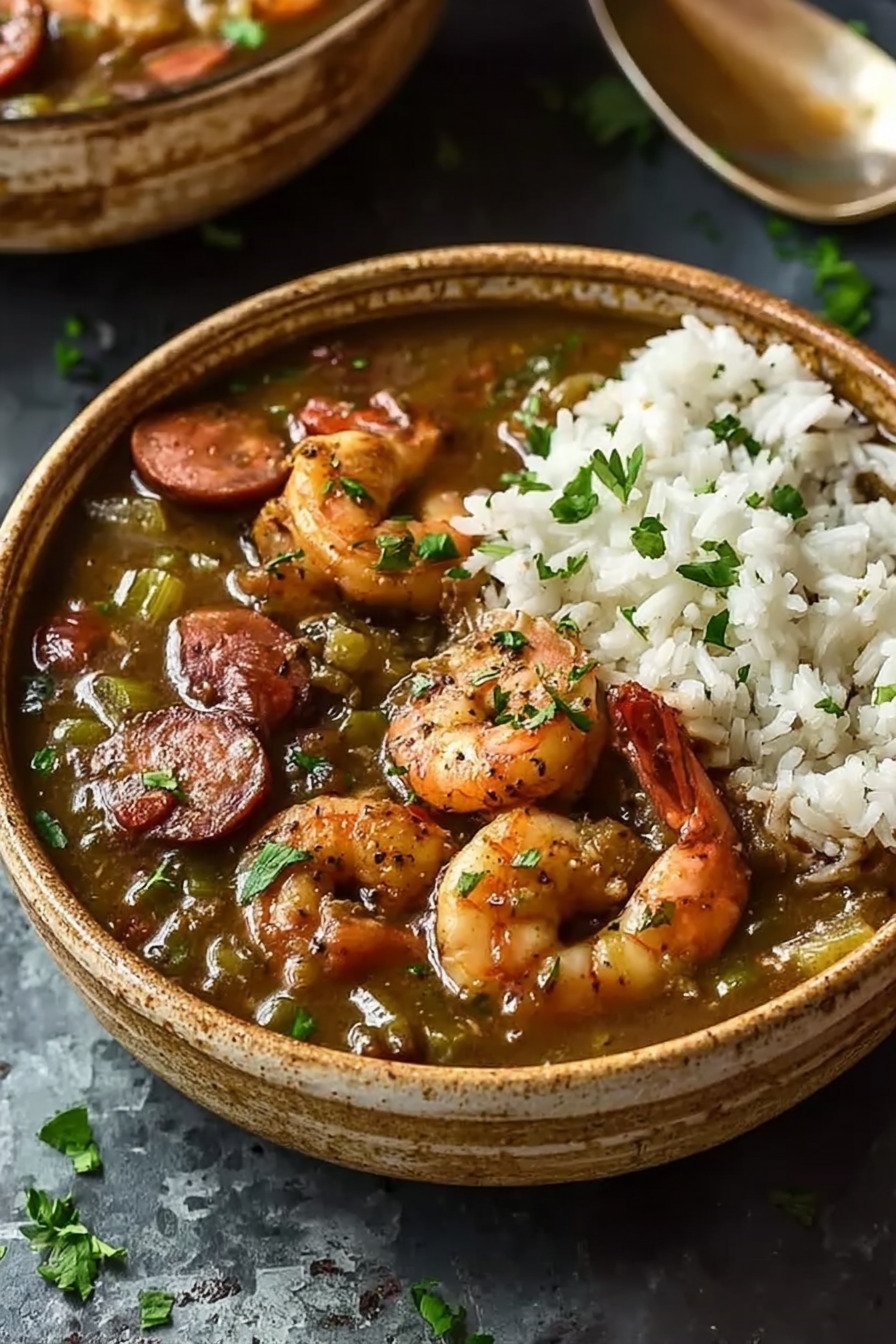
Table of Contents
- 1) Key Takeaways
- 2) Easy New Orleans Gumbo Recipe
- 3) Ingredients for New Orleans Gumbo
- 4) How to Make New Orleans Gumbo
- 5) Tips for Making New Orleans Gumbo
- 6) Making New Orleans Gumbo Ahead of Time
- 7) Storing Leftover New Orleans Gumbo
- 8) Try these Main Course next!
- 9) New Orleans Gumbo
- 10) Nutrition
1) Key Takeaways
- What makes a gumbo authentic New Orleans style?
- Can you make gumbo in a crockpot for easier cooking?
- What’s the secret to a perfect dark roux?
- How do you make gumbo healthier without losing flavor?
- What are the best proteins to use in traditional gumbo?
2) Easy New Orleans Gumbo Recipe
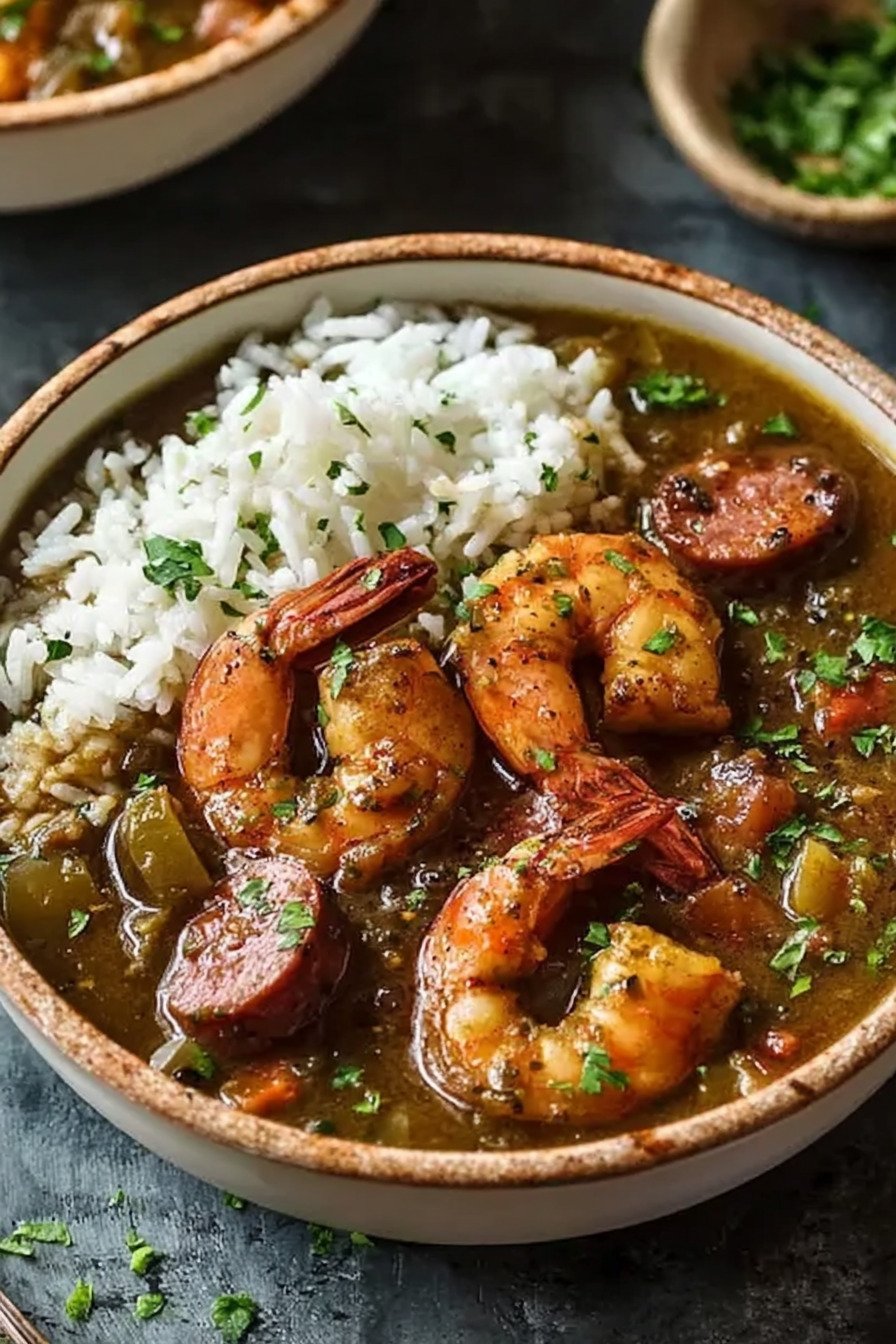
Listen, I’m gonna be straight with you about this gumbo recipe. It’s not one of those throw-it-together-in-15-minutes kind of meals. But here’s the thing, it’s absolutely worth every single minute you spend on it. When I first started making this authentic gumbo recipe back in college, I was intimidated by the whole roux situation. My roommate from Baton Rouge looked at me like I’d lost my mind when I asked if we could skip that step. “Nancy,” she said, shaking her head, “that’s like asking if you can make coffee without beans.”
She was right. That dark, chocolate-colored roux is what transforms this from just another soup into something that’ll make your taste buds do a happy dance. I’ve made this gumbo recipe probably a hundred times now, and I still get excited watching that flour and oil slowly turn into liquid gold. The smell alone is enough to make you want to call in sick to work and just camp out in your kitchen all day.
What I love most about cooking for Nancy Cooks is sharing recipes that actually work in real kitchens with real people who have real lives. You don’t need fancy equipment or hard-to-find ingredients for this one. Just patience, a good heavy pot, and maybe a glass of wine to keep you company during the stirring. Trust me, once you master this, you’ll be that friend everyone wants to invite over for dinner.
The beauty of a proper cajun gumbo recipe is how it brings people together. I can’t count how many times I’ve had friends show up “just to say hi” when they knew I was making a pot. Suddenly my kitchen’s packed with people offering to chop vegetables, telling stories, and sneaking tastes when they think I’m not looking. That’s what food should do, right? Create those moments where everything else fades away and you’re just present with the people you care about.
3) Ingredients for New Orleans Gumbo
All-Purpose Flour and Oil for the Roux
Okay, so this is where the magic happens. You’ll need about a cup of flour (heap it up a little) and two-thirds cup of oil. I usually grab vegetable or canola oil, but honestly, any neutral oil works fine. Some people get all fancy with their oil choices, but we’re keeping this practical here at Nancy Cooks. The flour and oil ratio creates this incredible base that’s got a nutty, almost caramel-like flavor once you cook it down properly. Don’t even think about using butter for this one, it’ll burn before you get that deep color you’re after.
The Holy Trinity: Celery, Bell Pepper, and Onion
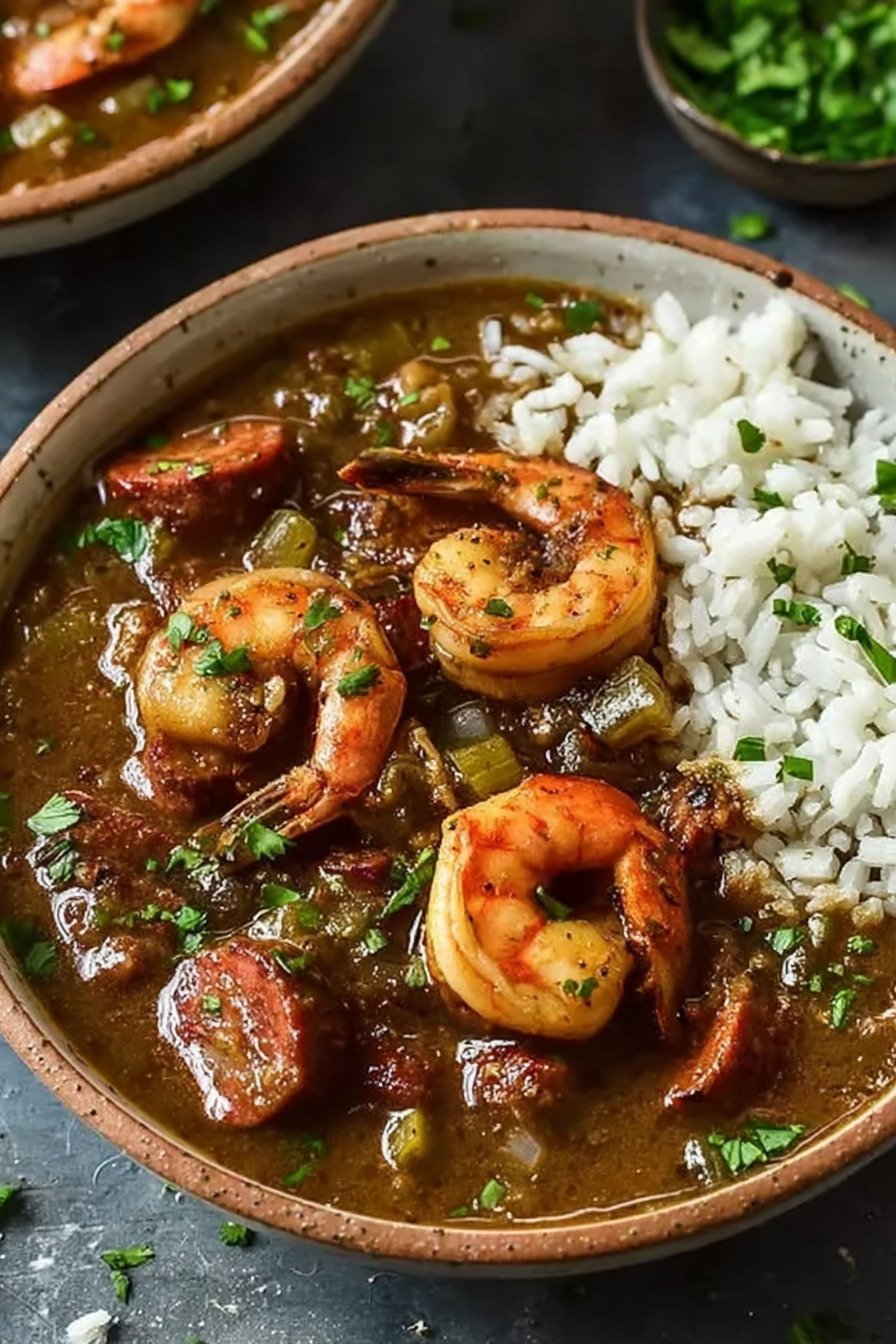
If you’ve ever cooked any Louisiana food, you know about the holy trinity. It’s like the Cajun version of mirepoix, and it’s non-negotiable. You’ll need a whole bunch of celery (and yeah, use those leaves too, they’ve got tons of flavor), one green bell pepper, and a large yellow onion. Dice everything up nice and small. I learned the hard way that big chunks of onion in gumbo are not cute. Nobody wants to bite into a massive piece of raw-ish onion. Take your time with the chopping, throw on some good music, and just enjoy the process.
Green Onions and Fresh Parsley
Here’s where we add some brightness and color to balance all that rich, dark roux. Grab a bunch of green onions and another bunch of fresh parsley. Chop them up fine. The green onions add this mild, sweet onion flavor that’s different from regular onions, and the parsley? It’s not just for looks. It brings this fresh, slightly peppery taste that cuts through all the richness. I’ve tried using dried parsley when I’m being lazy, and it’s just not the same. Spring for the fresh stuff on this one.
Garlic
Two to three cloves of garlic, minced up real fine. Some days I use two, some days I use five. Depends on my mood and whether I’m planning to be around people the next day. Garlic adds that aromatic depth that makes your whole house smell like heaven. If you’re one of those people who uses the jarred minced garlic, I’m not gonna judge you. We’re all doing our best here. But fresh garlic does hit different if you’ve got the time.
Cajun Seasoning
You’ll want one to two tablespoons of good Cajun seasoning. I like Tony Chachere’s, but use whatever brand you trust. Start with less and add more as you go. Every Cajun seasoning blend is different, some are saltier, some are spicier. Taste as you go. That’s the real secret to good cooking, not following recipes blindly but actually tasting and adjusting. My grandmother would absolutely lose it if she saw someone just dump in seasoning without tasting first.
Chicken Broth
Six to eight cups of chicken broth forms the liquid base of your best gumbo recipe authentic to Louisiana tradition. I usually go with the low-sodium kind so I can control the salt myself. Sometimes I’ll use homemade stock if I’ve got it in the freezer, but let’s be real, the store-bought stuff works just fine. On the higher end of that range, you’ll get a brothier gumbo. On the lower end, it’s thicker and more stew-like. Both are delicious, just depends what you’re feeling.
Andouille Sausage
This is where things get smoky and delicious. Twelve ounces of andouille sausage, sliced into coins. Andouille is this smoked pork sausage that’s got a kick to it. If you can’t find it, grab some good quality smoked sausage or kielbasa. It won’t be exactly the same, but it’ll still be tasty. I buy mine at the regular grocery store, nothing fancy. Some people get all worked up about finding “authentic” andouille, but honestly, most of us are just working with what’s available at our local stores.
Rotisserie Chicken
One rotisserie chicken from the grocery store, meat pulled off and shredded. This is my favorite shortcut in the whole recipe. Who has time to cook a whole chicken from scratch when you’re already spending an hour on the roux? The rotisserie chicken is already seasoned, it’s moist, and it literally takes five minutes to shred. Sometimes I’ll pick up two chickens when they’re on sale and freeze the extra meat for next time. Future Nancy always thanks present Nancy for that move.
Pre-Cooked Shrimp
Two cups of pre-cooked shrimp. I usually buy the frozen kind that’s already peeled and deveined. Just thaw them out in a bowl of cold water while you’re working on everything else. Some people like to use raw shrimp and cook them in the gumbo, and that’s fine too. I just find the pre-cooked ones are easier and you don’t have to worry about overcooking them and ending up with rubber. Plus, for a healthy gumbo recipe option, shrimp adds protein without much fat.
Hot Cooked Rice
You’ll serve this over hot white rice. Make as much or as little as you want depending on how many people you’re feeding. I usually do about a cup of uncooked rice per two people. Some folks like a little rice with a lot of gumbo, some like it the other way around. There’s no wrong answer here. Just make sure the rice is hot when you serve it so it doesn’t cool down your gumbo.
4) How to Make New Orleans Gumbo
Step 1: Start Your Roux
Grab your biggest, heaviest pot. I’m talking that stockpot you only break out for special occasions. Toss in your flour and oil and crank the heat to medium-low. Now comes the fun part, you’re gonna stir this constantly for the next 30 to 45 minutes. Yeah, I know. But this is where you earn your stripes as a gumbo maker. Keep stirring. The mixture will go from blonde to tan to brown to that gorgeous dark chocolate color you’re after. If you smell anything burning at all, start over. I’m serious. A burned roux will ruin the whole pot.
Step 2: Brown That Sausage
While your roux is doing its thing, grab a separate skillet and get it nice and hot over medium-high heat. Lay your sausage slices in a single layer. Don’t crowd them. Let them sit there and get a good brown crust on one side for about two to three minutes. Then flip them and do the same on the other side. You want those crispy, caramelized edges. They add so much flavor. Once they’re done, move them to a plate and set aside.
Step 3: Deglaze Like a Pro
Here’s a chef trick I learned from watching too much Food Network. Pour about half a cup of your chicken broth into that hot skillet where you cooked the sausage. All those brown bits stuck to the bottom? That’s flavor, baby. Scrape them up with a wooden spoon and pour this liquid gold into your pot with the roux. You just made your gumbo about 50% better with this one simple step.
Step 4: Add Everything Else
Time to build this thing. Pour in the rest of your broth, then add your celery, bell pepper, onion, green onions, parsley, and garlic. Give it all a good stir to mix with that beautiful dark roux. Bring the whole thing to a boil, then let it cook for about five to seven minutes. Your vegetables should start getting tender but not mushy. You’ll see some foam rise to the top, just skim that off with a spoon. Sprinkle in your Cajun seasoning and stir it through.
Step 5: Bring in the Protein
Now for the good stuff. Add your shredded chicken, those gorgeous browned sausage slices, and your shrimp. Stir everything together and let it simmer gently. You’re not looking for a hard boil here, just a gentle bubble. Let all those flavors get to know each other. This is when your kitchen starts smelling so good that your neighbors will probably knock on your door asking what you’re making.
Step 6: Taste and Adjust
This is the most important step, and it’s where cooking becomes more art than science. Grab a spoon and taste your gumbo. Does it need more salt? More spice? More depth? If it’s tasting a little flat, I sometimes add a spoonful of chicken bouillon paste. If it needs heat, hit it with some hot sauce or extra Cajun seasoning. Keep tasting and adjusting until it makes you do that little happy dance that happens when food tastes exactly right.
Step 7: Serve It Up
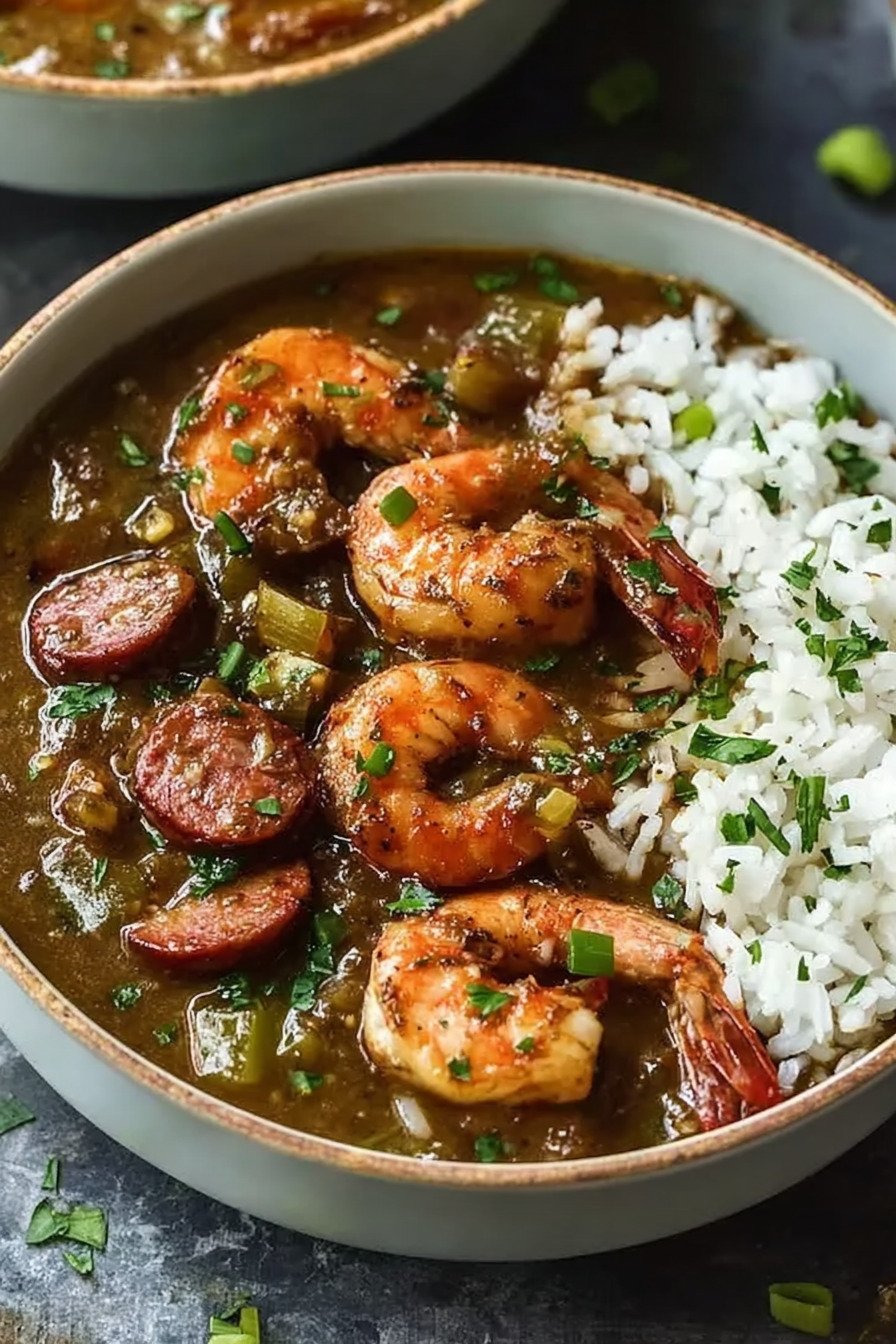
Scoop some hot rice into bowls, then ladle that gorgeous gumbo right over the top. Some people like to put the rice on the side, but I’m a fan of the rice-in-the-bowl method. Garnish with extra green onions or parsley if you’re feeling fancy. Grab some crusty bread for dipping. Pour yourself a cold drink. Sit down, take a bite, and bask in the glory of what you just created. This is what cooking is all about.
5) Tips for Making New Orleans Gumbo
Master the Roux
I can’t stress this enough, the roux makes or breaks your gumbo. Use a heavy-bottomed pot, keep your heat at medium-low, and stir constantly. I mean constantly. This is not the time to check your phone or start another task. If you need to step away, take the pot off the heat. Some people like to make their roux in the oven to avoid the constant stirring, and that works too. Spread your flour and oil mixture in a cast iron skillet and bake at 350°F, stirring every 20 minutes until it’s dark. Takes about the same amount of time but frees up your hands.
Don’t Rush the Process
Good gumbo can’t be rushed. I learned this the hard way when I tried to make a quick version for a potluck. Cranked up the heat on the roux to save time, and burned it. Had to start over and showed up an hour late. The slow cooking is what develops all those deep, complex flavors. If you’re short on time, consider making a gumbo recipe crockpot style. You can brown your roux on the stove, then transfer everything to a slow cooker and let it simmer for hours. It’s not traditional, but it works great when you’ve got other things to do.
Layer Your Flavors
Notice how we browned the sausage separately and deglazed the pan? That’s flavor layering. Every step adds another dimension to your final dish. Same with cooking the vegetables until they’re just tender. You want them to contribute their flavor without turning to mush. When you add the proteins at the end, you’re preserving their texture while letting them soak up all the flavors you’ve built. These little details might seem fussy, but they’re what separate good gumbo from great gumbo.
Adjust to Your Taste
Every single time I make this recipe, it turns out slightly different. Sometimes I’m heavy-handed with the Cajun seasoning. Sometimes I add more garlic. Sometimes I throw in some okra if I’ve got it. The recipe is a guideline, not a rulebook. Taste as you go and trust your instincts. If you think it needs something, it probably does. If you want a vegetarian gumbo recipe version, skip the meat and load up on okra, mushrooms, and maybe some beans. The roux and seasonings will still give you that authentic gumbo flavor.
Use Quality Ingredients
You don’t need to break the bank, but use the best ingredients you can afford. Fresh vegetables make a difference. Good quality sausage makes a difference. If you’re using store-bought broth, get the low-sodium kind so you control the salt. If you’ve got homemade stock, even better. One time I used some questionable sausage I found in the back of my freezer, and the whole pot tasted off. Learned that lesson. Quality in equals quality out.
6) Making New Orleans Gumbo Ahead of Time
Here’s some great news for all my fellow meal-preppers out there. Gumbo is one of those magical dishes that actually gets better after sitting in the fridge overnight. All those flavors meld together and deepen. It’s like the ingredients go to flavor school while you’re sleeping and come back with advanced degrees. I actually prefer to make my gumbo a day ahead when I’m having people over. Takes all the stress out of party day.
The key to making gumbo ahead is cooling it properly. Don’t just stick a hot pot in your fridge, that’ll warm up everything else in there and potentially put you in the food safety danger zone. Let it cool on the counter for about an hour, stirring occasionally. Once it’s close to room temperature, transfer it to containers and refrigerate. If you’re in a hurry, you can set the pot in a sink with some ice water to speed up the cooling process.
When you’re ready to reheat, do it low and slow. Medium-low heat on the stove, stirring occasionally until it’s heated through. Don’t microwave the whole pot. I mean, you can, but it heats unevenly and you might end up with scorching hot spots and cold spots. Stovetop reheating gives you better control and lets you adjust the seasoning if needed. Sometimes I’ll add a splash of water or broth if it’s thickened up too much in the fridge.
If you’re really planning ahead, you can freeze gumbo for up to three months. Just make sure you’re using freezer-safe containers and leaving some headspace for expansion. Label everything with the date so you don’t end up with mystery containers six months from now. When you’re ready to eat it, thaw it in the fridge overnight, then reheat on the stove. Easy weeknight dinner sorted. This is one of my favorite strategies when I’m doing a big batch cooking session on Sundays.
One thing I’ve learned over at Nancy Cooks is that having good food ready to go makes life so much easier. You come home tired from work, and instead of staring blankly into your fridge wondering what to eat, you’ve got this incredible homemade gumbo waiting for you. Just heat it up, make some rice, and boom. Restaurant-quality meal in 20 minutes. That’s the kind of planning that future you will thank present you for. Trust me on this one.
7) Storing Leftover New Orleans Gumbo
Let’s talk leftovers, which, let’s be honest, is when gumbo really shines. I’ve never understood people who don’t like leftovers. Leftover gumbo is a gift to yourself. Store it in airtight containers in your fridge for up to five days. Some sources say three to four days, but I’ve pushed it to five plenty of times with no issues. Just use your nose and common sense. If it smells off, toss it. But usually, it’ll be perfectly fine.
I like to portion out my leftovers into individual servings right away. Makes it easier to grab and go. Sometimes I’ll pack it in mason jars for work lunches. Just remember to leave some space at the top if you’re freezing in glass containers, or you’ll end up with broken glass in your freezer. Been there, done that, learned that lesson. Plastic freezer containers work great too. Whatever you use, just make sure it’s actually airtight or your gumbo will get freezer burn.
When you reheat leftovers, add a little splash of water or broth to loosen it up. Gumbo tends to thicken as it sits, which isn’t bad, but adding a bit of liquid helps bring it back to life. Heat it gently on the stove or in the microwave. If you’re microwaving, do it in short bursts and stir in between. Nothing worse than cold gumbo in the middle with molten lava around the edges. Make fresh rice to serve it over, or if you’re really in a pinch, even just some crusty bread works great for soaking up all that delicious sauce.
Some people ask me about freezing leftover gumbo, and yes, you absolutely can. It freezes beautifully. The only thing that might change texture a bit is the shrimp. They can get a little rubbery after freezing and reheating. If that bothers you, you could always leave the shrimp out of the portion you’re freezing and add fresh shrimp when you reheat. But honestly, I usually just freeze it all together and the texture difference doesn’t bother me one bit when I’m eating delicious gumbo in the middle of February that I made back in October.
8) Try these Main Course next!
9) New Orleans Gumbo
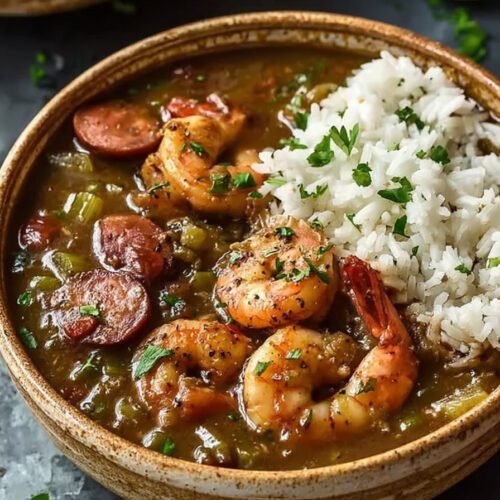
Best Authentic New Orleans Gumbo Recipe
Ingredients
For the Roux
- 1 cup all-purpose flour (heaping)
- 2/3 cup vegetable or canola oil
For the Gumbo
- 1 bunch celery, diced (include those leaves!)
- 1 green bell pepper, diced
- 1 large yellow onion, diced
- 1 bunch green onions, finely chopped
- 1 bunch fresh parsley, finely chopped
- 2 to 3 cloves garlic, minced
- 1 to 2 tablespoons Cajun seasoning
- 6 to 8 cups chicken broth
- 12 oz andouille sausage, sliced into coins
- Meat from 1 rotisserie chicken, shredded
- 2 cups pre-cooked shrimp
- Hot cooked rice, for serving
Instructions
- Start by making your roux. Grab a large, heavy-bottomed stockpot and combine the flour and oil. Cook over medium-low heat, stirring constantly (and I mean constantly!) for 30 to 45 minutes. You’re looking for a dark brown color, kind of like chocolate, with a consistency similar to soft cookie dough. If it seems too thick, add a tiny bit more oil. Too thin? Sprinkle in some flour. Whatever you do, don’t let it burn, or you’ll have to start over.
- While your roux is doing its thing, grab a separate skillet and crank the heat to medium-high. Lay your sausage slices in a single layer and let them brown nicely on one side (about 2 to 3 minutes). Flip them over and brown the other side. Move the browned sausage to a plate.
- Here’s a chef’s trick: pour about half a cup of chicken broth into that hot skillet to grab all those tasty brown bits stuck to the bottom. Pour this flavorful liquid right into your pot with the roux.
- Now dump in the rest of your broth, celery, bell pepper, onion, green onions, parsley, and garlic. Give it all a good stir and bring it to a boil. Let it cook for 5 to 7 minutes until those veggies start getting tender. You’ll see some foam rise to the top, just skim that off. Season with Cajun seasoning to your taste.
- Time to add the good stuff! Stir in your shredded chicken, that beautiful browned sausage, and the shrimp. Let everything simmer gently until it’s all heated through and those flavors really get to know each other.
- Give it a taste and adjust your seasonings. Need more salt? More heat? Go for it. Sometimes I add a little chicken bouillon paste if I want it richer.
- Serve this beauty over fluffy white rice. And here’s a secret: it tastes even better the next day when all those flavors have had time to really hang out together.
10) Nutrition
Serving Size: 1 bowl (1/10 of recipe), Calories: 385, Sugar: 3.2 g, Sodium: 892 mg, Fat: 18.4 g, Saturated Fat: 4.1 g, Carbohydrates: 28.7 g, Fiber: 3.1 g, Protein: 26.8 g, Cholesterol: 124 mg





Leave a Comment