
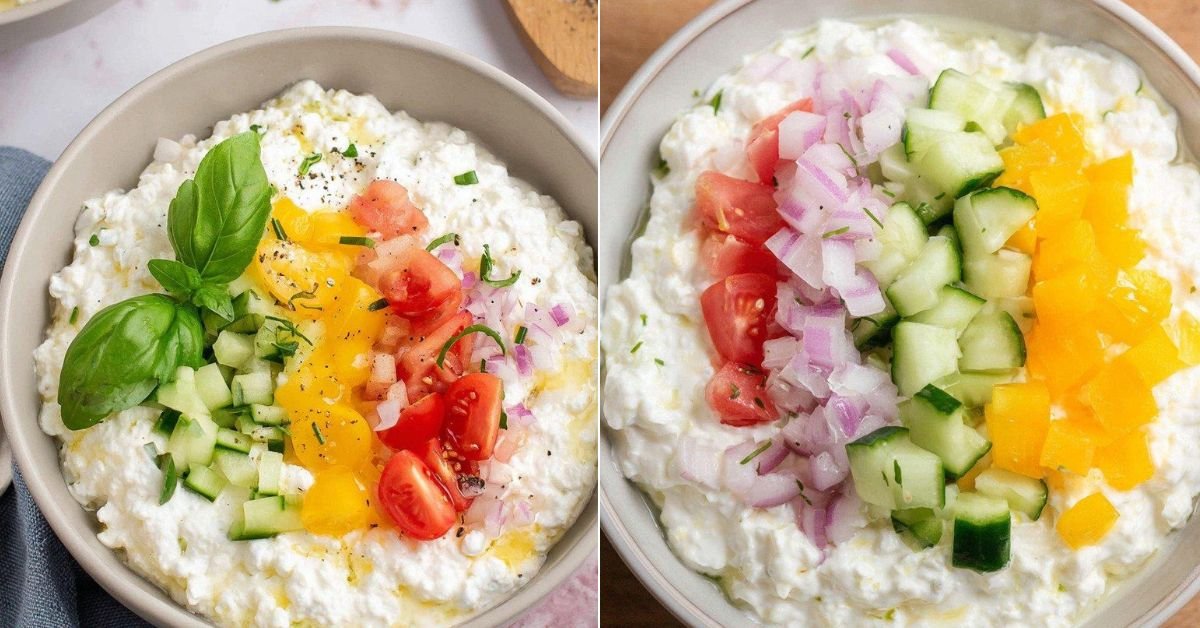
1) What I Learned Testing This Savory Cottage Cheese Bowl
Watery cottage cheese bowls can taste flat fast, especially when juicy vegetables and vinegar hit the bowl too early. I’m Nancy, and my first try had good ingredients but not enough balance, so I tested smaller vegetable cuts, lighter seasoning, and adding the vinegar at the end. That small adjustment was the discovery: creamy cottage cheese needs crisp toppings, gentle acidity, and fresh herbs to feel like a real meal. This savory bowl gives the fresh, high-protein feel people look for in a buffalo chicken cottage cheese bowl or low calorie protein bowl, but with a cool, vegetable-forward bite I reach for when I want a calm, no-cook lunch.
Table of Contents
- 1) What I Learned Testing This Savory Cottage Cheese Bowl
- 2) Key Takeaways
- 3) Easy Savory Cottage Cheese Bowl Recipe
- 4) Why Most Savory Cottage Cheese Bowl Recipes Fail
- 5) Ingredients for Savory Cottage Cheese Bowl
- 6) How to Make Savory Cottage Cheese Bowl
- 7) Recipe Card: Savory Cottage Cheese Bowl
- 8) Tips for Making Savory Cottage Cheese Bowl
- 9) Common Mistakes & Fixes
- 10) How to Tell Savory Cottage Cheese Bowl Has the Right Texture
- 11) Professional Secrets Behind Better Savory Cottage Cheese Bowl
- 12) Best Dishes or Pairings to Serve With Savory Cottage Cheese Bowl
- 13) Making Savory Cottage Cheese Bowl Ahead of Time
- 14) Storing Leftover Savory Cottage Cheese Bowl
- 15) FAQ (Real Cooking Questions)
- 16) Save This Savory Cottage Cheese Bowl Recipe
- 17) Conclusion
- 18) Nutrition
2) Key Takeaways
- The biggest texture trick is controlling moisture: dice vegetables small, seed an extra-juicy tomato if needed, and add vinegar right before serving.
- Cottage cheese already brings salt and creaminess, so season lightly first, taste, then adjust with pepper and a small pinch of salt.
- Fresh basil changes the bowl from plain to aromatic, but it should be added last because chopped basil darkens and loses fragrance as it sits.
- This works as a fresh no-cook high protein bowl, and optional cooked chicken or buffalo sauce can turn it toward a buffalo chicken bowl without changing the base recipe.
3) Easy Savory Cottage Cheese Bowl Recipe
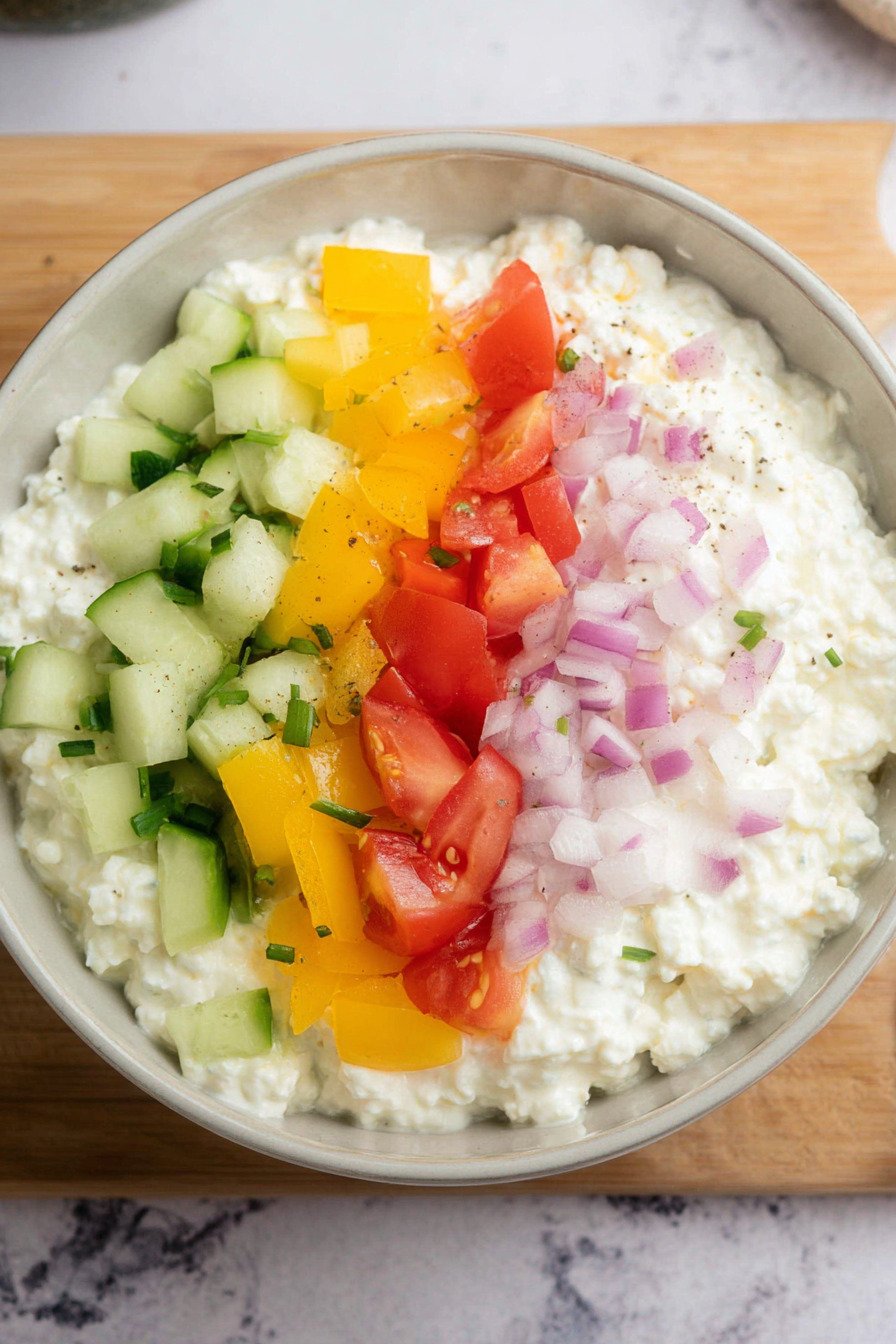
This savory cottage cheese bowl is a no-cook recipe, so the success depends on texture, balance, and timing rather than heat. The cottage cheese acts as the creamy base, while cucumber, bell pepper, tomato, and shallot bring crunch, sweetness, juiciness, and a small savory bite. White balsamic vinegar brightens the bowl without turning it sharp, and basil adds the fresh aroma that makes the whole bowl feel finished.
The method works because the toppings stay separate until serving. If the vinegar sits too long on the vegetables, the salt and acid pull out water, which can make the bowl loose. If the shallot is chopped too large, it can dominate the mild cottage cheese. Small cuts and last-minute seasoning are what make this simple bowl taste intentional.
4) Why Most Savory Cottage Cheese Bowl Recipes Fail
Most savory cottage cheese bowls fail because they ignore moisture. Tomato and cucumber release liquid quickly once salted or dressed, and cottage cheese can already contain whey. If those liquids collect in the bottom of the bowl, the texture turns watery instead of creamy. Dicing the vegetables evenly and adding vinegar at the end keeps the bowl crisp and clean.
Another common problem is harsh flavor. Raw shallot can taste sharp when the pieces are too large, especially against mild cottage cheese. Mincing it finely spreads the flavor more evenly, so you get savory depth without a hot onion bite. Under-seasoning is the opposite problem: without enough pepper, salt, or acidity, the bowl tastes plain. The fix is to season in small amounts and taste after the vinegar is added.
The final issue is stale herb flavor. Basil is delicate, and once chopped it bruises quickly. Add it just before eating so the aroma stays fresh. That one small step gives the bowl a brighter finish and makes it feel more like a composed lunch than a container of cottage cheese with toppings.
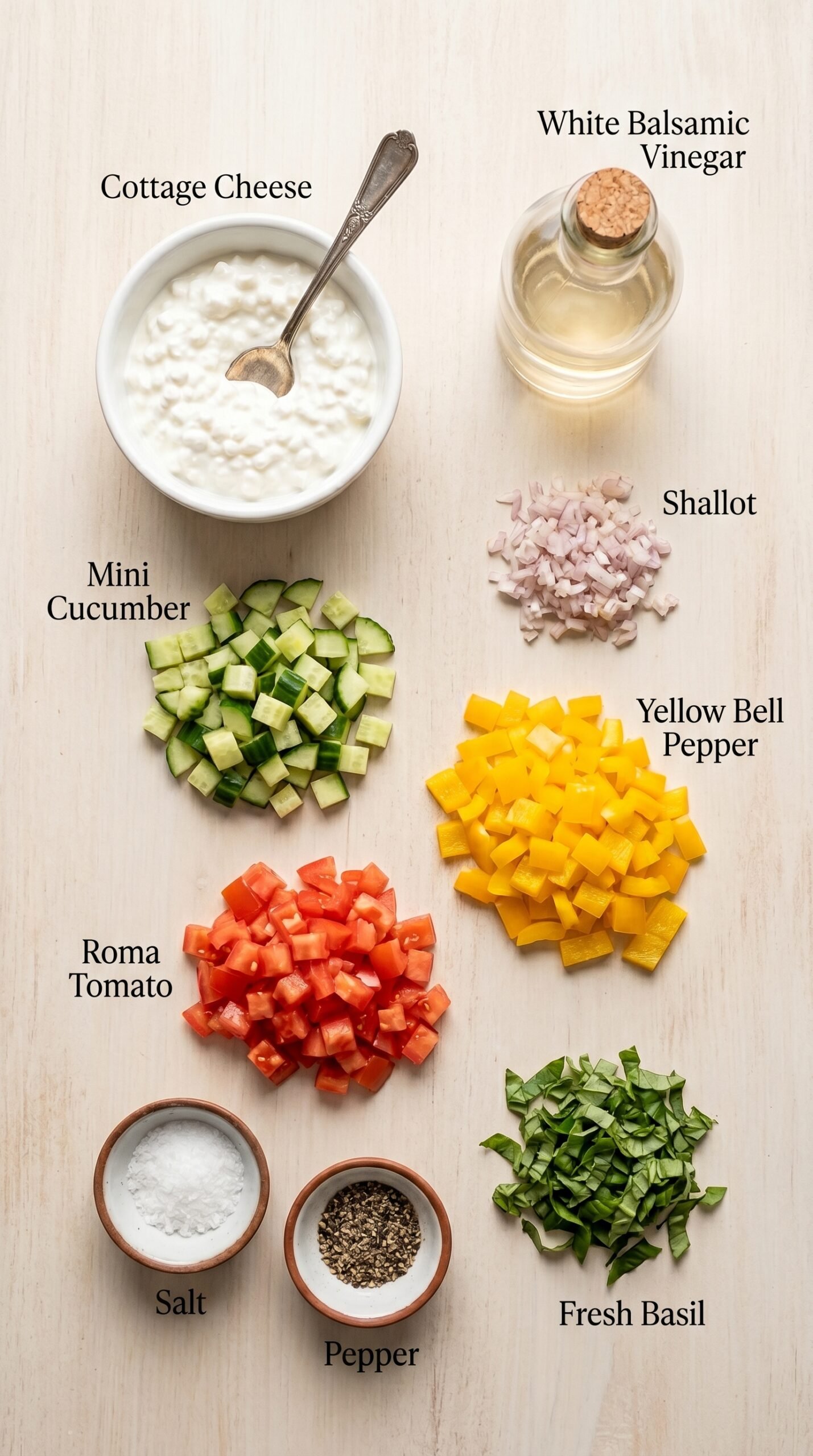
5) Ingredients for Savory Cottage Cheese Bowl
Low fat cottage cheese: This is the creamy protein base. Use it chilled, and if it looks very loose, drain it briefly before spooning it into the bowl. A thicker cottage cheese gives a better contrast with the crisp vegetables.
Shallot: Shallot adds savory sharpness without needing a cooked ingredient. Mince it finely so it seasons the bowl instead of taking over. Red onion can work in a pinch, but it will taste stronger.
Mini cucumber: Cucumber gives the bowl its clean crunch. Use it when you want a refreshing bite, and dice it small so every spoonful has texture. If using a watery cucumber, pat the pieces dry before adding them.
Yellow bell pepper: Bell pepper adds sweetness, color, and crispness. Yellow pepper is mild and sunny, but orange or red pepper can also work. Green pepper will taste sharper and less sweet.
Roma tomato: Roma tomato gives juicy freshness with less excess liquid than many larger tomatoes. If the tomato is very ripe, remove some seeds before dicing to protect the cottage cheese from becoming watery.
White balsamic vinegar: This brings gentle acidity and a slightly sweet finish. Add it right before serving. Regular balsamic can taste heavier and darken the bowl, while lemon juice gives a sharper result.
Salt and pepper: These sharpen the flavor and keep the bowl from tasting flat. Add salt carefully because cottage cheese varies by brand. Black pepper is especially useful because it adds warmth without extra moisture.
Fresh basil: Basil gives the final aroma and makes the bowl taste brighter. Add it at the end, not during prep, so it stays green and fragrant.
- Thick cottage cheese vs loose cottage cheese: Thick cottage cheese holds the toppings better, while loose cottage cheese can pool with vegetable juices.
- White balsamic vs lemon juice: White balsamic is softer and slightly sweet, while lemon juice tastes sharper and more direct.
- Mini cucumber vs regular cucumber: Mini cucumber usually has fewer seeds and better crunch, while regular cucumber may need seeding or patting dry.
- Fresh basil vs dried basil: Fresh basil gives aroma and color; dried basil tastes muted here because there is no heat or sauce to bloom it.
6) How to Make Savory Cottage Cheese Bowl
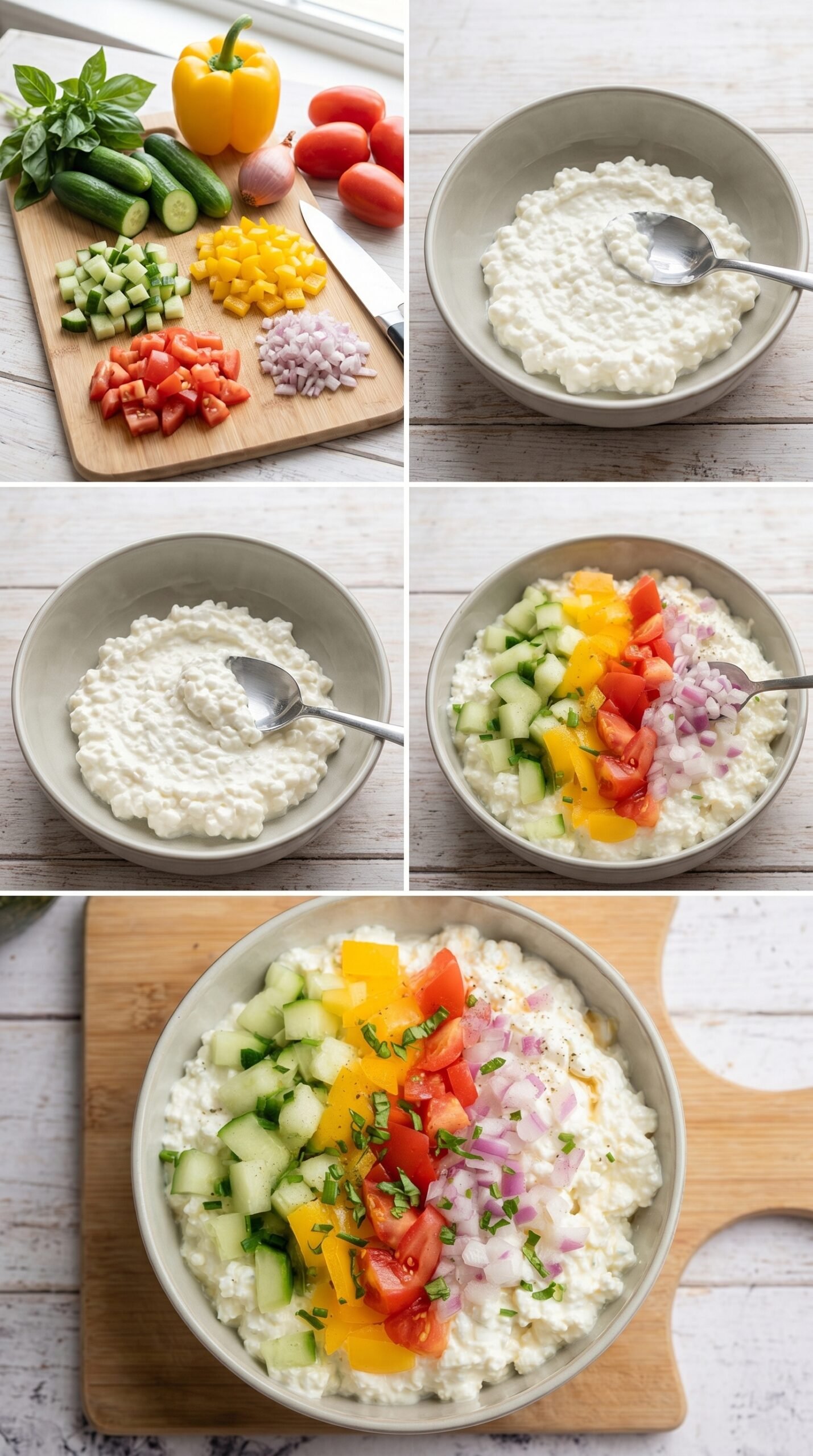
Step 1: Dice the cucumber, bell pepper, and tomato into small, even pieces. Mince the shallot finely and chop the basil last so it stays fragrant. The vegetables should look crisp and fresh, not crushed or wet.
Step 2: Spoon the cottage cheese into a bowl and smooth it into an even layer. This gives the toppings a stable base and keeps the bowl visually clean.
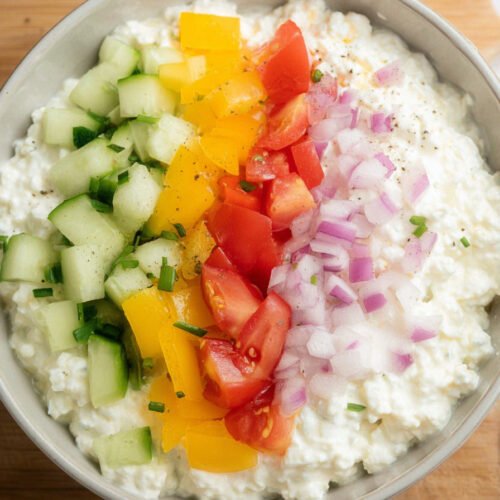
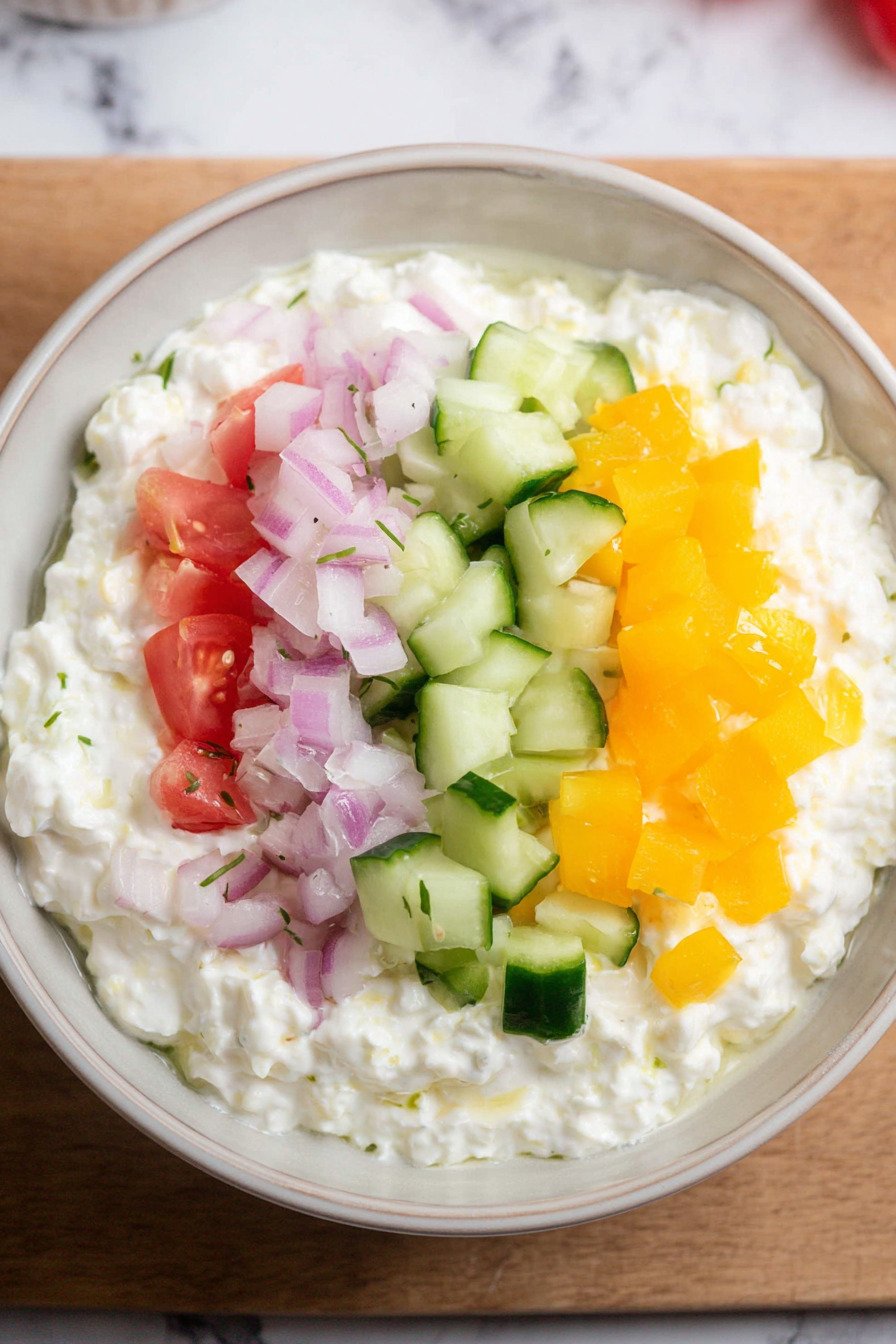
Step 3: Arrange the cucumber, bell pepper, tomato, and shallot over the cottage cheese. Keep them in sections for a composed look, or gently mix them if you want every bite to taste the same.
Step 4: Drizzle the white balsamic vinegar over the top. Add a small pinch of salt and pepper, then taste before adding more. The goal is bright and seasoned, not salty or sour.
Step 5: Finish with chopped fresh basil and eat right away. The stopping point is when the bowl looks glossy from the vinegar but has no watery pooling around the cottage cheese.
7) Recipe Card: Savory Cottage Cheese Bowl
Savory Cottage Cheese Bowl
Ingredients
- 1 cup low fat cottage cheese, drained briefly if very watery
- 1 shallot minced, finely chopped so the flavor spreads evenly
- 1 mini cucumber or 1/2 cup diced cucumber, cut small for crunch in every bite
- 1/2 medium yellow bell pepper chopped, diced evenly for sweetness and color
- 1 Roma tomato diced, seeds removed if extra juicy
- 1 tablespoon white balsamic vinegar, added just before serving
- Salt and pepper to taste, added lightly at first
- Fresh basil chopped, added at the end for aroma
Instructions
- Dice the cucumber, yellow bell pepper, and Roma tomato into small, even pieces. Mince the shallot finely and chop the fresh basil so the bowl has balanced texture instead of large sharp bites.
- Spoon the low fat cottage cheese into a serving bowl and spread it into an even layer. If the cottage cheese looks loose, let it sit in a fine-mesh strainer for a minute first to avoid a watery bowl.
- Arrange the cucumber, bell pepper, tomato, and shallot over the cottage cheese. Keep the vegetables in sections for a composed bowl, or gently mix them through for a more even bite.
- Drizzle the white balsamic vinegar over the top, then season with a small pinch of salt and pepper. Taste before adding more salt because cottage cheese can already be salty.
- Scatter the chopped fresh basil over the bowl and serve right away while the vegetables are crisp, the basil is fragrant, and the cottage cheese is still cool and creamy.
8) Tips for Making Savory Cottage Cheese Bowl
Use chilled cottage cheese and chilled vegetables for the freshest result. A savory bowl like this depends on contrast: cool creaminess, crisp vegetables, mild acidity, and fresh herbs. If everything is room temperature, the bowl tastes softer and less refreshing.
Cut the vegetables smaller than you think. Large chunks make the bowl harder to eat and can cause one bite to taste like tomato while the next tastes like plain cottage cheese. Small, even pieces create a better cottage cheese chicken bowl base if you later add cooked chicken as an optional variation.
For a buffalo chicken cottage cheese bowl variation, keep the original bowl intact and add cooked shredded chicken plus a small drizzle of buffalo sauce on top. Do not mix a large amount of sauce into the cottage cheese at the start, because it can make the texture loose and overpower the basil.
9) Common Mistakes & Fixes
Problem: The bowl turns watery. Cause: The tomato, cucumber, vinegar, and salt sat together too long. Fix: Keep components separate until serving, drain loose cottage cheese, and add vinegar at the end.
Problem: The shallot tastes too strong. Cause: The pieces are too large for a mild cottage cheese base. Fix: Mince the shallot very finely, or use a little less if your shallot is especially sharp.
Problem: The bowl tastes bland. Cause: Cottage cheese needs acid, pepper, herbs, and enough salt to balance the vegetables. Fix: Add the white balsamic first, then adjust salt and pepper in small amounts.
Problem: The basil looks dark or tired. Cause: It was chopped too early or mixed with moisture. Fix: Chop basil just before serving and scatter it over the top as the final step.
10) How to Tell Savory Cottage Cheese Bowl Has the Right Texture
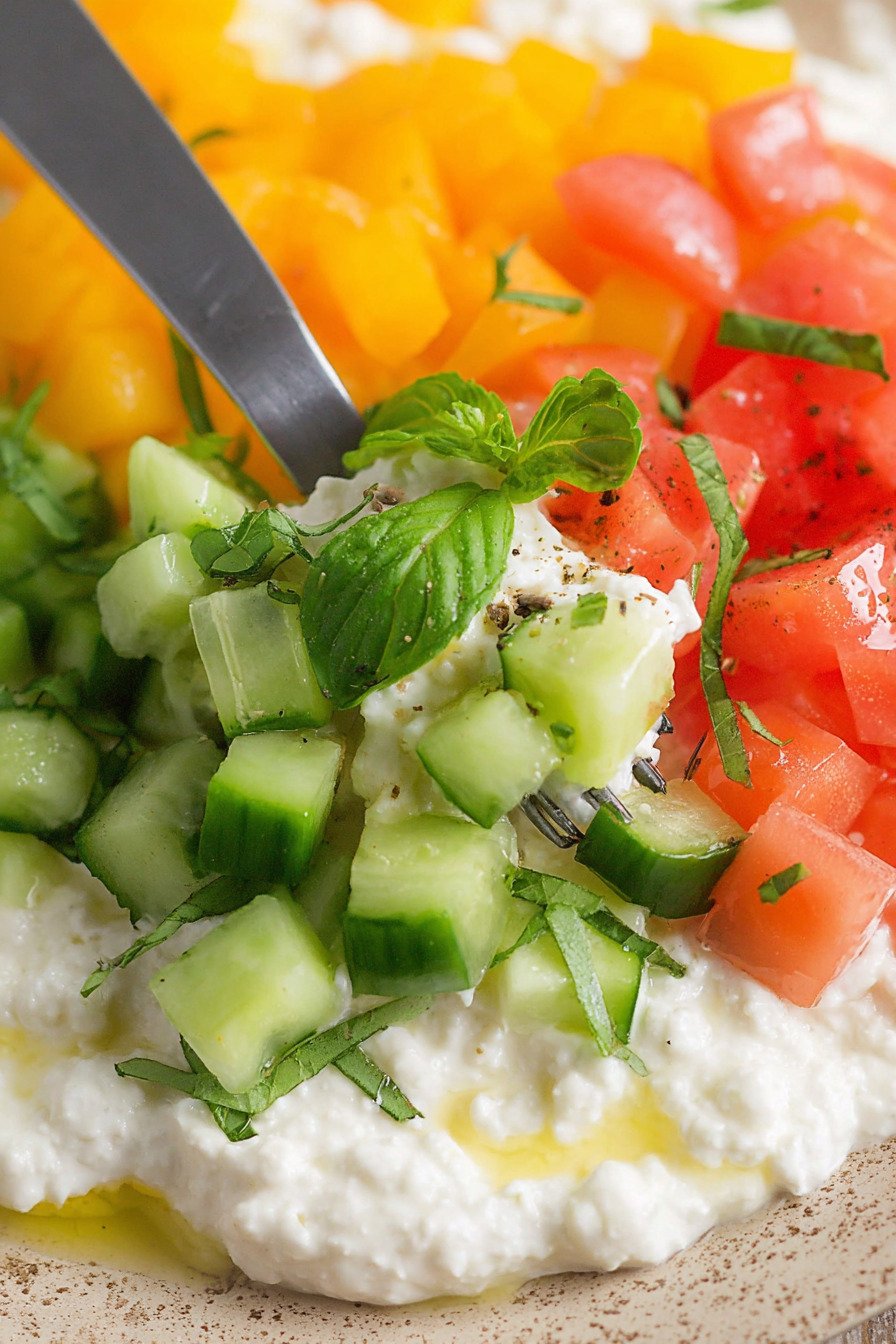
A good savory cottage cheese bowl should look creamy, crisp, and fresh. The cottage cheese should hold soft ridges from the spoon rather than spreading into a thin layer of liquid. The vegetables should sit brightly on top with defined edges, and there should be no watery pooling around the bottom of the bowl.
The texture should be cool and creamy with a clean crunch from the cucumber and bell pepper. The tomato should taste juicy but not flood the bowl. The flavor should be lightly tangy from the white balsamic, gently savory from the shallot, and aromatic from the basil. If the bowl tastes sour, salty, or watery, the vinegar or salt was added too early or too heavily.
11) Professional Secrets Behind Better Savory Cottage Cheese Bowl
The professional trick is treating this like a composed salad, not a random bowl of toppings. That means every cut matters. Small dice gives even distribution, keeps the spoonfuls balanced, and prevents watery vegetables from dominating the cottage cheese.
Another useful habit is seasoning in layers, but gently. Cottage cheese already has salt, the vegetables bring sweetness and water, and the vinegar adds acidity. When those elements are balanced at the end, the bowl tastes fresh and clean. When they are mixed too early, the texture breaks down and the flavor becomes dull.
If you want the healthy buffalo chicken bowl direction, add cooked chicken as a topping rather than changing the base. This keeps the original fresh texture while giving the bowl a more filling, meal-prep style profile.
12) Best Dishes or Pairings to Serve With Savory Cottage Cheese Bowl
This bowl works well as a light lunch, a high-protein snack, or a cool side next to simple grilled chicken, turkey slices, boiled eggs, or whole-grain toast. The creamy cottage cheese and crisp vegetables also pair nicely with roasted sweet potatoes, crispbread, pita wedges, or a simple green salad.
For a heartier plate, serve it beside a healthy rotisserie chicken bowl setup with shredded chicken, greens, and extra chopped vegetables. Keep saucy or hot toppings separate until serving so the cottage cheese stays cool and creamy.
13) Making Savory Cottage Cheese Bowl Ahead of Time
The best make-ahead strategy is to prep the vegetables and cottage cheese separately. Dice the cucumber, bell pepper, and tomato, mince the shallot, and store them in a covered container lined with a paper towel if they seem moist. Keep the cottage cheese in its own container and wait to add vinegar, salt, pepper, and basil until serving.
For meal prep, assemble the bowl no more than a few hours ahead if you need convenience, but expect the vegetables to soften slightly. For the freshest low calorie protein bowl texture, assemble it right before eating.
14) Storing Leftover Savory Cottage Cheese Bowl
Once fully assembled, this bowl is best eaten right away. Leftovers can be refrigerated in an airtight container for up to 24 hours, but the vegetables will release moisture and the basil may darken. Stir before eating, then refresh with a little extra pepper or fresh basil if needed.
Freezing is not recommended because cottage cheese changes texture after thawing and the fresh vegetables lose their crunch. If you have extra chopped vegetables, store them separately and build a fresh bowl the next day.
15) FAQ (Real Cooking Questions)
Can I make this into a buffalo chicken cottage cheese bowl? Yes. Keep the cottage cheese, vegetables, vinegar, and basil as the base, then add cooked shredded chicken and a small drizzle of buffalo sauce on top. Add the sauce lightly so the bowl stays creamy instead of runny.
Why is my cottage cheese bowl watery? The most likely reason is that the vegetables were salted or dressed too early. Tomato and cucumber release water quickly. Add the vinegar and seasoning right before serving, and drain very loose cottage cheese first.
Can I use regular balsamic vinegar? You can, but it will taste deeper and look darker. White balsamic is better here because it keeps the flavor lighter and lets the cucumber, bell pepper, tomato, and basil stay fresh-tasting.
Can I use a different herb? Fresh parsley, dill, or chives can work, but basil gives the sweetest aroma with the tomato and white balsamic. Avoid dried basil because it tastes flat in a no-cook bowl.
Is this a good meal prep recipe? It can be, as long as you store the components separately. For the best texture, keep cottage cheese in one container, chopped vegetables in another, and add vinegar, salt, pepper, and basil only when you are ready to eat.
16) Save This Savory Cottage Cheese Bowl Recipe
If this Savory Cottage Cheese Bowl helped you solve the problem of watery, bland cottage cheese lunches, save it for quick no-cook meals. The key reminder is: keep the vegetables crisp, add vinegar at the end, and finish with fresh basil.
17) Conclusion
A savory cottage cheese bowl looks simple, but the difference between flat and fresh comes down to moisture control, small cuts, gentle acidity, and last-minute herbs. Once you understand why the bowl turns watery or bland, it becomes much easier to build a creamy, crisp, balanced lunch without cooking. Keep the base chilled, season carefully, and let the basil finish the bowl with clean aroma.
18) Nutrition
Serving Size 1 portion Calories 245 Sugar 10 g Sodium 620 mg Fat 5 g Saturated Fat 3 g Carbohydrates 22 g Fiber 4 g Protein 29 g Cholesterol 20 mg






Leave a Comment