
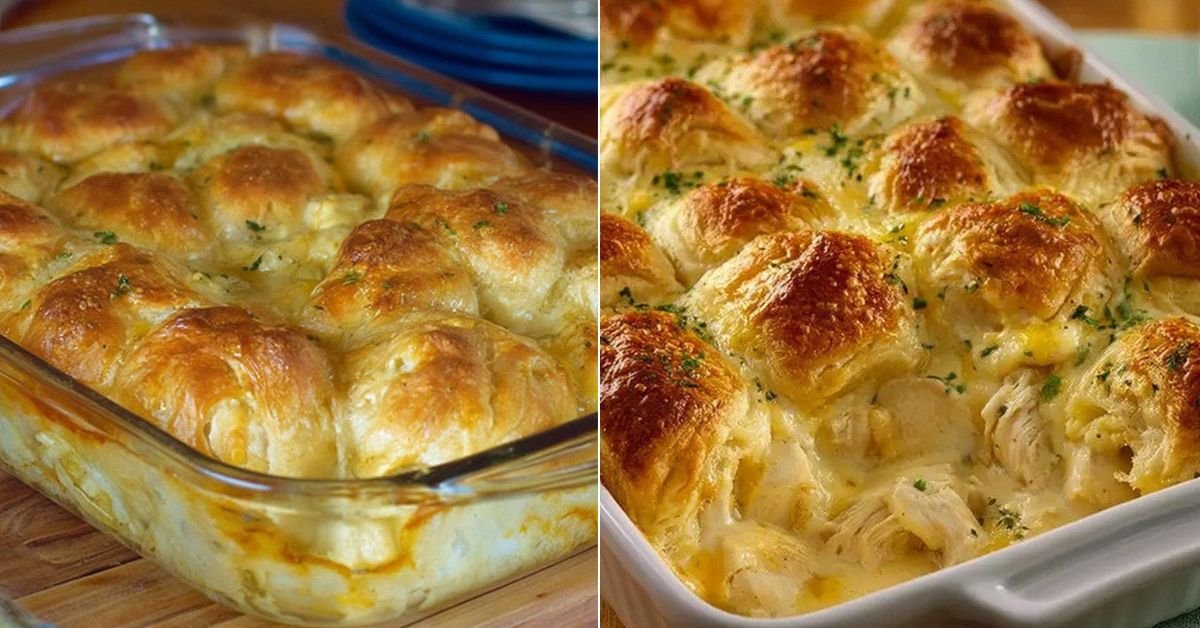
What I Learned Testing Chicken Crescent Roll Casserole
Dry chicken, leaky rolls, and sauce that settles in one sad corner can ruin a cozy casserole fast. I’m Nancy, and my first chicken crescent roll casserole came out tasty but uneven: some rolls were golden, others were soggy, and the filling escaped like it had somewhere better to be. After testing the filling texture, sauce thickness, and baking time, I discovered that softened cream cheese, neatly tucked dough, and evenly whisked sauce make all the difference. This crescent roll chicken casserole became one of those calm, comforting dinners I like serving when the table needs something warm, creamy, and reliable.
Table of Contents
- 1) What I Learned Testing Chicken Crescent Roll Casserole
- 2) Key Takeaways
- 3) Easy Chicken Crescent Roll Casserole Recipe
- 4) Why Most Chicken Crescent Roll Casserole Recipes Fail
- 5) Ingredients for Chicken Crescent Roll Casserole
- 6) How to Make Chicken Crescent Roll Casserole
- 7) Recipe Card: Chicken Crescent Roll Casserole
- 8) Tips for Making Chicken Crescent Roll Casserole
- 9) Common Mistakes & Fixes
- 10) How to Tell Chicken Crescent Roll Casserole Is Done
- 11) Professional Secrets Behind Better Chicken Crescent Roll Casserole
- 12) Best Dishes or Pairings to Serve With Chicken Crescent Roll Casserole
- 13) Making Chicken Crescent Roll Casserole Ahead of Time
- 14) Storing Leftover Chicken Crescent Roll Casserole
- 15) FAQ (Real Cooking Questions)
- 16) Save This Chicken Crescent Roll Casserole Recipe
- 17) Conclusion
- 18) Nutrition
2) Key Takeaways
- The filling should be creamy and cohesive, not wet; softened cream cheese helps the shredded chicken stay tucked inside the crescent rolls.
- Cold crescent dough is easier to handle, seals better, and gives this chicken crescent roll casserole a cleaner shape after baking.
- Whisking the cream of chicken soup with milk before pouring prevents thick clumps, dry edges, and uneven sauce pockets.
- Letting the casserole rest briefly after baking helps the sauce settle so the rolls serve neatly instead of sliding apart.
3) Easy Chicken Crescent Roll Casserole Recipe
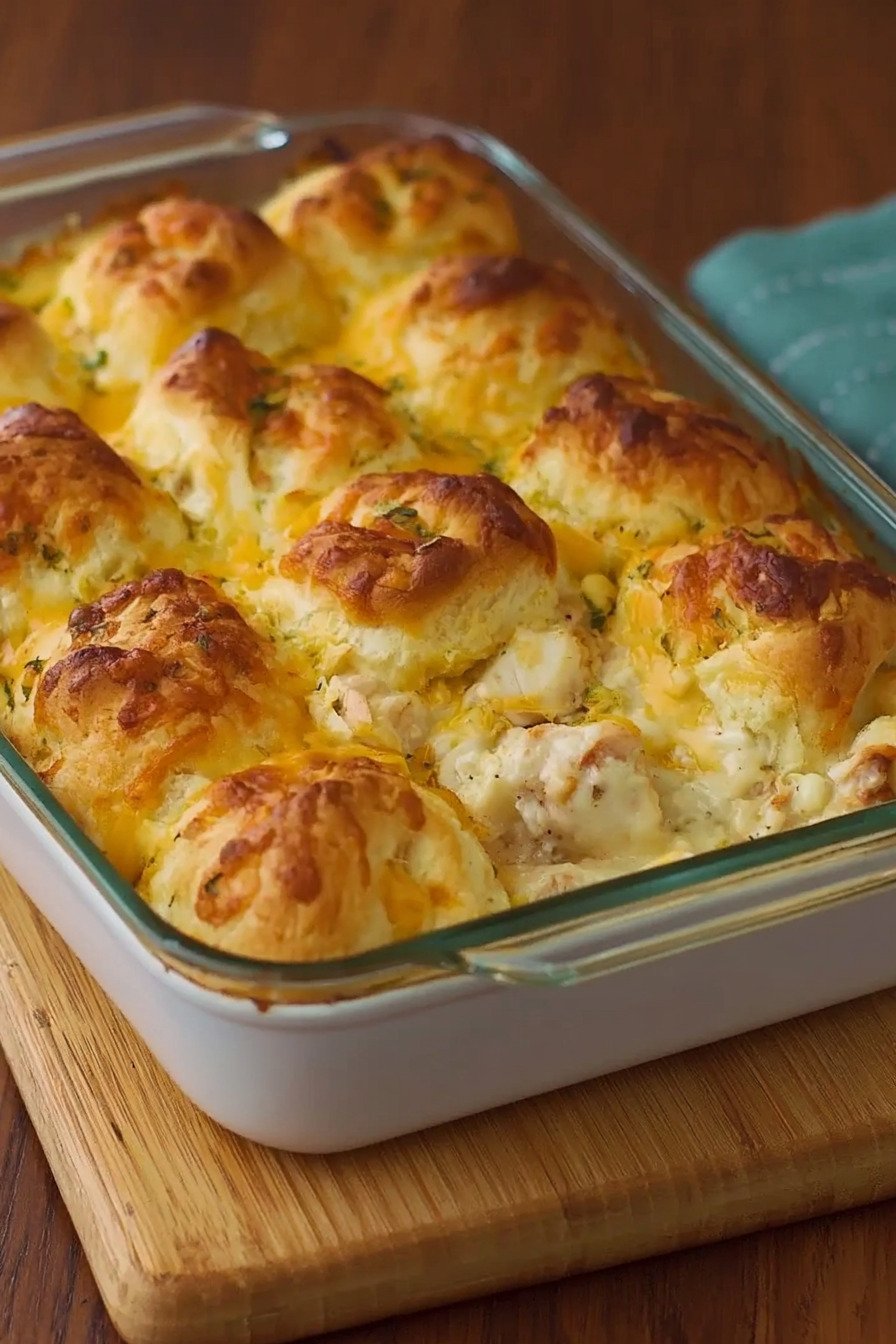
This chicken crescent roll casserole works because it balances three textures: tender shredded chicken, soft creamy filling, and flaky crescent tops. The chicken is already cooked, so the baking time is really about heating the filling, puffing the dough, melting the cheddar, and letting the sauce bubble gently around the rolls.
The most important part is not speed; it is control. If the filling is too loose, it leaks. If the dough gets warm, it stretches and tears. If the sauce is too thick in one spot, part of the casserole bakes dry while another part turns heavy. A little care at each stage makes chicken and crescent rolls feel like a real dinner instead of a rushed shortcut.
4) Why Most Chicken Crescent Roll Casserole Recipes Fail
Most problems with chicken crescent roll casserole come from moisture control. Crescent dough needs enough sauce to stay tender, but not so much that it steams into a gummy layer. When the cream of chicken soup is not whisked smoothly with milk, it lands in heavy streaks instead of coating the rolls evenly.
Another common failure is overfilling the dough. A generous spoonful sounds harmless, but crescent rolls expand as they bake. If the filling is packed too tightly, the seams open and the creamy chicken spills into the pan. That still tastes fine, but the texture becomes less tidy and the rolls lose their stuffed-casserole charm.
Cold cream cheese can also cause trouble. It does not blend evenly with shredded chicken, so some bites taste rich while others taste plain. Softened cream cheese coats the chicken more evenly and helps the garlic powder, onion powder, salt, and pepper distribute through the filling.
Flat flavor usually comes from forgetting that cooked chicken needs seasoning twice: once in the filling and once through the sauce-and-cheese layer. Since cream of chicken soup and cheddar are salty, the trick is to season the filling carefully, taste if possible, and avoid dumping in salt without thinking.
5) Ingredients for Chicken Crescent Roll Casserole
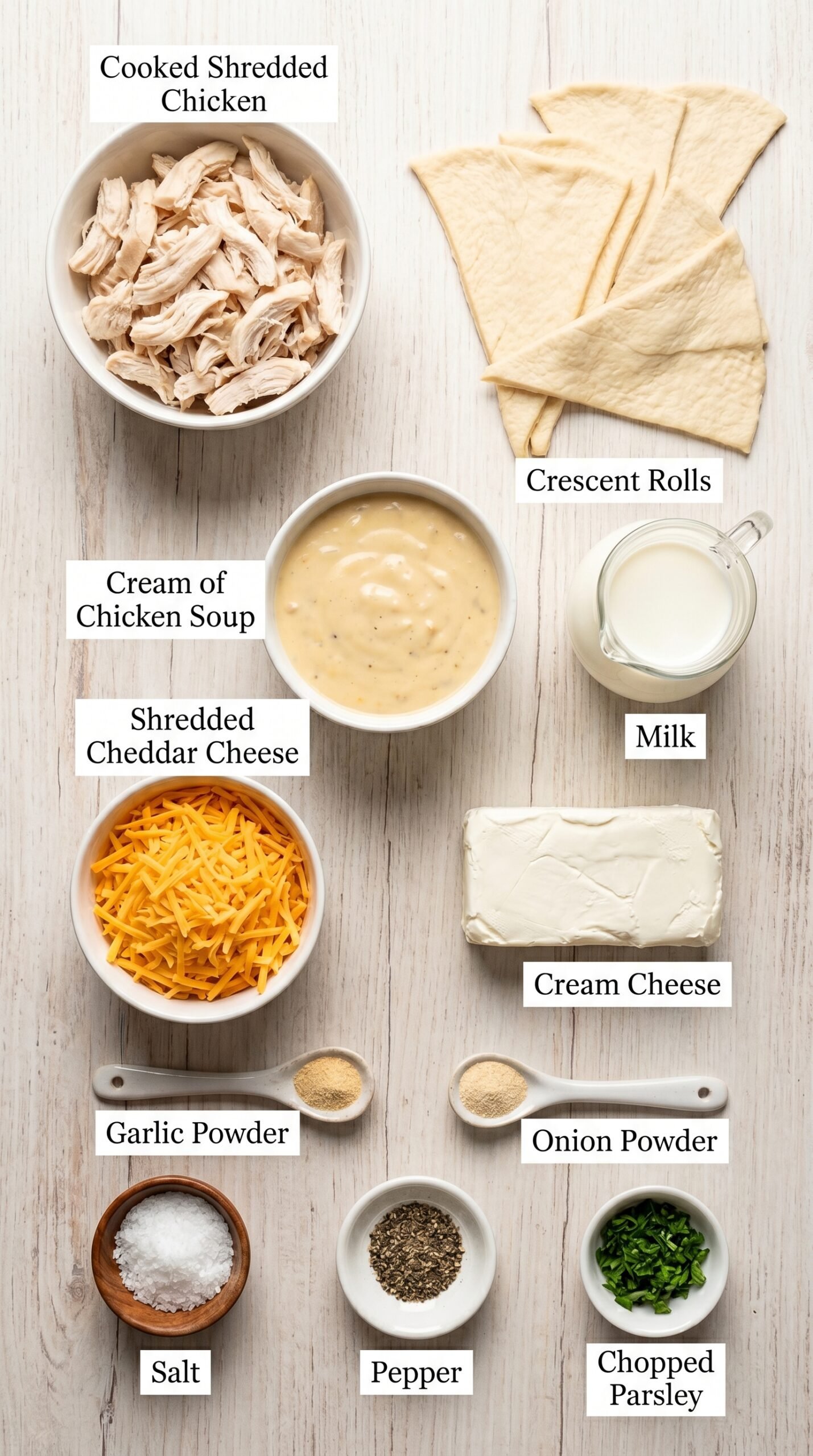
Cooked shredded chicken: This is the body of the casserole. Use it when it is already cooked and cool enough to handle. Finely shredded chicken rolls more neatly than large chunks, and dry chicken benefits from the cream cheese mixture because it adds moisture and richness.
Refrigerated crescent rolls: Crescent dough creates the soft, golden wrapping around the filling. Keep it chilled until you are ready to assemble; warm dough becomes sticky, stretches too easily, and can tear before it reaches the baking dish.
Cream of chicken soup: This forms the casserole sauce. Use it after the stuffed rolls are arranged, not inside the dough, so the rolls bake in a creamy layer instead of becoming too wet from the center outward.
Milk: Milk loosens the soup into a pourable sauce. If you skip it, the topping can sit in thick patches; if you add too much, the casserole may taste diluted and the bottom can soften more than intended.
Shredded cheddar cheese: Cheddar adds a savory, melted finish. It goes over the top before baking so it melts into the sauce and gives the casserole a more complete flavor.
Softened cream cheese: Cream cheese binds the chicken filling and keeps it creamy. It must be softened so it blends smoothly; cold cream cheese leaves lumps that do not season the chicken evenly.
Garlic powder: Garlic powder adds savory depth without adding moisture. It works well here because the filling needs flavor but should not become watery.
Onion powder: Onion powder gives the filling a rounder, more casserole-like flavor. It blends evenly into the cream cheese mixture and avoids the crunch or moisture that fresh onion might bring.
Salt and pepper: These sharpen the chicken filling. Add them thoughtfully because soup and cheddar already contain salt.
Chopped parsley: Parsley is optional, but it adds freshness and color at the end. Add it after baking so it stays bright instead of wilting into the sauce.
- Finely shredded chicken vs chunky chicken: Fine shreds blend into the cream cheese and roll neatly, while large chunks can poke through the dough and make sealing harder.
- Cold crescent dough vs warm dough: Cold dough separates cleanly and holds its shape; warm dough sticks, stretches, and tears more easily.
- Whisked sauce vs unwhisked sauce: A smooth soup-and-milk mixture coats evenly, while unwhisked soup can bake into thick, uneven patches.
- Softened cream cheese vs cold cream cheese: Softened cream cheese coats the chicken; cold cream cheese leaves lumps and uneven flavor.
6) How to Make Chicken Crescent Roll Casserole
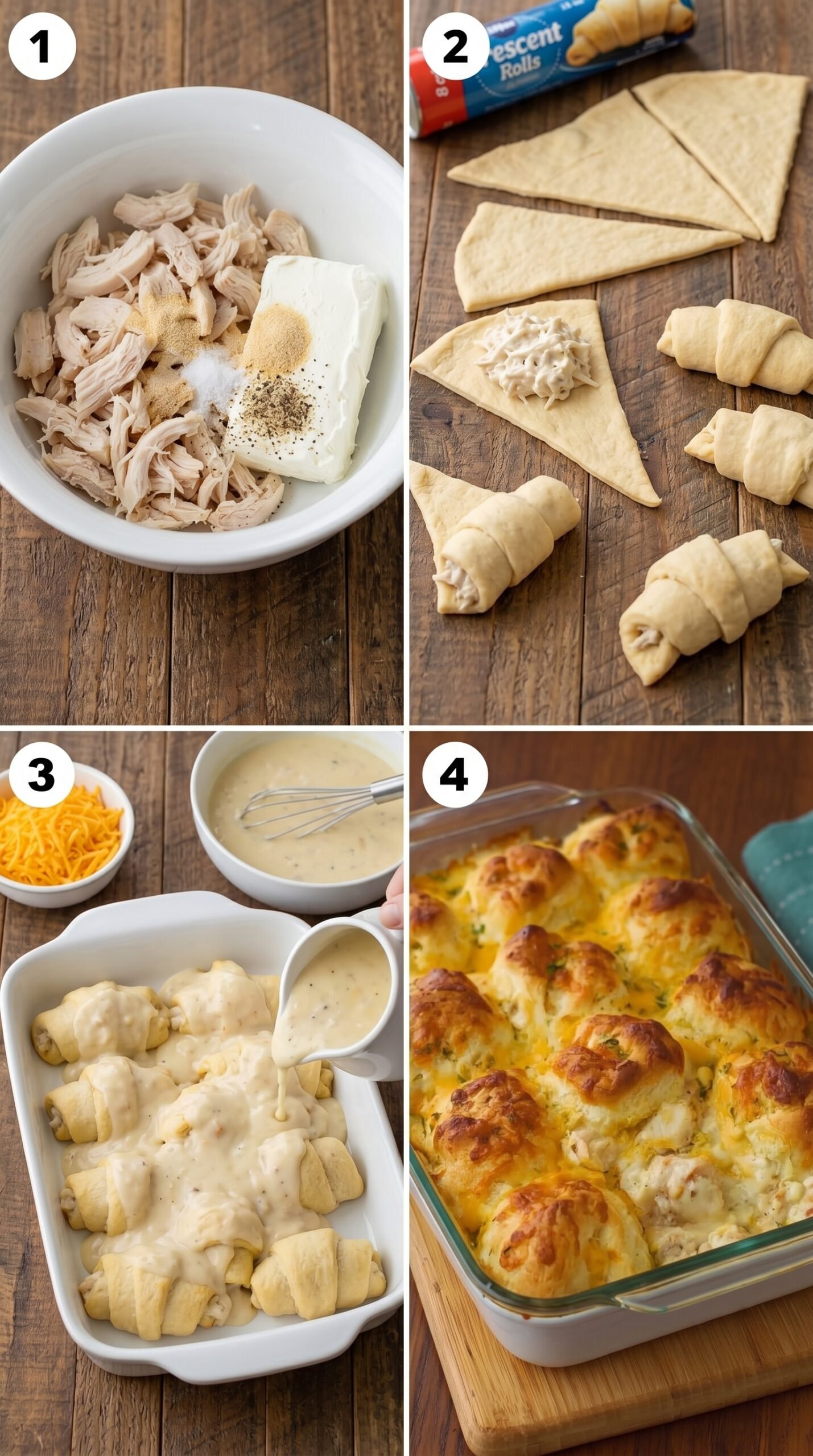
Step 1: Preheat the oven to 375°F and lightly grease a 9×13-inch baking dish. The oven should be fully hot before the casserole goes in, because crescent dough needs immediate heat to puff instead of melting into the sauce.
Step 2: Mix the softened cream cheese with the shredded chicken, garlic powder, onion powder, salt, and pepper until the filling looks creamy and evenly coated. If you see cold white streaks of cream cheese, keep stirring before filling the dough.
Step 3: Unroll the crescent dough and separate it into triangles. Add about a tablespoon of chicken filling to the wide end of each piece, then roll toward the point and tuck the sides gently. Do not overstuff; the rolls need space to expand.
Step 4: Place the stuffed rolls seam-side down in the prepared dish. Whisk the cream of chicken soup with milk until smooth, then pour it evenly over the rolls. Even coverage helps the casserole bake creamy without drowning one side.
Step 5: Sprinkle cheddar over the top and bake uncovered for 25 to 30 minutes. Look for golden crescent tops, melted cheese, and bubbling sauce around the edges. Let it cool slightly before serving so the sauce settles and the rolls hold together better.
7) Recipe Card: Chicken Crescent Roll Casserole
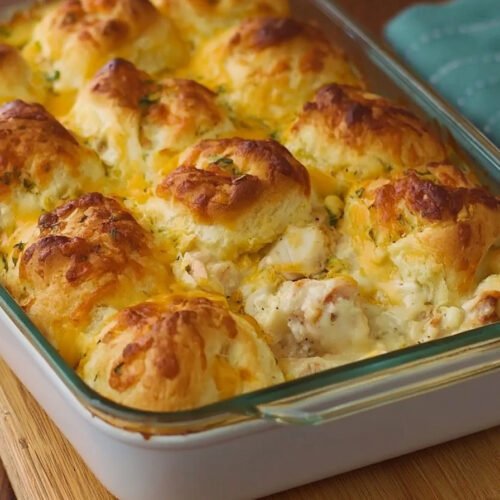
Chicken Crescent Roll Casserole with Creamy Cheddar Filling
Ingredients
- 2 cups cooked shredded chicken, finely shredded so it rolls neatly inside the dough
- 1 (8 oz) package refrigerated crescent rolls, kept chilled until ready to fill
- 1 (10.5 oz) can cream of chicken soup, whisked smooth for the sauce
- 1/2 cup milk, used to loosen the soup into a pourable topping
- 1 cup shredded cheddar cheese, divided evenly over the casserole for a melted finish
- 4 oz cream cheese, softened so it blends smoothly into the chicken
- 1/2 tsp garlic powder, for savory depth without adding extra moisture
- 1/2 tsp onion powder, to round out the creamy chicken filling
- Salt and pepper to taste, added carefully because the soup and cheese are already seasoned
- Chopped parsley, optional, for a fresh garnish after baking
Instructions
- Preheat the oven to 375°F (190°C). Lightly grease a 9×13-inch baking dish with cooking spray or butter, covering the corners so the sauce does not stick as it bubbles.
- In a medium bowl, stir together the softened cream cheese, shredded chicken, garlic powder, onion powder, salt, and pepper until the chicken is evenly coated and the mixture looks creamy. Avoid large cold chunks of cream cheese, which can melt unevenly inside the rolls.
- Unroll the crescent dough and separate it into triangles. Place about 1 tablespoon of the chicken mixture on the wide end of each triangle, then roll toward the point, tucking the sides slightly so the filling stays inside during baking.
- Arrange the stuffed crescent rolls seam-side down in the prepared baking dish. In a separate bowl, whisk the cream of chicken soup and milk until completely smooth, then pour it evenly over the rolls so every piece gets some sauce without being drowned.
- Sprinkle the shredded cheddar cheese evenly over the top. Bake uncovered for 25 to 30 minutes, or until the crescent tops are golden, the cheese is melted, and the sauce is bubbling around the edges.
- Let the casserole rest for 5 minutes before serving so the creamy sauce settles slightly. Garnish with chopped parsley if using, then serve while the rolls are tender, cheesy, and warm.
8) Tips for Making Chicken Crescent Roll Casserole
Use chicken that is moist but not dripping wet. If your cooked chicken has been stored with broth or pan juices, drain it well before mixing. Too much extra liquid loosens the filling and can make the crescent seams open during baking.
Soften the cream cheese before mixing, but do not melt it. Melted cream cheese can turn slick and thin, while properly softened cream cheese clings to the chicken and gives the filling a creamy, scoopable texture.
Keep the crescent roll package refrigerated until the filling is ready. This is one of the quiet little steps that changes the final result. Cold dough feels firmer, rolls cleaner, and holds the filling better.
When pouring the soup mixture, move slowly across the dish instead of dumping it in the center. Crescent roll dinner recipes often fail when sauce pools in one place, leaving one side soggy and the other side dry.
Resting matters. Five minutes on the counter gives the sauce a chance to thicken slightly around the rolls. Serve too soon and the creamy layer may run; wait too long and the crescent tops lose some of their fresh-baked tenderness.
9) Common Mistakes & Fixes
Problem: The crescent rolls split open. Cause: The dough was overfilled, too warm, or not tucked at the sides. Fix: Use about a tablespoon of filling per triangle, roll gently, and place each roll seam-side down.
Problem: The casserole tastes too salty. Cause: Cream of chicken soup, cheddar, and rotisserie chicken can all bring sodium. Fix: Season the filling lightly first, then adjust only if the chicken tastes flat.
Problem: The sauce is clumpy. Cause: The soup and milk were not whisked until smooth. Fix: Whisk in a separate bowl before pouring, scraping the sides so no thick soup pockets remain.
Problem: The bottom feels too soft. Cause: Too much sauce may have pooled underneath the rolls, or the casserole was covered during baking. Fix: Pour evenly, bake uncovered, and let the rolls brown before removing the dish from the oven.
Problem: The filling tastes bland. Cause: Cooked chicken needs enough seasoning to stand up to the dough and sauce. Fix: Mix the garlic powder, onion powder, salt, and pepper thoroughly into the cream cheese before rolling.
10) How to Tell Chicken Crescent Roll Casserole Is Done
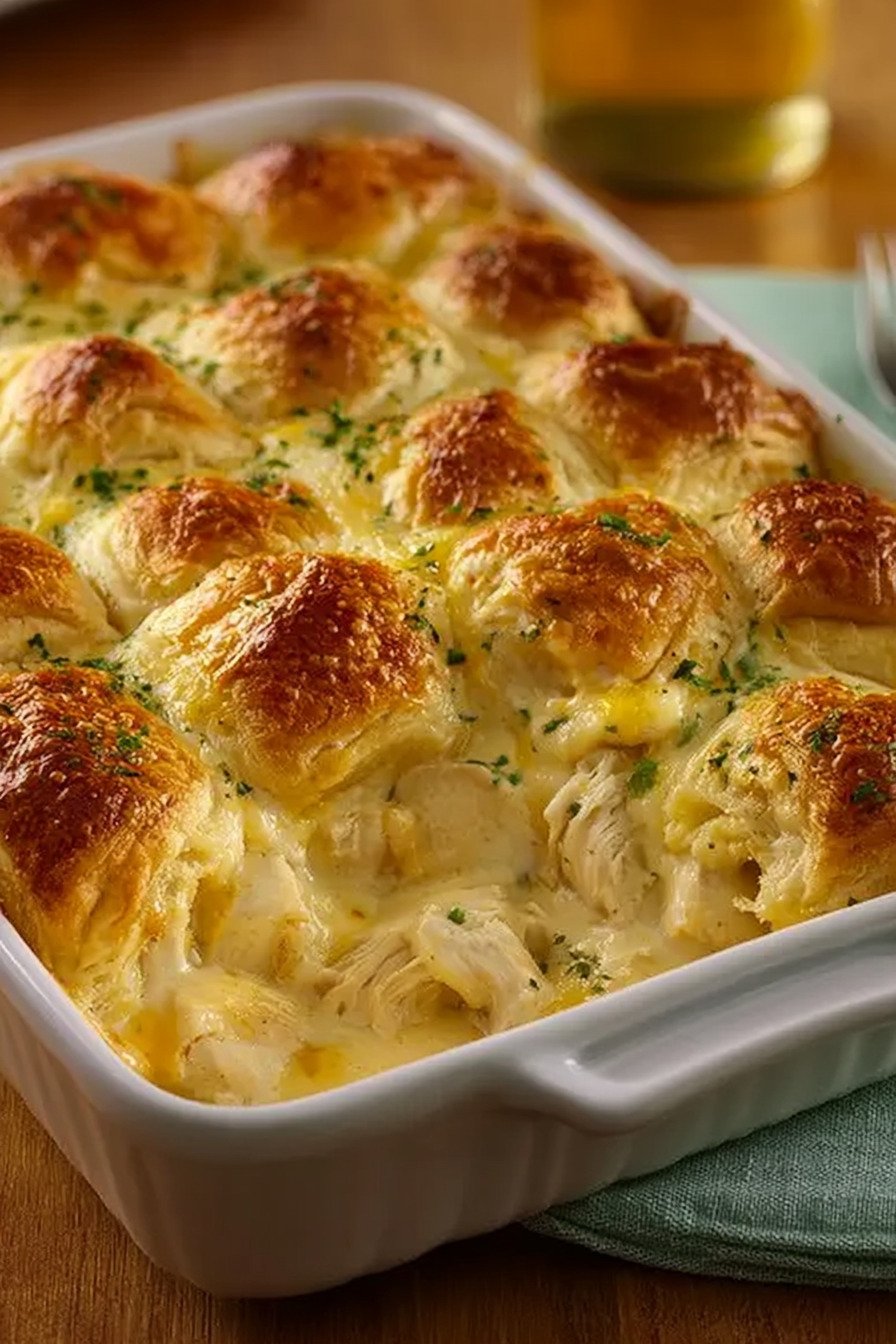
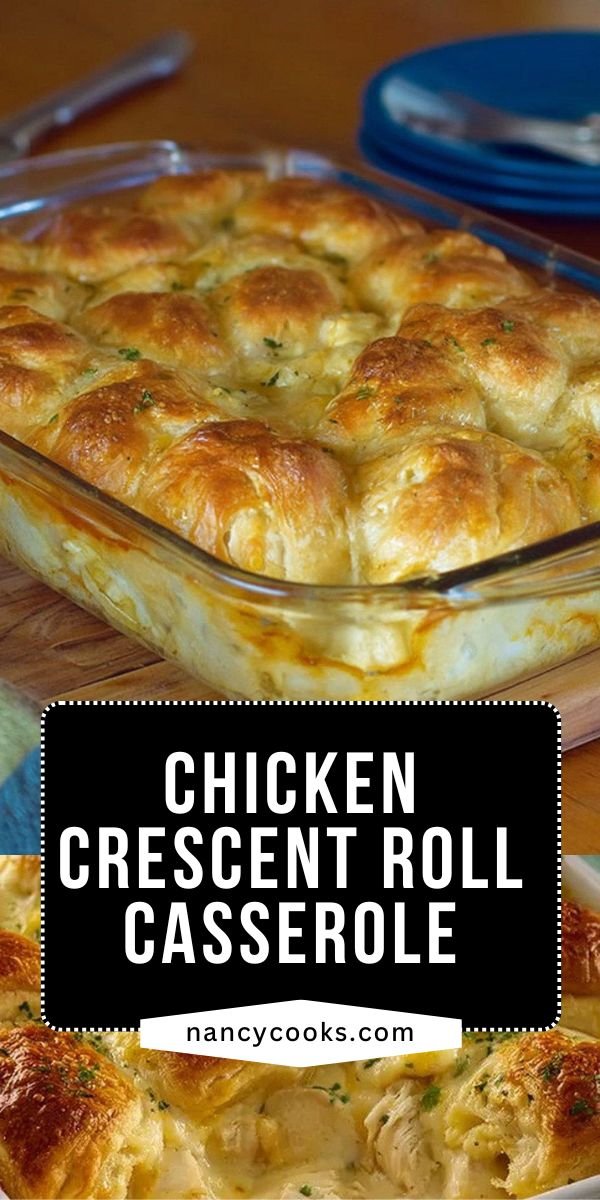
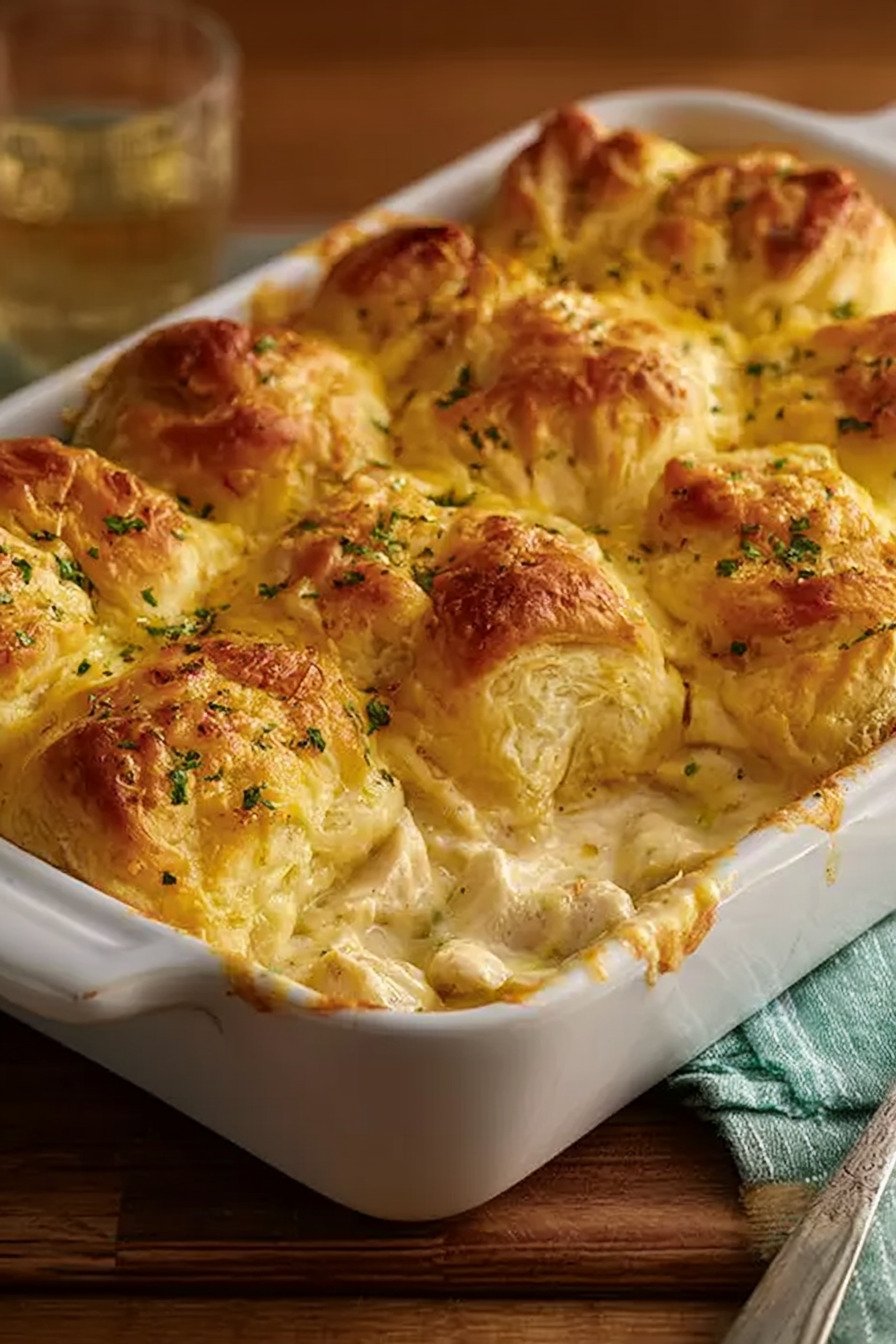
Chicken crescent roll casserole is done when the crescent tops are visibly golden, the cheddar is fully melted, and the sauce bubbles gently around the edges of the baking dish. The rolls should look puffed rather than flat, and the exposed dough should not appear wet or pale.
The texture should be creamy underneath and tender on top. When you lift a serving, the sauce should cling lightly to the rolls instead of running like soup. The filling should be hot all the way through, with no cold cream cheese pockets in the center.
The aroma should be savory and warm, with cheddar, chicken, garlic, and onion coming through. Failure signs include gummy dough, watery pooling, filling spilling heavily into the pan, or cheese that has browned before the crescent dough has fully baked.
11) Professional Secrets Behind Better Chicken Crescent Roll Casserole
The first professional habit is controlling moisture before the casserole ever reaches the oven. Cooked chicken should be shredded, not chopped into large cubes, because shredded chicken absorbs the cream cheese mixture more evenly. That gives each bite the same creamy texture.
The second secret is using the sauce as a blanket, not a flood. In recipes using crescent roll dough, too much liquid directly on top can weigh down the dough. A smooth, moderate layer of sauce helps keep the casserole creamy while still allowing the tops to brown.
The third secret is watching the edges. The bubbling edges tell you the sauce is hot, while the golden tops tell you the dough has baked through. If the top browns too quickly, the oven may be running hot; if the sauce bubbles but the dough stays pale, the dish may need a few more minutes uncovered.
12) Best Dishes or Pairings to Serve With Chicken Crescent Roll Casserole
Because chicken crescent roll casserole is creamy, cheesy, and rich, it pairs best with sides that bring freshness or crunch. A crisp green salad with a bright vinaigrette cuts through the sauce and keeps the plate from feeling heavy.
Roasted broccoli, green beans, peas, or carrots also work well because their gentle sweetness balances the savory filling. If you want a more classic comfort-food plate, serve it with steamed vegetables and a simple fruit salad.
For a fuller dinner, add a light soup before the casserole, such as vegetable soup or tomato soup. Avoid pairing it with too many creamy sides, since the casserole already brings cream cheese, cheddar, and a soup-based sauce.

13) Making Chicken Crescent Roll Casserole Ahead of Time
The best make-ahead strategy is to prepare the chicken filling in advance, then assemble the rolls close to baking time. The filling can be mixed, covered, and refrigerated for up to one day. Let it sit at room temperature for a few minutes before filling the dough so it spreads more easily.
Avoid rolling the crescent dough too far ahead if possible. Refrigerated dough can soften and absorb moisture from the filling, which makes the finished rolls less flaky. If you must assemble ahead, keep the dish tightly covered and bake it the same day.
For the cleanest result, whisk the soup and milk right before pouring, then add the cheddar just before baking. That keeps the top layer fresh and helps the casserole bake with better texture.
14) Storing Leftover Chicken Crescent Roll Casserole
Cool leftovers before storing, then cover the dish or transfer portions to an airtight container. Refrigerate for up to 3 days. The crescent rolls will soften as they sit, but the flavor stays rich and comforting.
For reheating, the oven gives better texture than the microwave. Warm leftovers at 325°F until heated through. A microwave works for speed, but it softens the dough more and can make the sauce heat unevenly.
Freezing is possible, but the texture of crescent dough and cream sauce may change after thawing. If you freeze it, wrap portions tightly and reheat gently. For best quality, this casserole is strongest when baked fresh or refrigerated for short-term leftovers.
15) FAQ (Real Cooking Questions)
Can I use rotisserie chicken? Yes. Rotisserie chicken works well in chicken and crescent rolls because it is already cooked and flavorful. Remove the skin if it feels too oily, shred the meat finely, and taste before adding much salt.
Can I use homemade cooked chicken? Yes. Poached, baked, or leftover chicken can all work. The key is moisture balance: the chicken should not be dry and stringy, but it should also not be dripping with broth.
Why did my crescent rolls stay doughy? The oven may not have been fully preheated, the rolls may have been covered, or too much sauce may have pooled over the dough. Bake uncovered and look for golden tops before pulling the casserole out.
Can I add vegetables? You can add small amounts of cooked, well-drained vegetables to the filling, but keep them optional. Wet vegetables can loosen the cream cheese mixture and make the rolls harder to seal.
Are chicken and crescent roll recipes good for meal prep? They can be, especially if you prep the filling ahead. For best texture, assemble and bake close to serving time rather than storing unbaked stuffed dough overnight.
16) Save This Chicken Crescent Roll Casserole Recipe
If this chicken crescent roll casserole helped you solve leaky rolls, uneven sauce, or dry chicken filling, save it for a cozy family dinner. The key reminder is: keep the dough cold, the filling creamy, and the sauce smooth before baking.
17) Conclusion
Chicken crescent roll casserole is simple, but it rewards attention to small details. Softened cream cheese keeps the chicken filling smooth, chilled crescent dough rolls cleanly, and a well-whisked sauce gives the casserole its creamy finish without turning it soggy. Once you understand those checkpoints, the recipe stops feeling like a gamble and starts feeling dependable. That is the real comfort here: golden rolls, savory chicken, melted cheddar, and the confidence that dinner will come out warm, creamy, and ready to serve.
18) Nutrition
Serving Size 1 portion Calories 395 Sugar 4 g Sodium 785 mg Fat 25 g Saturated Fat 11 g Carbohydrates 24 g Fiber 1 g Protein 19 g Cholesterol 72 mg




Leave a Comment