
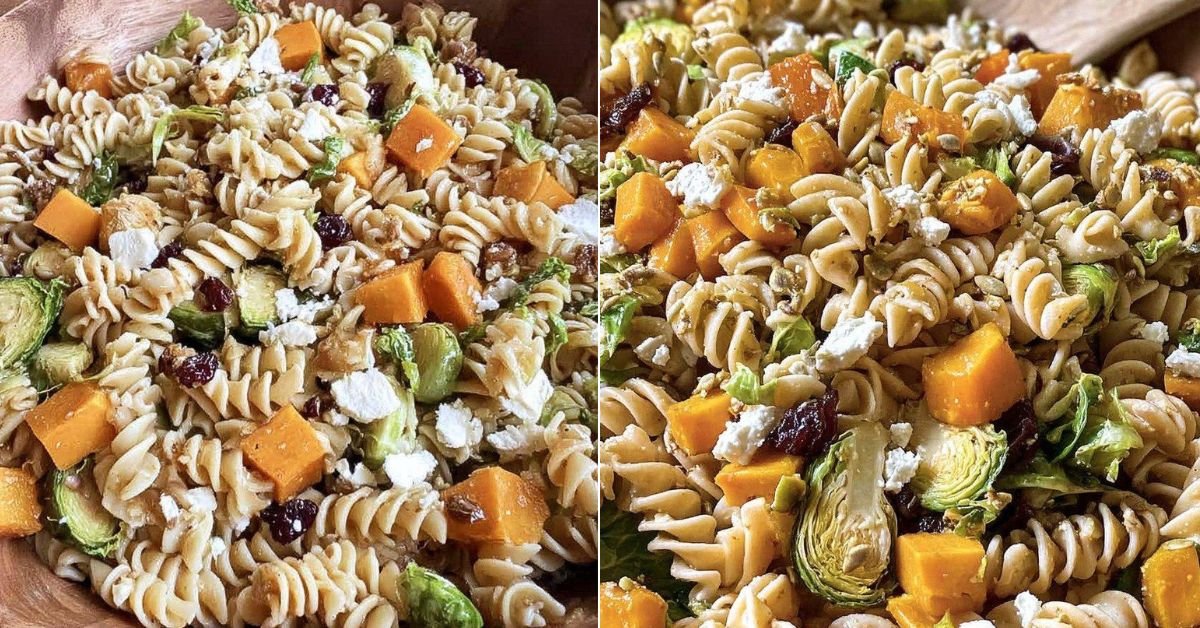
1) What I Learned Testing Fall Pasta Salad
Cold pasta salads can turn dull fast when the pasta gets soft, the dressing sinks, or roasted vegetables make everything heavy. I’m Nancy, and my first try at this fall pasta salad tasted cozy but looked muddy and felt too rich. After testing the roasting time, cooling the pasta, and adding the apples later, I discovered the balance: tender squash, browned Brussels sprouts, crisp-sweet apple, creamy goat cheese, and a maple Dijon dressing that keeps the bowl bright. It reminds me of calm holiday prep, especially when I need a fall harvest pasta salad that feels fresh enough for Thanksgiving.
Table of Contents
- 1) What I Learned Testing Fall Pasta Salad
- 2) Key Takeaways
- 3) Easy Fall Pasta Salad with Butternut Squash and Brussels Recipe
- 4) Why Most Fall Pasta Salad with Butternut Squash and Brussels Recipes Fail
- 5) Ingredients for Fall Pasta Salad with Butternut Squash and Brussels
- 6) How to Make Fall Pasta Salad with Butternut Squash and Brussels
- 7) Recipe Card: Fall Pasta Salad with Butternut Squash and Brussels
- 8) Tips for Making Fall Pasta Salad with Butternut Squash and Brussels
- 9) Common Mistakes & Fixes
- 10) How to Tell Fall Pasta Salad with Butternut Squash and Brussels Has the Right Texture
- 11) Professional Secrets Behind Better Fall Pasta Salad with Butternut Squash and Brussels
- 12) Best Dishes or Pairings to Serve With Fall Pasta Salad with Butternut Squash and Brussels
- 13) Making Fall Pasta Salad with Butternut Squash and Brussels Ahead of Time
- 14) Storing Leftover Fall Pasta Salad with Butternut Squash and Brussels
- 15) FAQ (Real Cooking Questions)
- 16) Save This Fall Pasta Salad with Butternut Squash and Brussels Recipe
- 17) Conclusion
- 18) Nutrition
2) Key Takeaways
- Cook the pasta just to al dente so the salad stays springy after dressing instead of becoming soft or swollen.
- Roast the butternut squash and Brussels sprouts before adding the apples, because apples need less time and can collapse if roasted too long.
- Let the pasta and roasted vegetables cool before adding goat cheese so the cheese stays creamy in small pockets instead of melting into a paste.
- Whisk the maple Dijon vinaigrette until glossy so the oil, vinegar, mustard, and maple syrup coat the salad evenly.
3) Easy Fall Pasta Salad with Butternut Squash and Brussels Recipe
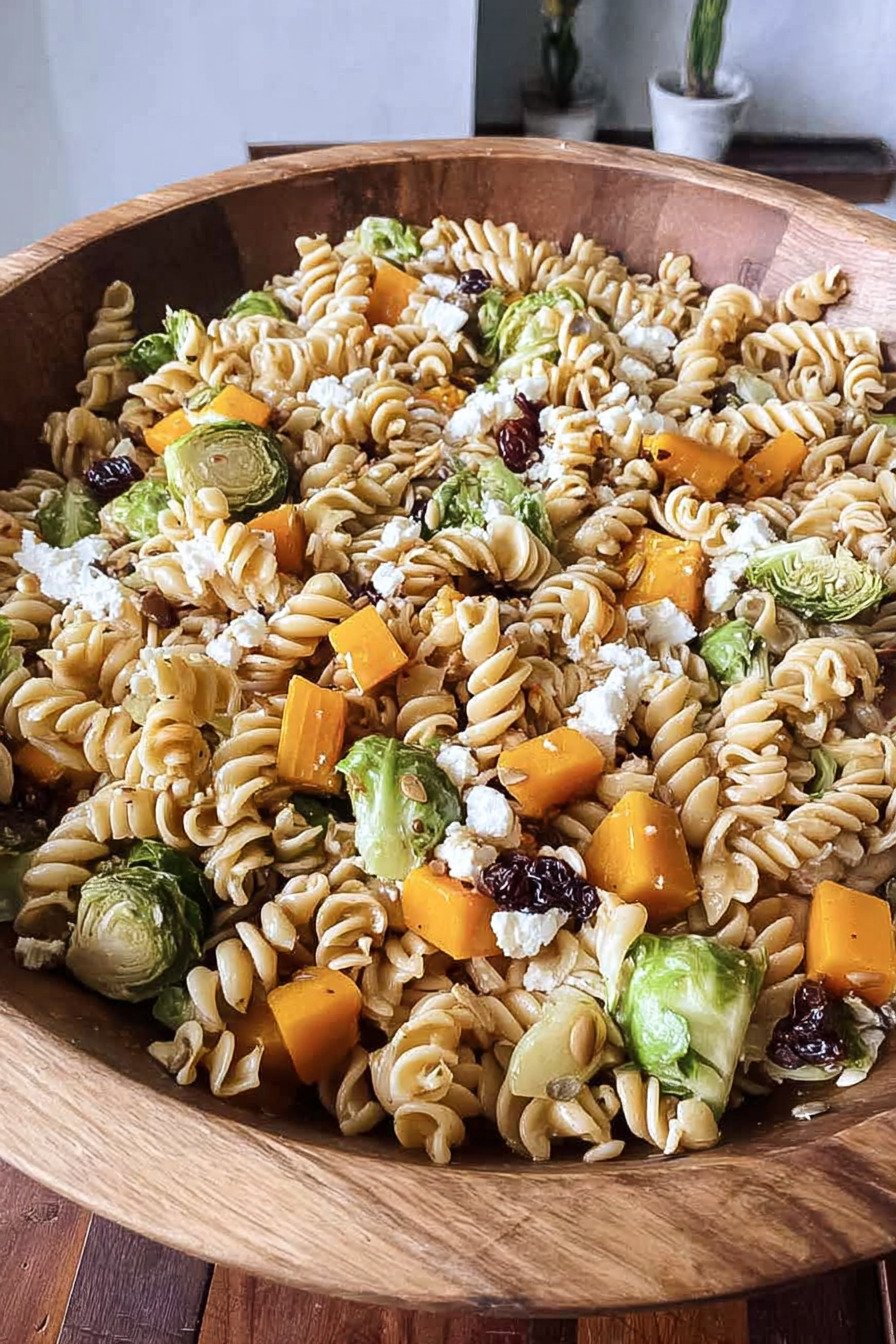
This fall pasta salad works because it treats each texture separately before everything meets in the bowl. The pasta is cooked firm, the vegetables are roasted until tender and lightly caramelized, the apples are added later for controlled softness, and the dressing is emulsified before tossing. That order matters. If the hot pasta, warm vegetables, and goat cheese are mixed too soon, the salad loses definition. When the ingredients are cooled and tossed gently, every forkful has pasta, sweet squash, savory Brussels sprouts, apple, tangy cheese, and a balanced maple balsamic finish.
4) Why Most Fall Pasta Salad with Butternut Squash and Brussels Recipes Fail
Most fall pasta salad problems come from timing, moisture, and temperature. Overcooked pasta absorbs dressing too quickly and turns heavy, so stopping the pasta while it still has bite protects the final texture. Roasted vegetables can make the salad feel wet if they are crowded on the pan or tossed while steaming, so they need enough room to brown and a short cooling period before assembly. Apples can become mushy if roasted from the beginning, which is why adding them after the squash and Brussels sprouts have had a head start keeps them tender but still recognizable.
Dressing balance is another common issue. If the vinaigrette is poured together without enough whisking, the oil can slick the pasta while the vinegar stays sharp at the bottom of the bowl. Dijon mustard helps the dressing emulsify, but it needs a full minute of whisking to look smooth and glossy. Goat cheese can also disappear into the salad if the pasta is warm. Cooling the base first keeps the cheese creamy, the cranberries chewy, and the salad bright enough to serve as a fall pasta salad side dish instead of a dense pasta bowl.
5) Ingredients for Fall Pasta Salad with Butternut Squash and Brussels
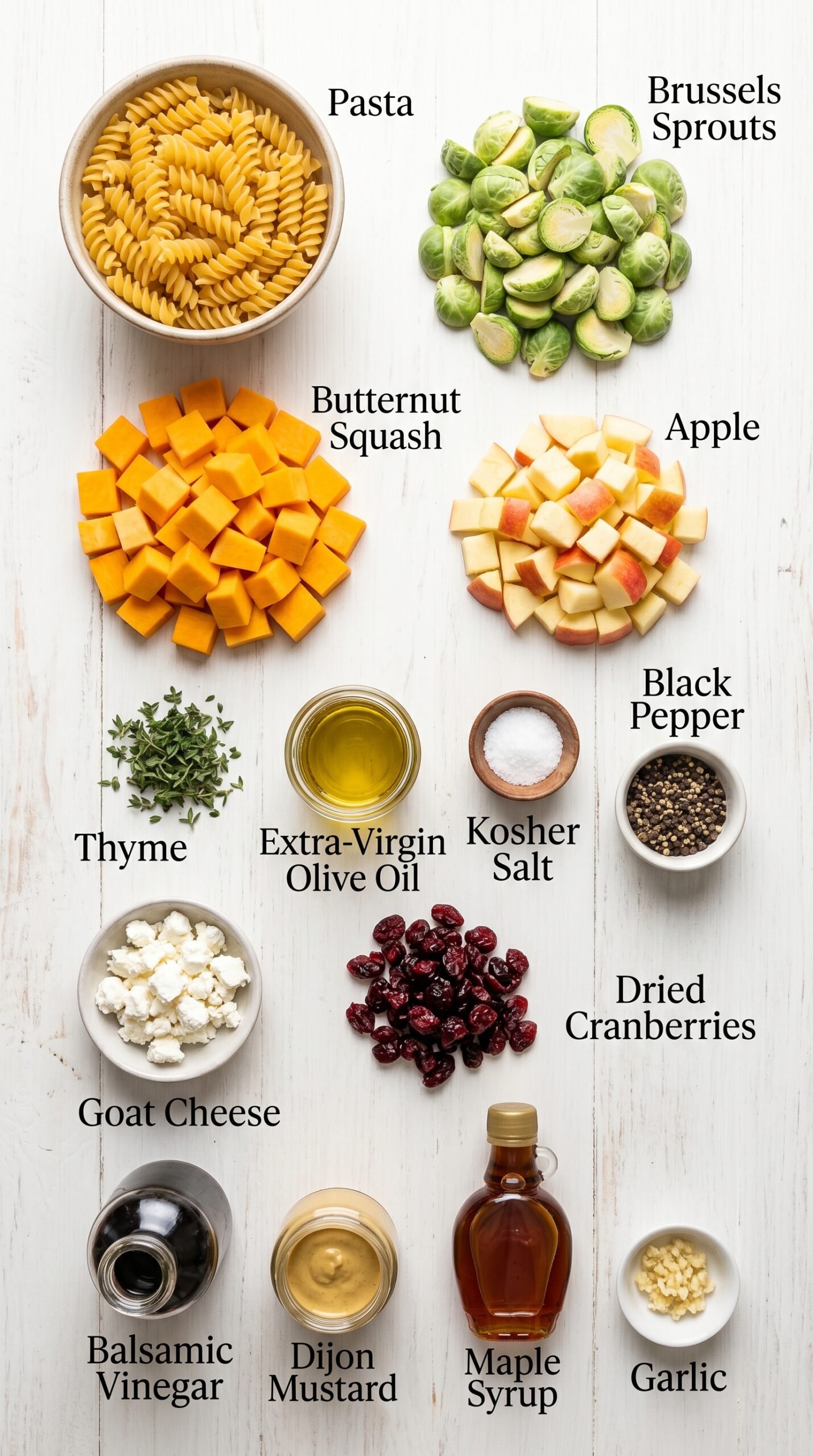
Dry pasta: Rotini works well because the spirals catch the maple Dijon vinaigrette and small pieces of roasted vegetables. Use it when you want a sturdy salad texture. If you choose another shape, pick one with ridges or curves rather than a smooth noodle that lets dressing slide off.
Brussels sprouts: Diced Brussels sprouts add savory depth and a lightly browned edge after roasting. Use evenly cut pieces so the leaves crisp slightly without burning. If the pieces are too large, they may stay tough in the center while the outer leaves darken.
Butternut squash: Squash brings the sweet, soft, golden element that makes this feel like a fall harvest pasta salad. Dice it evenly so it becomes fork-tender during roasting. Larger chunks need more time and can make the pasta salad hard to toss neatly.
Apple: Honeycrisp-style apples add juicy sweetness and a little acidity. They are added after the vegetables roast for a while because apples soften faster than squash. If added too early, they can collapse and release extra moisture into the salad.
Fresh thyme: Thyme gives the roasted vegetables a woodsy aroma that fits the maple and balsamic dressing. Add it before roasting so the flavor blooms in the olive oil. Dried thyme works, but use less because it is more concentrated.
Extra-virgin olive oil: Olive oil helps the vegetables roast instead of dry out, and it forms the body of the vinaigrette. Use it in the roasting step for browning and in the dressing for a smooth coating. A very bitter oil can make the dressing taste sharp, so choose one you enjoy raw.
Kosher salt and black pepper: Salt brings out the sweetness in the squash, apple, and maple syrup while pepper keeps the salad from tasting flat. Season both the roasted vegetables and the dressing. If using a salty feta instead of goat cheese, taste before adding extra salt at the end.
Goat cheese: Goat cheese adds creamy tang without needing a heavy sauce. Add it after the pasta and vegetables have cooled so it stays in soft pieces. Feta gives a firmer, saltier result, which can be useful if you want sharper contrast.
Dried cranberries: Cranberries are optional, but they add chewy texture, color, and tart sweetness. Use them when serving this as a thanksgiving pasta salad or for fall party side dishes where a brighter look helps the bowl stand out.
Balsamic vinegar, Dijon mustard, maple syrup, and garlic: These build the vinaigrette. Balsamic gives acidity, Dijon helps the dressing hold together, maple syrup rounds the sharpness, and minced garlic adds savory depth. Whisking well prevents a separated dressing from making the salad oily in spots and too acidic in others.
- Rotini vs smooth pasta: Rotini holds dressing and small roasted pieces better, while smooth pasta can taste under-seasoned because the vinaigrette slips away.
- Warm ingredients vs cooled ingredients: Warm pasta melts goat cheese and absorbs dressing too quickly; cooled pasta keeps the salad clean, bright, and defined.
- Roasted apples vs raw apples: Briefly roasted apples taste softer and more autumnal, while raw apples stay crunchier but can feel separate from the roasted vegetables.
- Goat cheese vs feta: Goat cheese gives creamy tang, while feta gives a saltier, firmer bite. Both work, but they change the final balance.
6) How to Make Fall Pasta Salad with Butternut Squash and Brussels
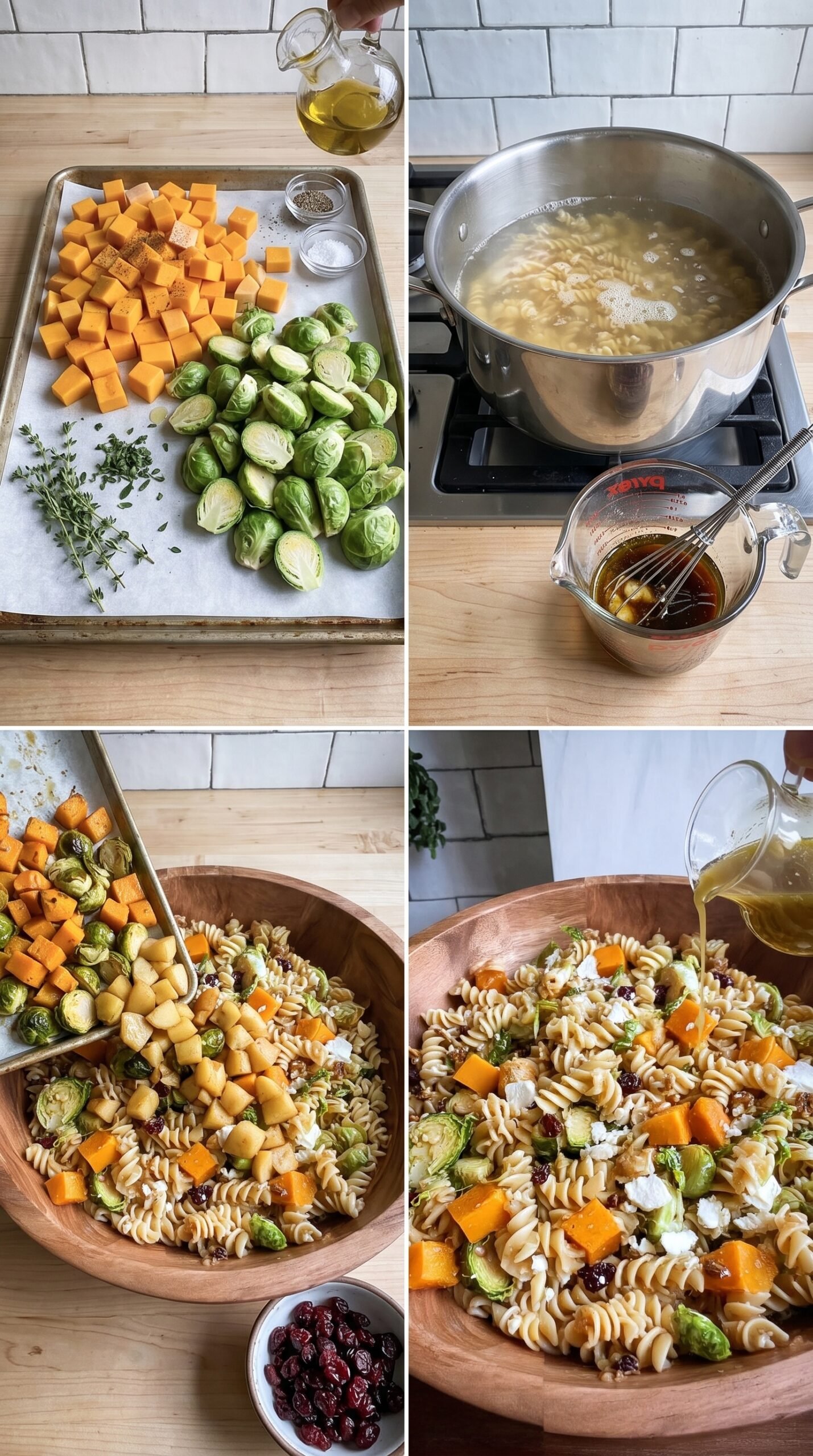
Step 1: Heat the oven to 400°F and line a baking sheet with greased parchment. Dice the butternut squash, Brussels sprouts, and apple into pieces that are easy to eat in one bite. Even cutting is the first texture control step.
Step 2: Roast the butternut squash and Brussels sprouts with olive oil, thyme, salt, and pepper. Give them about 20 minutes before adding the apples. The squash should begin softening, and the Brussels sprouts should smell nutty, not bitter or scorched.
Step 3: Add the apples to the sheet pan and roast until everything is fork-tender. The apples should soften around the edges but still hold their shape. If liquid gathers on the pan, let the mixture cool a few minutes before adding it to the pasta.
Step 4: Cook the pasta in salted boiling water while the vegetables roast. For the best salad texture, drain it when it is al dente or slightly firmer than usual. Toss it with a small drizzle of olive oil or a spoonful of reserved pasta water, then let it cool.
Step 5: Whisk the maple Dijon vinaigrette until smooth and glossy. Combine the cooled pasta, roasted vegetables, goat cheese, and optional cranberries in a large bowl, then pour over the dressing and toss gently. Stop once everything is coated so the squash and cheese do not break down too much.
7) Recipe Card: Fall Pasta Salad with Butternut Squash and Brussels
Fall Pasta Salad with Butternut Squash and Brussels
Ingredients
For the Salad
- 8 oz pasta, dry, such as rotini, cooked until just al dente so it holds its shape in the salad
- 2 cups brussels sprouts, diced small enough to roast evenly and mix through the pasta
- 2 cups butternut squash, diced into similar-size pieces for even tenderness
- 2 cups apple, diced, such as Honeycrisp, added later so it softens slightly without turning mushy
- 1 tablespoon fresh thyme, chopped, or 1 teaspoon dried thyme for an earthy fall aroma
- 2 tablespoon extra-virgin olive oil, used to coat the vegetables before roasting
- 1 teaspoon kosher salt, divided through the roasted vegetables for balanced seasoning
- ½ teaspoon black pepper, freshly cracked if possible for better flavor
- 4 oz goat cheese, more for topping, or feta cheese for a saltier finish
- ¼ cup dried cranberries, optional, for chewy sweetness and color contrast
For Maple Dijon Vinaigrette Dressing
- ⅓ cup extra-virgin olive oil, the base that helps the dressing coat the pasta
- ¼ cup balsamic vinegar, for acidity and deep sweetness
- 1 tablespoon dijon mustard, to help emulsify the dressing and add sharpness
- 1 tablespoon maple syrup, for gentle sweetness that balances the vinegar
- 1 clove garlic, minced finely so it blends smoothly into the vinaigrette
- ½ teaspoon kosher salt, to season the dressing before tossing
- ¼ teaspoon black pepper, for a mild peppery finish
Instructions
- Preheat the oven to 400°F (200°C). Line a baking sheet with greased parchment paper for easier cleanup, then dice the butternut squash, Brussels sprouts, and apple into even pieces so they cook at a similar pace.
- Add the butternut squash and Brussels sprouts to the prepared sheet pan. Coat them with the extra-virgin olive oil, fresh thyme, kosher salt, and black pepper, then roast for 20 minutes. Scoot the vegetables to one side, add the diced apples, and roast for another 10 to 15 minutes, or until the squash is fork-tender, the Brussels sprouts have browned edges, and the apples are softened but not falling apart.
- While the vegetables roast, cook the pasta in a large pot according to the package directions. Salt the boiling water before adding the pasta. For a firmer salad texture, cook the pasta 1 to 2 minutes less than the box suggests, then drain it right away, saving about 1 tablespoon of pasta water. Toss the drained pasta with a small drizzle of olive oil or the reserved pasta water and let it cool so it does not melt the goat cheese.
- While the pasta cooks, make the maple Dijon vinaigrette by combining the olive oil, balsamic vinegar, Dijon mustard, maple syrup, minced garlic, kosher salt, and black pepper in a small bowl or measuring cup. Whisk for about 1 minute, until the dressing looks glossy and well-emulsified instead of separated.
- When the roasted vegetables are finished, let them cool slightly. Add the cooled pasta, roasted vegetables and apples, goat cheese, and optional dried cranberries to a large bowl. Pour the dressing over the salad and toss gently until every piece is coated without breaking up the squash or smearing the cheese too much.
- For make-ahead serving, wait to add the goat cheese and dressing until shortly before serving. For a Thanksgiving pasta salad look, use colorful pasta to add more visual contrast to the roasted squash, Brussels sprouts, apples, and cranberries.
8) Tips for Making Fall Pasta Salad with Butternut Squash and Brussels
The biggest improvement comes from cooling. Pasta salad is not just cooked pasta with dressing; it needs time for steam to leave the pasta and vegetables before creamy ingredients are added. Spread the drained pasta slightly in the bowl instead of leaving it in a tight mound, because trapped heat can keep softening it. When roasting the vegetables, avoid overcrowding the pan. Crowding traps moisture, and moisture prevents the browned edges that make the Brussels sprouts taste savory instead of cabbage-like.
For a gluten free fall pasta salad, choose a sturdy gluten-free rotini or penne and start checking it early. Gluten-free pasta can move from firm to fragile quickly, and broken pasta makes the salad feel messy. For a vegetarian fall pasta salad with stronger flavor, use feta instead of goat cheese, but reduce added salt slightly. For a more colorful thanksgiving pasta salad, choose tri-color pasta and add the cranberries just before serving so they keep their chewy texture.
9) Common Mistakes & Fixes
Problem: The pasta salad tastes soggy. Cause: The pasta was overcooked or dressed while too warm. Fix: Cook the pasta 1 to 2 minutes less than the package suggests, drain immediately, and cool it before adding the vinaigrette.
Problem: The vegetables taste steamed instead of roasted. Cause: The sheet pan was crowded or the pieces were too wet. Fix: Use a large pan, spread the squash and Brussels sprouts in a single layer, and roast until the edges lightly brown.
Problem: The apples disappear into the salad. Cause: They were roasted too long or diced too small. Fix: Add them after the first roasting stage and remove the pan when they are softened but still shaped.
Problem: The dressing tastes sharp in some bites and oily in others. Cause: The vinaigrette separated before tossing. Fix: Whisk until the dressing looks glossy, then toss right away so the mustard can help it cling to the pasta.
Problem: The goat cheese turns pasty. Cause: The pasta or roasted vegetables were still hot. Fix: Cool the base first and fold gently instead of stirring aggressively.
10) How to Tell Fall Pasta Salad with Butternut Squash and Brussels Has the Right Texture
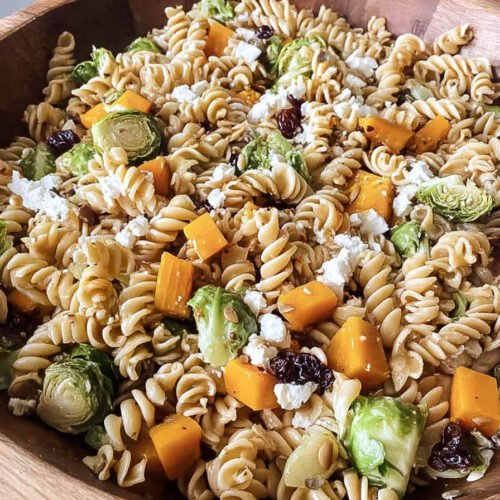
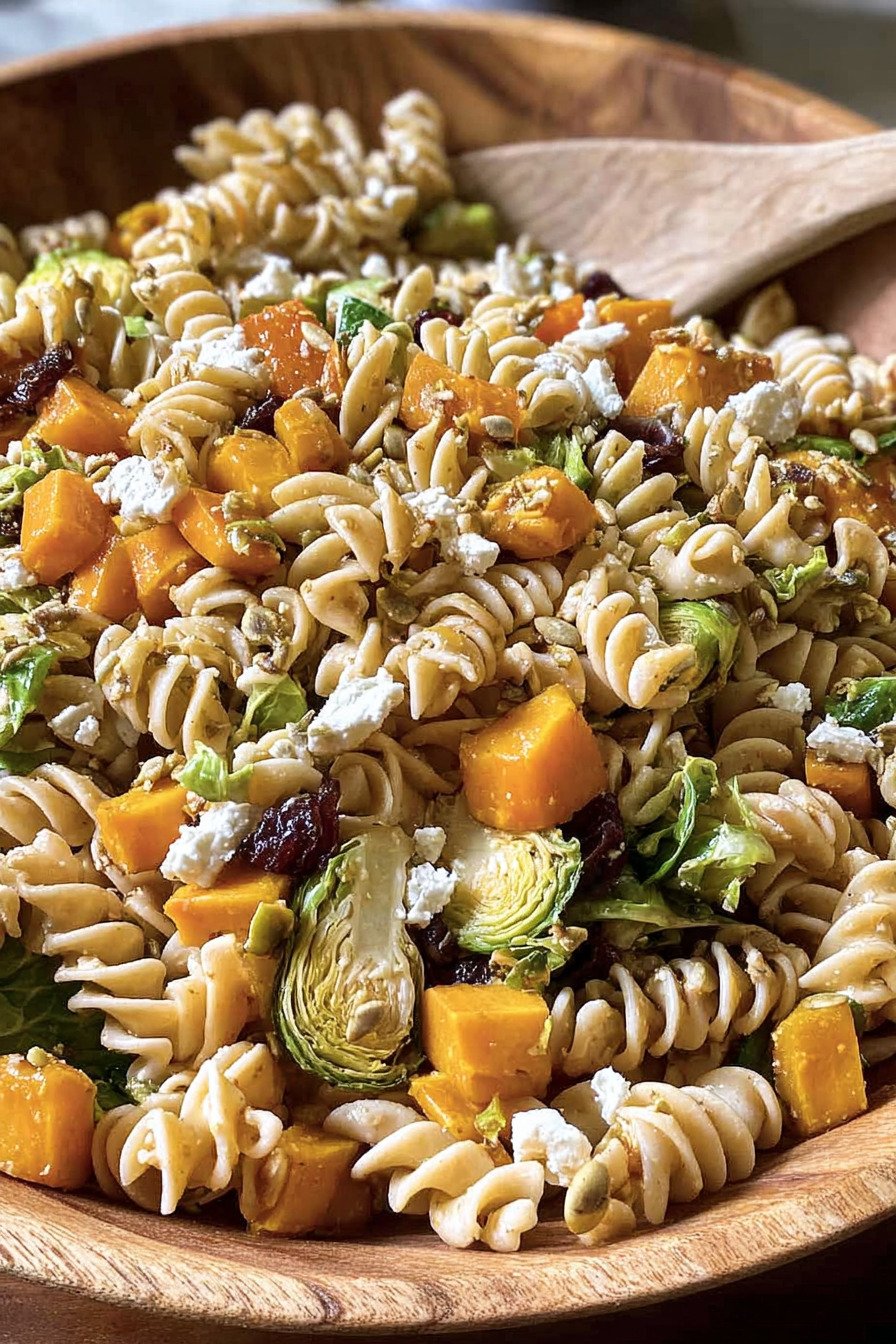
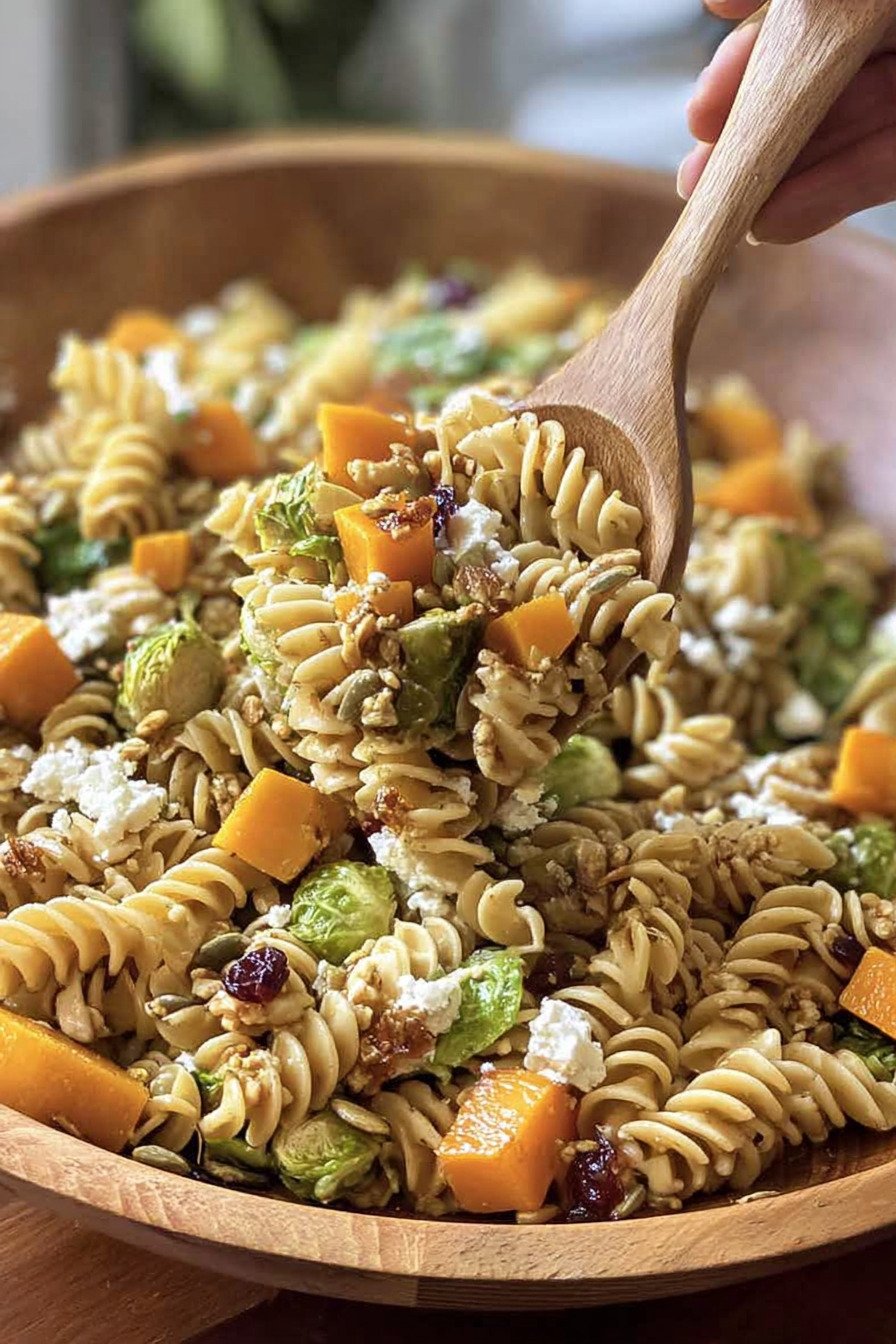
The right fall pasta salad should look colorful and separated, not mashed together. The pasta should be firm enough to hold its shape, the squash should be fork-tender with clean edges, the Brussels sprouts should have some browned bits, and the apples should be soft but not collapsed. The goat cheese should appear in creamy pockets rather than coating the entire bowl. The dressing should lightly shine on the pasta without pooling at the bottom. A good bite tastes sweet, tangy, savory, and fresh, with a gentle thyme aroma and no watery finish.
11) Professional Secrets Behind Better Fall Pasta Salad with Butternut Squash and Brussels
Professional-style pasta salad depends on sequencing. Salt the pasta water so the pasta has flavor before it ever touches the dressing. Roast vegetables hot enough to caramelize their edges, because browned flavor gives the salad depth that raw vegetables cannot provide. Add delicate ingredients later: apples later on the sheet pan, goat cheese after cooling, and dressing close to serving if making it ahead. The final secret is tasting after the cheese is added. Goat cheese and feta both change salt perception, so the salad should be adjusted only after the full bowl is assembled.
12) Best Dishes or Pairings to Serve With Fall Pasta Salad with Butternut Squash and Brussels
This fall pasta salad works well beside roasted turkey, herb chicken, pork tenderloin, baked salmon, lentil soup, or a simple sandwich platter. For a holiday table, serve it near roasted vegetables, green beans, stuffing, or cranberry sauce because the maple Dijon dressing bridges sweet and savory flavors. For lunch, pair it with a cup of soup or add extra goat cheese for a more filling bowl. As fall party side dishes go, this one is useful because it can sit at room temperature for a short serving window without losing its main texture.

13) Making Fall Pasta Salad with Butternut Squash and Brussels Ahead of Time
To make this fall pasta salad ahead, cook the pasta, roast the squash, Brussels sprouts, and apples, and whisk the vinaigrette in advance. Store the pasta and roasted vegetables separately from the dressing and cheese. This protects the pasta from absorbing too much liquid and keeps the goat cheese from smearing. For the cleanest texture, assemble the salad within a few hours of serving. If you need to prepare it the day before, wait to add the dressing, goat cheese, and cranberries until the final toss.
14) Storing Leftover Fall Pasta Salad with Butternut Squash and Brussels
Store leftovers in an airtight container in the refrigerator. The salad is best within 2 to 3 days, although the pasta will continue to absorb dressing as it sits. Before serving leftovers, let the bowl stand at room temperature briefly so the olive oil loosens and the flavors wake up. If the pasta tastes dry, add a small splash of olive oil or balsamic vinegar and toss gently. Freezing is not recommended because pasta, apples, and goat cheese lose their texture after thawing.
15) FAQ (Real Cooking Questions)
Can I make this fall pasta salad gluten-free? Yes. Use a sturdy gluten-free pasta shape and cook it carefully so it stays firm. Rinse only if the brand tends to become sticky, then drain well before tossing.
Can I serve this warm? You can serve it slightly warm, but do not add the goat cheese while the pasta and vegetables are hot. Warm ingredients can melt the cheese and make the salad look cloudy.
Can I use feta instead of goat cheese? Yes. Feta gives a saltier, firmer bite, while goat cheese gives a softer and creamier texture. Taste before adding extra salt if using feta.
Why add the apples after the vegetables have roasted first? Apples soften faster than squash and Brussels sprouts. Adding them later keeps them tender and sweet without turning them mushy.
Is this a good Thanksgiving pasta salad? Yes. It has seasonal color, roasted vegetables, apple, cranberries if you use them, and a dressing that tastes festive without feeling heavy.
16) Save This Fall Pasta Salad with Butternut Squash and Brussels Recipe
If this fall pasta salad helped you solve the problem of soggy pasta, mushy apples, or flat dressing, save it for holiday meals, autumn lunches, and make-ahead side dishes. The key reminder is: cool the pasta and roasted vegetables before adding goat cheese and dressing.
17) Conclusion
Once you understand the timing, this fall pasta salad becomes much more reliable. Roast the sturdy vegetables first, add the apples later, keep the pasta al dente, whisk the dressing until smooth, and wait until the warm ingredients cool before folding in the cheese. Those small choices turn a common pasta salad problem into a bowl with real contrast: tender squash, savory Brussels sprouts, sweet apple, tangy goat cheese, and a bright maple Dijon finish. The method is simple, but the control is what makes it worth repeating.
18) Nutrition
Serving Size 1 portion Calories 365 Sugar 11 g Sodium 510 mg Fat 20 g Saturated Fat 6 g Carbohydrates 39 g Fiber 5 g Protein 10 g Cholesterol 15 mg
Leave a Comment