
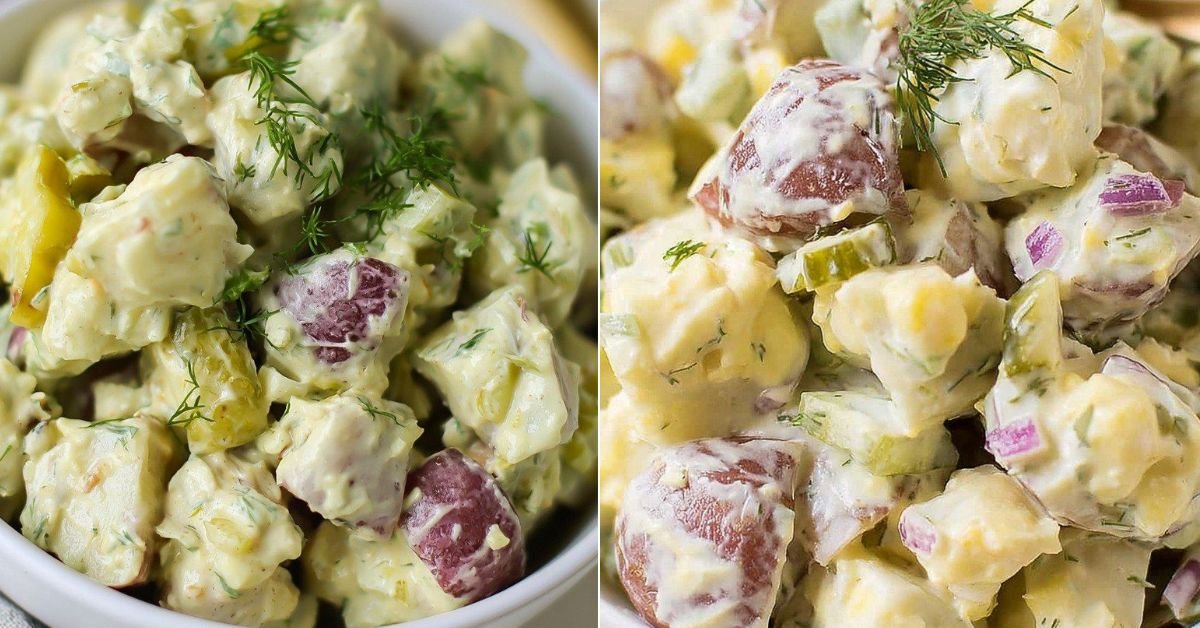
1) What I Learned Testing Dill Pickle Potato Salad
Potato salad should not turn watery, bland, or mushy after chilling. I’m Nancy, and my early batches had that exact problem: the dressing tasted bright at first, then went flat by dinner. After testing the pickle juice ratio, cooling time, and how finely to chop the pickles, I found the discovery that changed everything: cold potatoes hold creamy dressing better, and pickle juice seasons without heaviness. This dill pickle potato salad brings the comfort of a family cookout with a sharper, crunchier finish that feels calm, nostalgic, and reliable.
Table of Contents
- 1) What I Learned Testing Dill Pickle Potato Salad
- 2) Key Takeaways
- 3) Easy Dill Pickle Potato Salad Recipe
- 4) Why Most Dill Pickle Potato Salad Recipes Fail
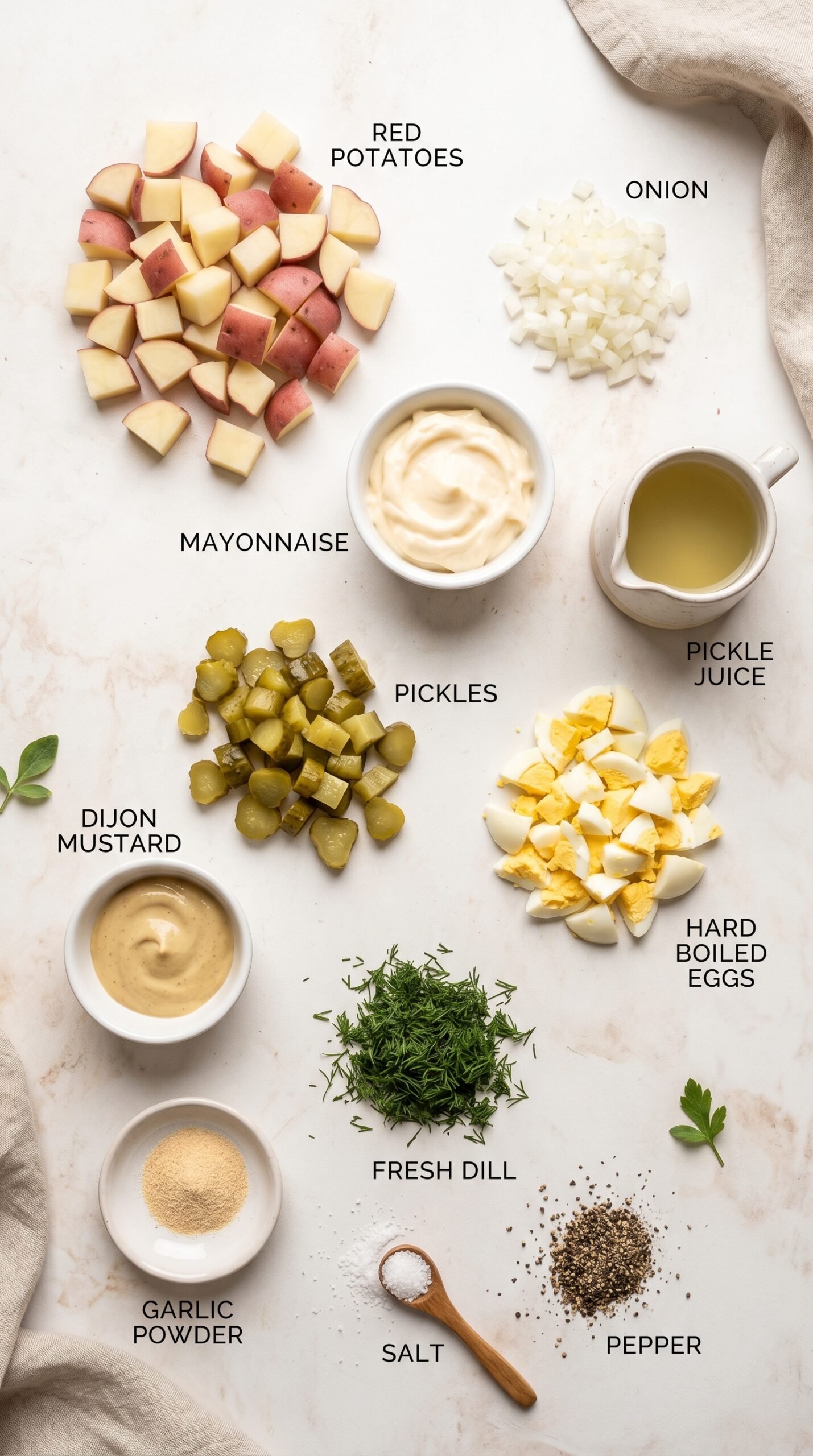
- 5) Ingredients for Dill Pickle Potato Salad
- 6) How to Make Dill Pickle Potato Salad
- 7) Recipe Card: Dill Pickle Potato Salad
- 8) Tips for Making Dill Pickle Potato Salad
- 9) Common Mistakes & Fixes
- 10) How to Tell Dill Pickle Potato Salad Has the Right Texture
- 11) Professional Secrets Behind Better Dill Pickle Potato Salad
- 12) Best Dishes or Pairings to Serve With Dill Pickle Potato Salad
- 13) Making Dill Pickle Potato Salad Ahead of Time
- 14) Storing Leftover Dill Pickle Potato Salad
- 15) FAQ (Real Cooking Questions)
- 16) Save This Dill Pickle Potato Salad Recipe
- 17) Conclusion
- 18) Nutrition
2) Key Takeaways
- Cool the potatoes completely before dressing them; this protects the creamy texture and keeps the salad from loosening in the refrigerator.
- Pickle juice seasons the dressing while adding clean tang, so the salad tastes brighter without needing extra mayonnaise.
- Red potatoes hold their shape better than high-starch potatoes, which helps this creamy dill potato salad stay chunky instead of mashed.
- Taste after chilling, not only before chilling, because cold potatoes can dull salt, pepper, dill, and pickle flavor.
3) Easy Dill Pickle Potato Salad Recipe
This dill pickle potato salad recipe is built around one simple goal: creamy potato salad that still tastes lively after several hours in the refrigerator. The method works because the potatoes are cooked until tender, cooled fully, and then folded with a dressing that has enough acidity to wake up the starch without making the bowl soupy.
The texture should be chunky, creamy, and cold, with soft potatoes, tender eggs, and crisp pickle pieces. The flavor should land in layers: mild potato first, then creamy dressing, then fresh dill, then the clean snap of pickle juice. That balance is what makes this potato salad with dill feel familiar but not boring.
The step most cooks skip is the resting time. Four hours in the refrigerator is not just waiting time; it is flavor-building time. The potatoes absorb the tangy dressing, the onion softens into the mayo, and the dill becomes more fragrant without taking over the whole salad.
4) Why Most Dill Pickle Potato Salad Recipes Fail
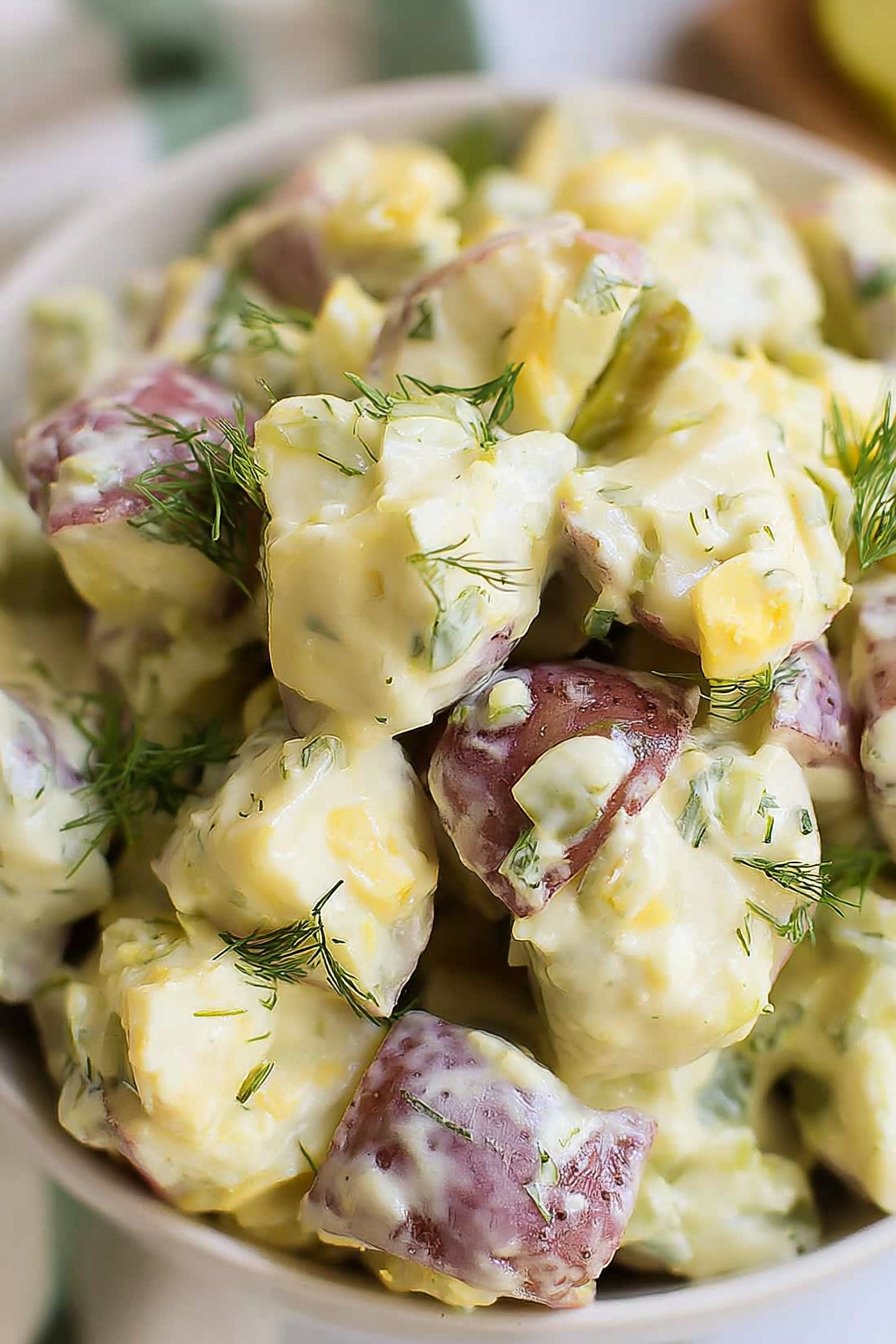
Most potato salads fail because the potatoes are dressed while they are still warm. Heat loosens mayonnaise, and once the dressing thins out, it can settle at the bottom of the bowl instead of clinging to the potatoes. In this method, the potatoes cool completely before mixing, so the dressing stays creamy and coats each piece more evenly.
Another common problem is watery texture from poor draining. Potatoes can hold surface moisture after boiling, especially when they are diced. If that extra water goes into the bowl, it dilutes the dressing and dulls the pickle flavor. Draining well and letting the potatoes cool uncovered for a bit helps steam escape before the dressing is added.
Flat flavor usually comes from under-seasoning or relying only on mayonnaise. Potatoes need acid and salt to taste alive when cold. Pickle juice solves that problem by adding tang, saltiness, and a sharper finish. Dijon mustard adds another layer of brightness, while fresh dill gives the salad a clean herbal lift.
Mushy potato salad happens when the potatoes are overcooked or stirred too aggressively. Once tender potatoes meet a thick dressing, heavy stirring can break them down. Folding gently keeps the red potato pieces intact and gives the finished salad a better bite.
Harsh onion flavor can also distract from the dill pickle balance. Finely diced onion works best because it blends into the dressing instead of showing up as sharp chunks. After chilling, the onion flavor mellows and becomes part of the creamy base.
5) Ingredients for Dill Pickle Potato Salad
Red potatoes: Red potatoes are used because they hold their shape after boiling. Dice them before cooking so they cook evenly and cool faster. If you replace them with a very starchy potato, the salad may become softer and more broken after mixing.
Mayonnaise: Mayonnaise creates the creamy dressing that clings to the potatoes. Add it only after the potatoes have cooled. If you reduce it too much, the salad may taste dry after chilling; if you add too much, the pickle and dill flavors can feel muted.
Pickle juice: Pickle juice adds acidity, salt, and that unmistakable dill pickle flavor. It goes directly into the dressing so the tang is evenly distributed. Too little can make the salad taste flat; too much can thin the dressing.
Finely diced onion: Onion gives the dressing a savory backbone. It should be finely diced so it blends in rather than creating harsh bites. Larger pieces can overpower the fresh dill and pickles.
Dijon mustard: Dijon mustard adds gentle sharpness and helps the dressing taste more layered. Use it in the dressing before mixing with the potatoes. Replacing it with a sweeter mustard will change the balance and make the salad less clean-tasting.
Garlic powder: Garlic powder rounds out the creamy dressing without adding raw garlic bite. It works well here because it disperses smoothly. Fresh garlic can taste too strong in a cold salad unless used very carefully.
Fresh dill: Fresh dill gives this dill potato salad its bright herbal finish. Add it to the dressing and save a little extra for serving. Dried dill can work in a pinch, but it will taste less fresh and should be used more sparingly.
Salt and pepper: Salt and pepper should be adjusted after the dressing is mixed because pickles and pickle juice already bring salt. Pepper is especially useful after chilling because it wakes up the creamy, cold flavors.
Hard boiled eggs: Eggs add richness and a soft contrast to the crunchy pickles. Rough chopping keeps them noticeable without turning them into paste. If chopped too finely, they disappear into the dressing.
Pickles: Chopped pickles bring crunch and bold flavor. Add them with the cooled potatoes and eggs so they keep texture. Larger pieces give a stronger bite, while smaller pieces spread pickle flavor more evenly through the salad.
- Red potatoes vs russet potatoes: Red potatoes stay chunkier after boiling, while russets break down more easily and can make the salad softer.
- Pickle juice vs vinegar: Pickle juice adds tang plus built-in pickle seasoning, while plain vinegar adds acidity without the same dill pickle character.
- Fresh dill vs dried dill: Fresh dill tastes brighter and cleaner, while dried dill is more concentrated and less vibrant.
- Gentle folding vs aggressive stirring: Folding protects the potato pieces, while heavy stirring can make the salad look smashed and pasty.
6) How to Make Dill Pickle Potato Salad
Step 1: Start the diced red potatoes in cold water so the pieces cook evenly from the outside to the center. Bring the pot to a boil and cook until the potatoes are fork tender, about 15 minutes. The fork should slide in easily without the potato collapsing.
Step 2: Drain the potatoes well and let them cool completely. This is the texture-saving step. If steam is still rising strongly from the potatoes, they are too warm for mayonnaise dressing.
Step 3: Whisk the dressing until smooth before it touches the potatoes. The mayonnaise, pickle juice, onion, Dijon mustard, garlic powder, and dill should look evenly combined, with no streaks of mustard or pockets of dry garlic powder.
Step 4: Combine the cooled potatoes, chopped eggs, and chopped pickles in a large bowl. Pour the dressing over the top and fold gently. Stop when everything is coated; do not keep stirring just because the bowl looks tempting.
Step 5: Cover and chill for at least 4 hours. Before serving, stir gently, taste again, and adjust with pepper, a tiny splash of pickle juice, or extra fresh dill if the cold salad needs more brightness.

7) Recipe Card: Dill Pickle Potato Salad
Dill Pickle Potato Salad
Ingredients
- 3 pounds red potatoes, diced into even bite-size pieces so they cook at the same rate
- 1 ½ cups mayonnaise, for a creamy dressing that clings well after chilling
- ¼ cup pickle juice, to add tang and help season the potatoes throughout
- ¼ cup onion, finely diced so the flavor blends into the dressing without harsh chunks
- 1 ½ tablespoons dijon mustard, for gentle sharpness and depth
- ½ teaspoon garlic powder, to round out the creamy dressing without overpowering the dill
- ¼ cup fresh dill, chopped, plus more for serving, for the brightest herb flavor
- salt and pepper, added to taste after the dressing is mixed
- 4 hard boiled eggs, roughly chopped, for richness and soft texture
- 1 cup pickles, roughly chopped, for crunch and bold pickle flavor
Instructions
- Place the diced red potatoes in a large pot and cover them with cold water by about 1 inch. Bring to a boil over high heat, then boil until the potatoes are fork tender, about 15 minutes. Drain well and let the potatoes cool completely so the dressing stays creamy instead of loosening from steam.
- When the potatoes are cool, make the dressing. In a bowl, whisk together the mayonnaise, pickle juice, finely diced onion, dijon mustard, garlic powder, and chopped fresh dill until smooth. Season with salt and pepper to taste, keeping in mind that the pickles and pickle juice already add salt.
- In a large mixing bowl, combine the cooled potatoes, chopped hard boiled eggs, and chopped pickles. Pour the dressing over the top and fold gently until everything is coated, using a wide spatula so the potatoes stay chunky instead of breaking down.
- Cover the bowl and refrigerate for at least 4 hours so the potatoes absorb the tangy dressing and the flavors settle. Before serving, stir gently, taste for salt and pepper, and sprinkle with more fresh dill.
8) Tips for Making Dill Pickle Potato Salad
The texture trick is to drain the potatoes well and let them cool fully before mixing. If you rush this step, the dressing can loosen and slide off the potatoes. A good sign is that the potatoes feel cool to the touch and no longer release visible steam.
Cut the potatoes into even bite-size pieces. If the pieces are uneven, the small ones may break down while the larger ones stay firm in the center. Even sizing gives you a salad that tastes creamy without turning mushy.
Keep the onion finely diced. In a cold salad, large onion pieces can taste sharper than they would in a hot dish. Smaller pieces soften in the dressing and give savory flavor without stealing attention from the pickles and dill.
Use the chopped pickles to control the bite. Bigger pickle pieces make the salad crunchier and bolder. Smaller pickle pieces create a smoother summer potato salad where the pickle flavor is spread throughout every forkful.
Season twice: once when making the dressing and again after chilling. This matters because cold temperatures can mute flavor. A final sprinkle of pepper and fresh dill right before serving can make the whole bowl taste fresher.
9) Common Mistakes & Fixes
Problem: The salad turns watery after chilling. Cause: The potatoes were not drained well or were dressed while still warm. Fix: Drain thoroughly, cool completely, and fold in the dressing only when the potatoes are no longer warm.
Problem: The salad tastes bland the next day. Cause: Cold potatoes absorbed the dressing and dulled the seasoning. Fix: Stir gently and refresh with a small splash of pickle juice, extra fresh dill, and a little pepper.
Problem: The potatoes fall apart. Cause: They were overcooked or mixed too aggressively. Fix: Boil only until fork tender and use a folding motion instead of stirring hard.
Problem: The onion tastes too sharp. Cause: The onion pieces were too large or uneven. Fix: Dice the onion finely and let the salad chill long enough for the flavor to mellow into the dressing.
Problem: The dressing tastes too heavy. Cause: The acidity is too low or the mayo flavor is dominating. Fix: Add pickle juice in small amounts and taste as you go so the dressing becomes brighter without turning thin.
10) How to Tell Dill Pickle Potato Salad Has the Right Texture
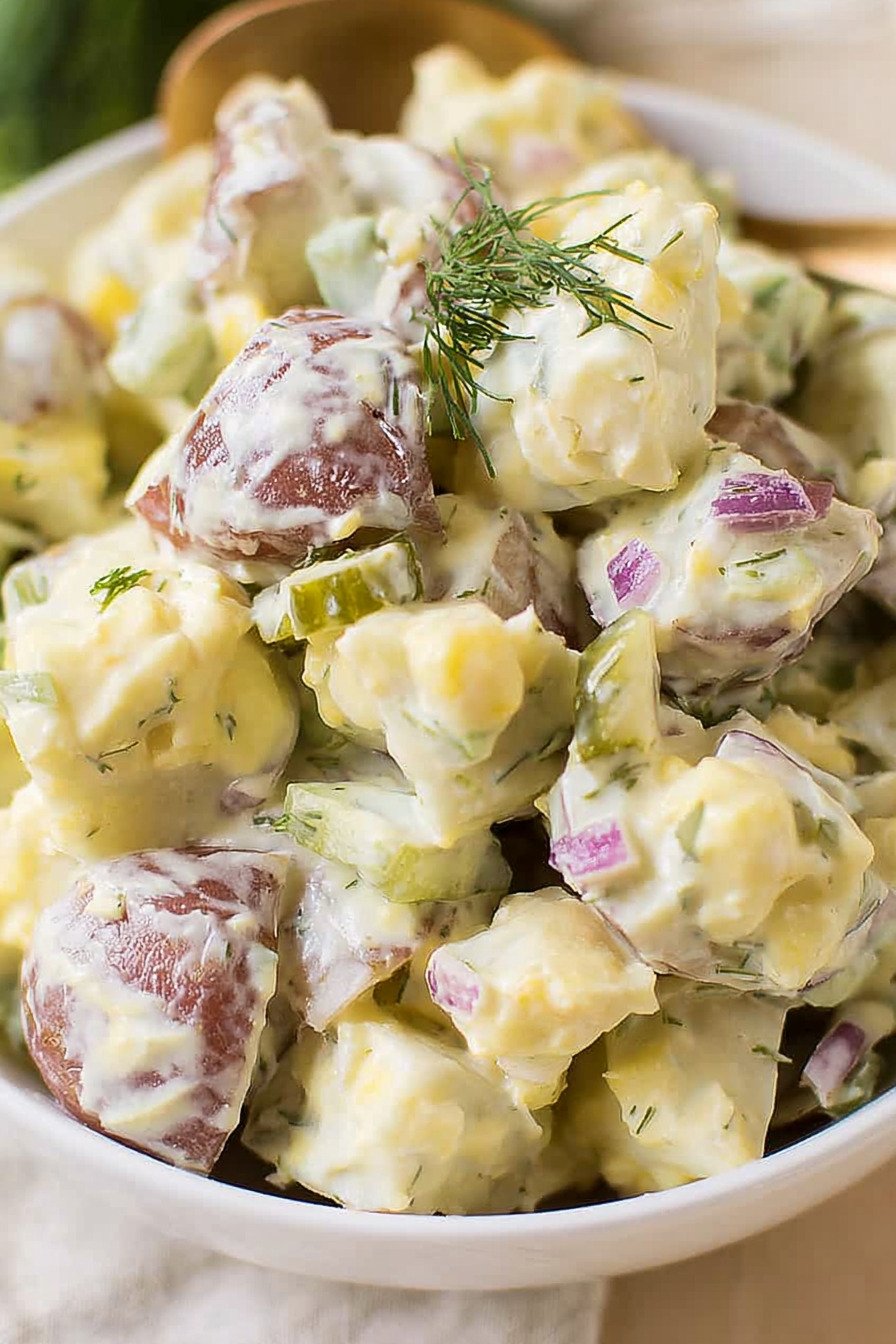
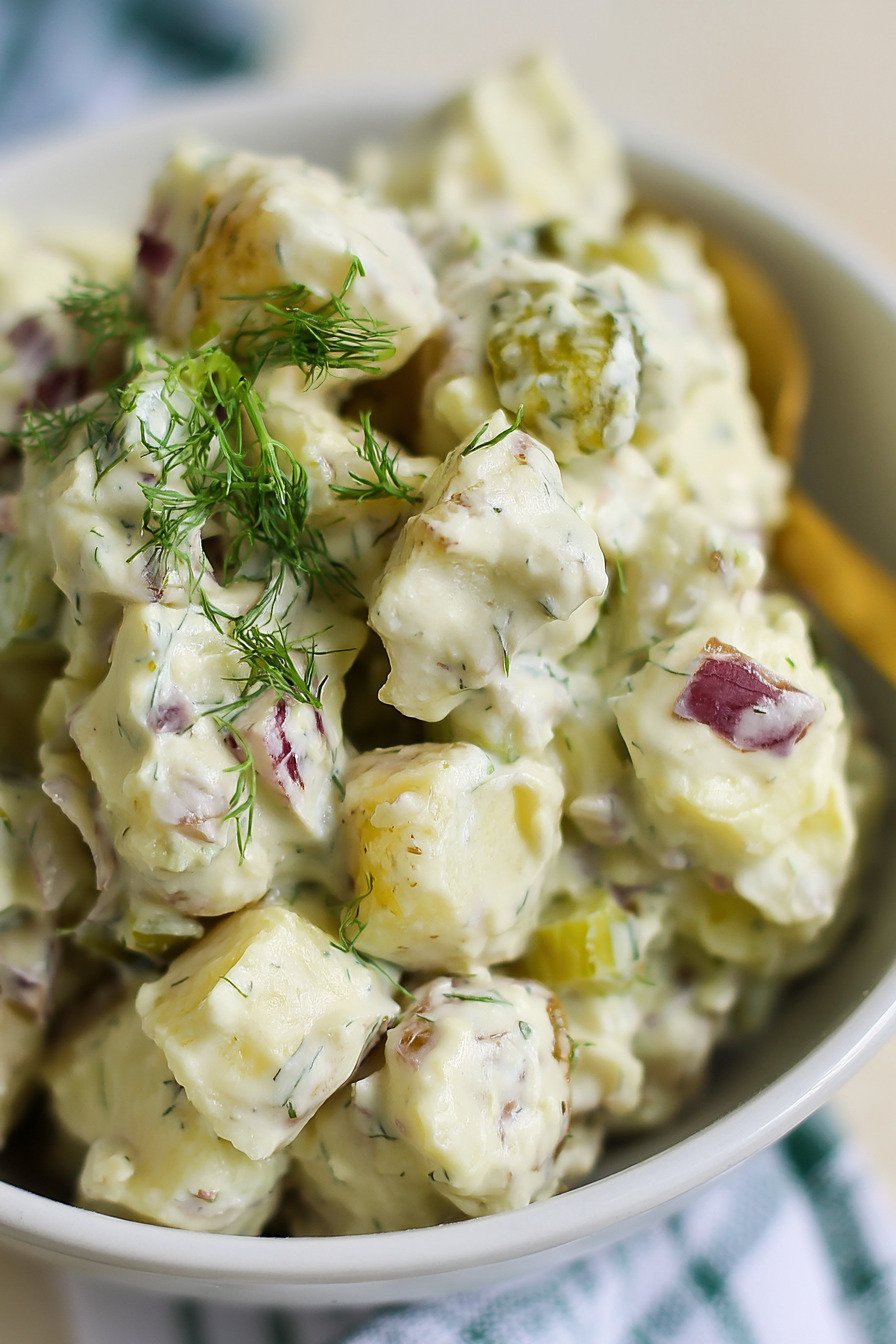
Dill pickle potato salad has the right texture when the potatoes are tender but still hold their edges. The dressing should look creamy and cling to the potatoes rather than pooling at the bottom of the bowl. You should see soft chunks of egg, visible flecks of dill, and crisp bits of pickle throughout.
The salad should feel cold, creamy, and chunky on the fork. It should not look shiny, loose, or watery. When you scoop it, it should mound gently instead of spreading like a thin dressing. If the potatoes smear too easily, they may have been overcooked or stirred too much.
The aroma should be fresh and tangy, with dill and pickles showing up before the mayonnaise. The flavor should be balanced: creamy first, then sharp, then savory. If it tastes dull, it likely needs pepper, dill, or a small amount of pickle juice. If it tastes salty, let it sit a little longer with the potatoes before adding anything else.
11) Professional Secrets Behind Better Dill Pickle Potato Salad
The first professional habit is seasoning with restraint at the beginning and precision at the end. Pickle juice, pickles, and mayonnaise can all bring salt, so the smartest move is to taste the finished chilled salad before making final adjustments.
The second secret is controlling moisture. A cold mayonnaise dressing cannot hide watery potatoes. Letting the potatoes drain and cool properly gives the dressing a better surface to cling to, which is why the salad tastes creamier without needing more mayo.
The third secret is building contrast. Soft potatoes need crunch. Rich eggs need acidity. Creamy dressing needs herbs. Pickles, pickle juice, Dijon mustard, and fresh dill each solve one part of that balance, so the salad tastes layered instead of one-note.
The final secret is patience. A potato salad that tastes slightly sharp right after mixing often tastes just right after chilling. The potatoes absorb the dressing, the onion mellows, and the dill settles into the creamy base.
12) Best Dishes or Pairings to Serve With Dill Pickle Potato Salad
This salad pairs especially well with grilled and smoky dishes because the pickle tang cuts through richer flavors. Serve it with grilled chicken, burgers, hot dogs, barbecue chicken, pulled pork sandwiches, or steak skewers. It also works next to deli sandwiches, wraps, fried chicken, or a cold picnic spread.
For a lighter plate, serve it with sliced tomatoes, cucumber salad, grilled vegetables, or simple roasted chicken. For a classic summer table, pair it with corn on the cob, baked beans, coleslaw, watermelon, and iced tea. The salad brings creaminess and tang, so it balances both smoky mains and fresh sides.

13) Making Dill Pickle Potato Salad Ahead of Time
This is a strong make-ahead recipe because the flavor improves after chilling. Make it at least 4 hours before serving so the potatoes can absorb the dressing. For the best texture, prepare it up to 24 hours ahead, keep it covered in the refrigerator, and stir gently before serving.
Do not add extra mayonnaise automatically before serving. First taste the salad cold. If it needs a refresh, use extra fresh dill, a pinch of pepper, or a very small splash of pickle juice. That brings back brightness without making the dressing heavy or runny.
14) Storing Leftover Dill Pickle Potato Salad
Store leftover dill pickle potato salad in an airtight container in the refrigerator for up to 3 days. Keep it cold and return it to the refrigerator promptly after serving, especially during warm weather. Because this is a mayonnaise-based salad, it is not a good candidate for long room-temperature holding.
Freezing is not recommended. The potatoes can become grainy, and the mayonnaise dressing may separate after thawing. For leftovers, stir gently before serving and refresh with dill or pepper if the flavor has softened. It is excellent tucked beside sandwiches, grilled chicken, or a simple lunch plate.
15) FAQ (Real Cooking Questions)
Can I make dill pickle potato salad the night before? Yes. In fact, making it the night before gives the dressing time to settle into the potatoes. Stir gently before serving and add fresh dill on top to refresh the flavor.
Why did my potato salad turn watery? The potatoes were probably too warm or too wet when the dressing was added. Drain them well and let them cool completely before mixing with the mayonnaise dressing.
Can I use a different potato? You can, but red potatoes are reliable because they hold their shape. A starchier potato may break apart more easily and make the salad softer.
How do I make the pickle flavor stronger? Chop the pickles a little larger or add a tiny splash of pickle juice after chilling. Add small amounts because too much pickle juice can thin the dressing.
Is this a gluten free potato salad? It can be naturally gluten free when the mayonnaise, Dijon mustard, and pickles are certified gluten free. Always check packaged ingredient labels if cooking for someone who needs strict gluten-free preparation.
16) Save This Dill Pickle Potato Salad Recipe
If this dill pickle potato salad helped you solve watery, bland potato salad, save it for cookouts, picnics, and make-ahead summer meals. The key reminder is: cool the potatoes completely before adding the pickle dressing so the texture stays creamy, chunky, and bright.
17) Conclusion
Dill pickle potato salad becomes much easier once you understand what usually goes wrong. Warm potatoes loosen dressing, excess moisture dulls flavor, and rough stirring breaks down the texture. This method fixes those problems with cooled red potatoes, a tangy pickle juice dressing, fresh dill, chopped pickles, and gentle folding. The result is a cold, creamy, crunchy side dish that tastes sharper after chilling instead of flatter. Once you learn that balance, you can bring potato salad to the table with more confidence and fewer last-minute fixes.
18) Nutrition
Serving Size 1 portion | Calories 385 | Sugar 3 g | Sodium 710 mg | Fat 28 g | Saturated Fat 5 g | Carbohydrates 28 g | Fiber 3 g | Protein 8 g | Cholesterol 115 mg





Leave a Comment