
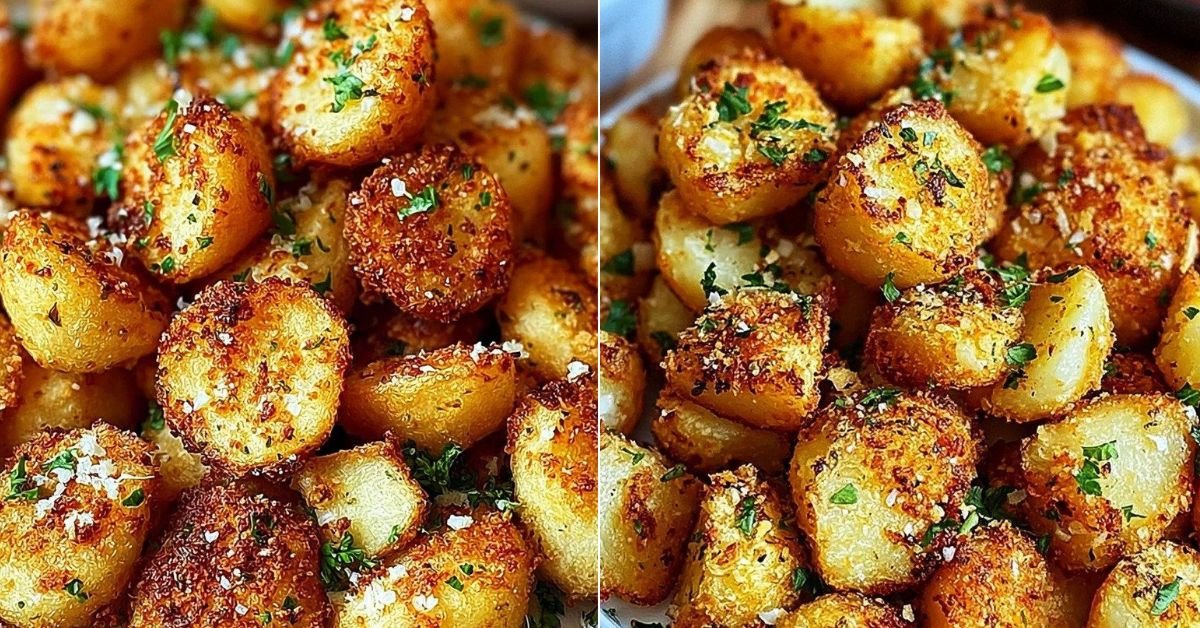
The Texture Trick Behind Viral Crispy Garlic Parmesan Crusted Potatoes
Soggy roasted potatoes are the kitchen disappointment nobody asks for. I’m Nancy, and after one too many batches that steamed instead of crisped, I started testing pan spacing, oven heat, and when to add the cheese. The discovery was simple but game-changing: roast the potatoes first, then coat them while warm so the Parmesan clings and crisps instead of burning early. These crispy garlic parmesan potatoes bring back that calm Sunday-dinner feeling for me, with browned edges, tender centers, and the kind of crispy parmesan potatoes people reach for before they even sit down.
Table of Contents
- 1) The Texture Trick Behind Viral Crispy Garlic Parmesan Crusted Potatoes
- 2) Key Takeaways
- 3) Easy Viral Crispy Garlic Parmesan Crusted Potatoes Recipe
- 4) Why Most Viral Crispy Garlic Parmesan Crusted Potatoes Recipes Fail
- 5) Ingredients for Viral Crispy Garlic Parmesan Crusted Potatoes
- 6) How to Make Viral Crispy Garlic Parmesan Crusted Potatoes
- 7) Recipe Card: Viral Crispy Garlic Parmesan Crusted Potatoes Recipe – Easy & Delicious!
- 8) Tips for Making Viral Crispy Garlic Parmesan Crusted Potatoes
- 9) Common Mistakes & Fixes
- 10) How to Tell Viral Crispy Garlic Parmesan Crusted Potatoes Are Perfect
- 11) Professional Secrets Behind Better Viral Crispy Garlic Parmesan Crusted Potatoes
- 12) Best Dishes or Pairings to Serve With Viral Crispy Garlic Parmesan Crusted Potatoes
- 13) Making Viral Crispy Garlic Parmesan Crusted Potatoes Ahead of Time
- 14) Storing Leftover Viral Crispy Garlic Parmesan Crusted Potatoes
- 15) FAQ (Real Cooking Questions)
- 16) Save This Viral Crispy Garlic Parmesan Crusted Potatoes Recipe
- 17) Conclusion
- 18) Nutrition
2) Key Takeaways
- Roast before coating: The potatoes need time to become tender and lightly dry before the garlic Parmesan mixture goes on. Adding cheese too early can make it burn before the potatoes finish cooking.
- Spacing matters: A crowded pan traps steam, which softens the edges. A single layer gives these crispy garlic parmesan potatoes the browned, craggy surface that makes them worth saving.
- Warm potatoes hold coating better: Tossing the roasted potatoes while they are hot helps the butter, olive oil, garlic, herbs, and Parmesan cling to each piece.
- The final high-heat bake builds the crust: Raising the oven to 425°F gives the Parmesan crust color and crunch while keeping the centers tender.
3) Easy Viral Crispy Garlic Parmesan Crusted Potatoes Recipe
This viral crispy garlic parmesan crusted potatoes recipe works because it treats potatoes like they need two different cooking jobs. First, the potatoes roast at 400°F until the centers become fork-tender and the surfaces begin to dry. Then the garlic Parmesan coating goes on, followed by a hotter bake that turns the cheese into a golden crust. That sequence is the difference between potatoes that taste roasted and potatoes that taste steamed.
Yukon Gold potatoes are especially helpful here because they have a creamy interior and enough structure to hold their shape when tossed. Red potatoes can also work, but they stay a little firmer and waxier. The goal is not a fluffy baked-potato texture; the goal is a tender center with enough surface starch and moisture control to catch the Parmesan, butter, garlic, and herbs.
The flavor is built in layers. Olive oil helps with initial browning. Butter adds richness in the second stage. Garlic brings savory aroma, but it needs the protection of fat and cheese so it roasts rather than turns harsh. Parmesan gives saltiness, nuttiness, and the crust that makes parmesan crusted potatoes feel more intentional than regular roasted potatoes.
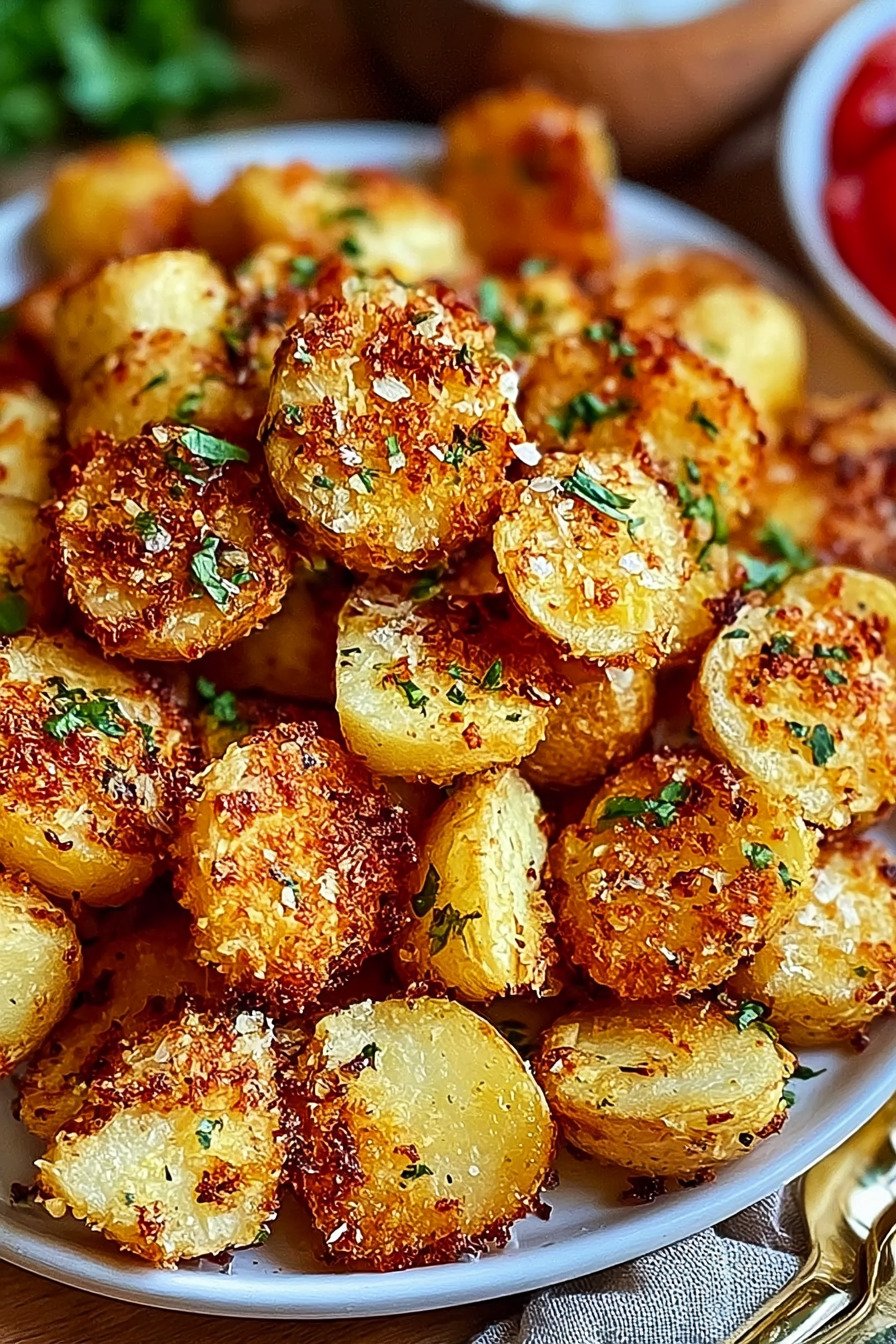
4) Why Most Viral Crispy Garlic Parmesan Crusted Potatoes Recipes Fail
Most crispy potato side dish recipes fail because the pan is overcrowded. When potato pieces sit too close together, they release steam into the small spaces between them. Instead of browning, the potatoes soften, and the edges never get the dry surface needed for crispness. A large baking sheet and a true single layer make a bigger difference than an extra splash of oil.
Another common problem is adding the Parmesan coating too soon. Parmesan browns quickly, and minced garlic can go from fragrant to bitter if it spends the entire roasting time in a hot oven. This method prevents that by roasting the potatoes first, then adding the garlic Parmesan mixture after the potatoes are already tender.
Uneven potato size also causes trouble. Small pieces overbrown before large pieces soften, which leaves you with a pan of mixed textures. Aim for roughly 1-inch chunks so every piece reaches the same stage before the final bake. The more even the cuts, the more predictable the crust.
Flat flavor usually comes from under-seasoning or using Parmesan as the only salt source. Parmesan is salty, but the potatoes still need measured salt and pepper in the coating. Potatoes are dense, and they absorb flavor better when seasoning is distributed through fat and tossed onto warm surfaces.
The last failure is pulling the potatoes too early. Light gold is not the same as crisp. Look for deeply browned edges, a dry-looking crust, and that roasted garlic aroma that smells mellow and savory rather than sharp.
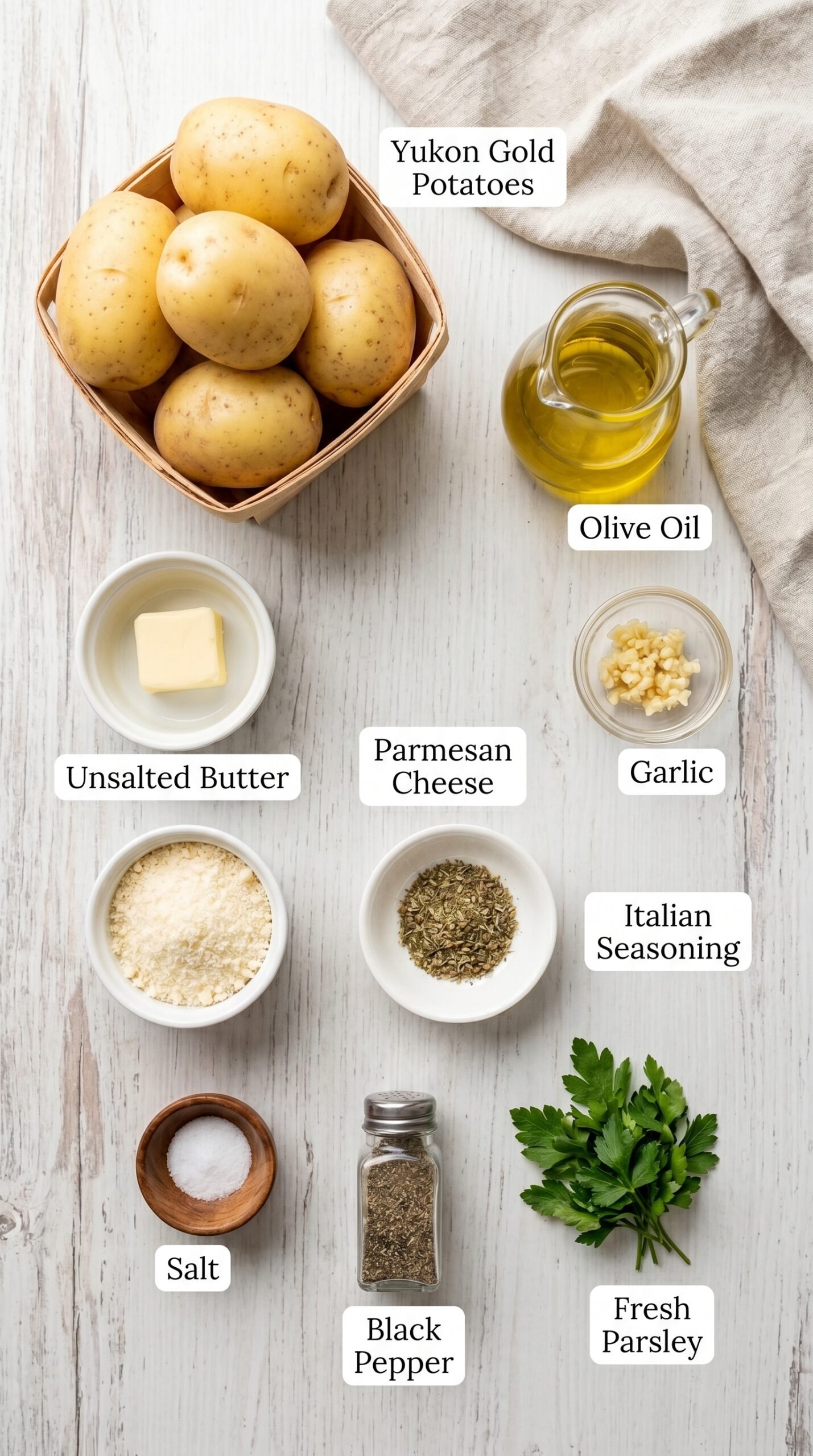
5) Ingredients for Viral Crispy Garlic Parmesan Crusted Potatoes
Yukon Gold potatoes: Yukon Golds create creamy centers and hold their shape well during tossing. Use them when you want crispy garlic parmesan potatoes with tender interiors instead of dry, crumbly pieces. Red potatoes can work too, but they produce a firmer bite.
Olive oil: Olive oil coats the potatoes during the first roast and helps conduct heat across the surface. If you use too little, the potatoes may dry out before browning. If you use too much, the coating can feel greasy instead of crisp.
Unsalted butter: Melted butter goes into the second-stage coating, where it adds richness and helps the Parmesan mixture spread. Unsalted butter keeps the seasoning easier to control because Parmesan already brings salt.
Garlic: Minced garlic gives these garlic parmesan potatoes their savory aroma. Add it with the Parmesan mixture after the first roast so it has enough time to mellow, but not so much time that it scorches.
Parmesan cheese: Grated Parmesan is the crust-builder. Finely grated cheese clings better than large shreds and browns more evenly. If the cheese is too coarse, it can fall off the potatoes and bake onto the pan instead.
Italian seasoning: Dried Italian seasoning adds oregano-thyme style aroma that works well with garlic and cheese. Use it in the coating so the herbs toast lightly during the final bake.
Salt: Salt sharpens the potato flavor and balances the richness of butter and cheese. Add the listed amount first, then taste after baking if you need a tiny final pinch.
Black pepper: Pepper keeps the Parmesan flavor from tasting flat. Freshly cracked pepper gives a brighter finish, but regular ground black pepper still works.
Fresh parsley: Parsley is optional, but it adds freshness and color right before serving. Add it at the end so it stays bright instead of wilting in the oven.
- Yukon Gold potatoes vs red potatoes: Yukon Golds turn creamier inside, while red potatoes stay slightly firmer and waxier. Both can work, but Yukon Golds give a softer contrast against the crisp crust.
- Finely grated Parmesan vs shredded Parmesan: Finely grated Parmesan coats more evenly and creates a better crust. Shredded Parmesan can melt in patches and leave bare spots.
- Garlic added early vs garlic added later: Garlic added at the beginning can burn. Garlic added after the first roast has enough time to become fragrant without turning bitter.
- Single layer vs crowded pan: A single layer promotes browning. A crowded pan traps moisture and creates soft, steamed potatoes.
6) How to Make Viral Crispy Garlic Parmesan Crusted Potatoes
Step 1: Preheat the oven to 400°F. Give it enough time to heat fully because potatoes placed in a weak oven start steaming before they begin browning.
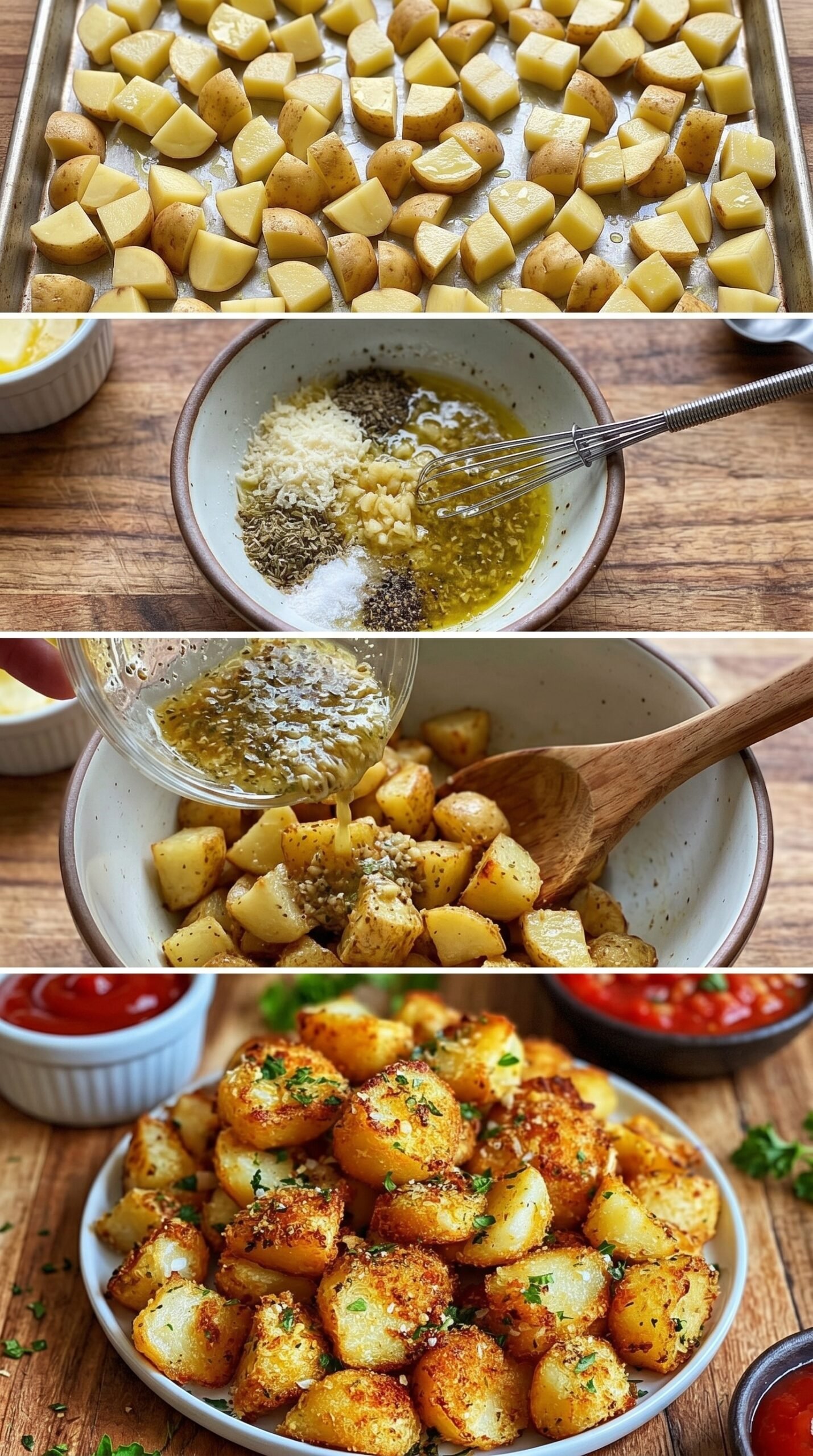
Step 2: Cut the scrubbed potatoes into roughly 1-inch chunks. Similar sizing is important because it keeps the centers tender at the same time. Leaving the skins on adds texture and helps the pieces hold together.
Step 3: Toss the potatoes with 2 tablespoons of olive oil until lightly coated. The oil should gloss the surfaces without pooling at the bottom of the bowl.
Step 4: Spread the potatoes on a large baking sheet in a single layer. If pieces are touching too closely, use a second pan. This is the step most cooks skip when their crispy parmesan potatoes turn soft.
Step 5: Roast for 20 to 25 minutes, until the potatoes are fork-tender and starting to brown. They do not need to be fully crisp yet; this stage is about cooking the centers and drying the surfaces.
Step 6: While the potatoes roast, whisk together melted butter, the remaining olive oil, minced garlic, grated Parmesan, Italian seasoning, salt, and black pepper. The mixture should look thick, savory, and spoonable.
Step 7: Increase the oven temperature to 425°F. The hotter final bake helps the Parmesan crust set quickly and gives the potato edges deeper color.
Step 8: Return the hot potatoes to a bowl and toss them with the garlic Parmesan mixture. Coat every piece gently so the potatoes stay intact while the cheese clings to the warm surfaces.
Step 9: Spread the coated potatoes back onto the baking sheet in a single layer. Turn cut sides down where you can, because flat sides brown beautifully against the hot pan.
Step 10: Bake for another 15 to 20 minutes, until the crust is golden brown and the edges are deeply browned. The aroma should be buttery, garlicky, and toasted, not raw or sharp.
Step 11: Finish with fresh parsley if using, then serve immediately. These potatoes are at their crispest right after they leave the oven.
7) Recipe Card: Viral Crispy Garlic Parmesan Crusted Potatoes Recipe – Easy & Delicious!
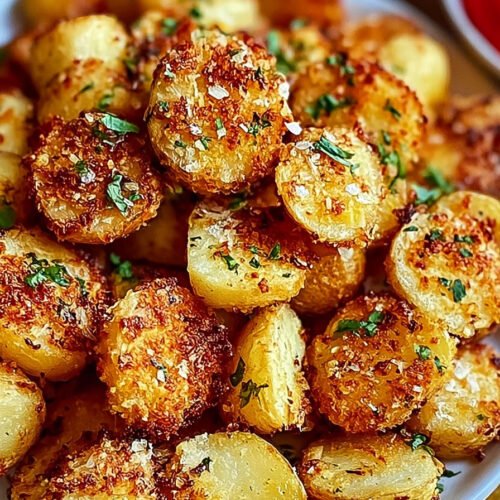
Viral Crispy Garlic Parmesan Crusted Potatoes Recipe
Ingredients
- 2 pounds Yukon Gold potatoes (or other waxy potatoes like red potatoes), scrubbed clean and cut evenly for consistent roasting
- 3 tablespoons olive oil, divided, to help the potatoes brown and carry the garlic Parmesan coating
- 2 tablespoons unsalted butter, melted, for richness and better crust formation
- 4 cloves garlic, minced finely so it spreads through the coating without large raw pieces
- 1/2 cup grated Parmesan cheese, preferably finely grated so it clings to the potatoes
- 1 teaspoon dried Italian seasoning (or a mix of dried oregano and thyme), for an herby savory crust
- 1/2 teaspoon salt, or to taste, adjusted after roasting if needed
- 1/4 teaspoon black pepper, or to taste, for gentle heat and balance
- Fresh parsley, chopped, for garnish (optional), added right before serving for color and freshness
Instructions
- Preheat your oven to 400°F (200°C) and position a rack in the center so the potatoes roast evenly.
- Cut the potatoes into roughly 1-inch chunks, keeping the pieces similar in size so the centers turn tender at the same time. Leave the skins on if you like extra texture.
- Place the potato chunks in a large bowl, drizzle with 2 tablespoons olive oil, and toss until every surface has a light coating.
- Spread the potatoes in a single layer on a large baking sheet, leaving space between pieces. Crowding traps steam and prevents crisp edges.
- Roast for 20 to 25 minutes, until the potatoes are fork-tender, lightly browned, and beginning to dry on the surface.
- While the potatoes roast, whisk together the melted butter, remaining 1 tablespoon olive oil, minced garlic, Parmesan cheese, Italian seasoning, salt, and black pepper in a small bowl until the mixture looks thick and spoonable.
- Increase the oven temperature to 425°F (220°C) so the coating can brown quickly and turn crisp without overcooking the potato centers.
- Remove the potatoes from the oven and return them to a bowl. Pour the garlic Parmesan mixture over the warm potatoes and toss gently but thoroughly so each piece is coated.
- Spread the coated potatoes back onto the baking sheet in a single layer, turning any cut sides down where possible for deeper browning.
- Bake for another 15 to 20 minutes, until the Parmesan crust is golden, the edges are deeply browned, and the garlic smells roasted rather than sharp.
- Garnish with fresh parsley if desired and serve immediately while the crust is crisp and the centers are hot and creamy.
8) Tips for Making Viral Crispy Garlic Parmesan Crusted Potatoes
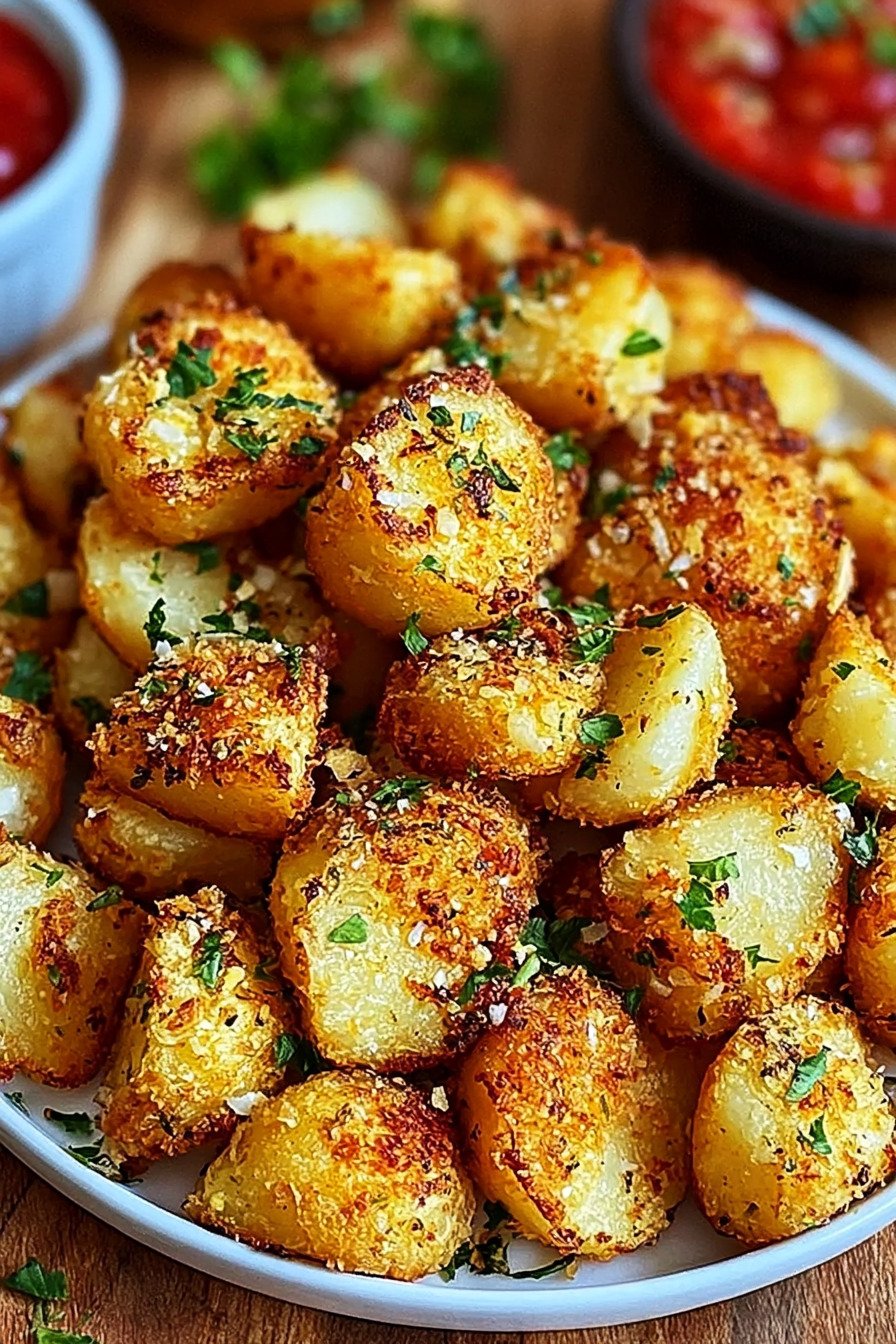
Use a rimmed baking sheet large enough for the potatoes to breathe. If the potatoes are stacked, even slightly, they will release moisture into each other. For true crispy garlic parmesan potatoes, each piece needs direct exposure to dry oven heat.
Do not rush the first roast. The potatoes should be fork-tender before the Parmesan mixture is added. If the centers are still firm, the final high-heat bake may brown the outside before the inside is ready.
Keep the coating thick rather than watery. Melted butter, olive oil, minced garlic, Parmesan, herbs, salt, and pepper should cling together. If the coating looks separated, whisk it again right before tossing with the potatoes.
Toss gently after the first roast. Warm potatoes are more delicate than raw potatoes, and aggressive stirring can break them apart. A flexible spatula or wide spoon helps coat them without crushing the edges.
Serve the potatoes soon after baking. The crust is made from cheese and roasted potato edges, so it naturally softens as steam collects. A few minutes of resting is fine, but long covered holding will reduce crunch.
9) Common Mistakes & Fixes
Problem: The potatoes are soft instead of crispy. Cause: The pan was overcrowded or the pieces were too wet. Fix: Use a larger baking sheet, spread the potatoes in a single layer, and make sure they are dry after scrubbing.
Problem: The garlic tastes bitter. Cause: Garlic can burn if exposed to high heat for too long. Fix: Add the minced garlic in the Parmesan coating after the potatoes have already roasted for the first 20 to 25 minutes.
Problem: The Parmesan sticks to the pan instead of the potatoes. Cause: The potatoes may not have been tossed while warm, or the cheese may have been too coarse. Fix: Coat the potatoes while hot and use finely grated Parmesan for better coverage.
Problem: The potatoes brown unevenly. Cause: Uneven cuts or hot spots in the oven can make some pieces cook faster. Fix: Cut the potatoes evenly and rotate the pan during the final bake if one side browns faster.
Problem: The flavor tastes flat. Cause: Potatoes need enough salt and pepper to balance their starchiness. Fix: Use the measured seasoning in the coating, then taste one hot potato before serving and adjust lightly if needed.
10) How to Tell Viral Crispy Garlic Parmesan Crusted Potatoes Are Perfect
The best visual sign is contrast. The potato edges should be deeply browned, the Parmesan should look golden and crusty, and the centers should still look soft rather than dried out. If the potatoes look pale, they need more time. If the cheese looks dark brown in spots but the potatoes are still firm, the first roast was probably too short.
The texture should feel crisp at the edges and tender in the middle. When you press a piece with a fork, the outside should give a little resistance before the inside breaks open. If the potatoes collapse into oily softness, they were likely crowded. If they feel dry all the way through, they may have been cut too small or baked too long.
The aroma should be warm, buttery, garlicky, and lightly toasted. Raw sharp garlic smell means the final bake may need another minute or two. Bitter or acrid garlic smell means the garlic has gone too far, so remove the darkest pieces before serving.
The flavor should be savory but balanced. Parmesan brings saltiness, butter adds richness, garlic adds depth, and parsley adds a fresh finish if used. A good parmesan potato recipe should taste seasoned all the way across the surface, not just salty in random bites.
11) Professional Secrets Behind Better Viral Crispy Garlic Parmesan Crusted Potatoes
The first professional secret is moisture control. Potatoes contain a lot of water, and crispness only happens when enough surface moisture evaporates. That is why the first roast matters so much. It dries the surface and softens the center before the cheese coating enters the picture.
The second secret is staged flavor. Garlic, butter, Parmesan, and herbs are bold ingredients, but they do not all behave the same under heat. Garlic can burn, butter can brown, Parmesan can darken, and herbs can become dusty if cooked too long. Adding the coating after the first roast keeps those flavors savory instead of scorched.
The third secret is contact. Flat potato sides against a hot pan brown better than rounded sides floating in the air. When you return the coated potatoes to the baking sheet, turn some cut sides downward. That simple habit creates more crisp patches without changing the ingredients.
The final secret is restraint. Do not keep tossing and poking during the final bake. Once the potatoes are coated and spread out, let the heat do its work. Too much movement can knock off the Parmesan crust before it has time to set.
12) Best Dishes or Pairings to Serve With Viral Crispy Garlic Parmesan Crusted Potatoes
These potatoes work well with simple proteins because the side dish already carries big garlic, butter, herb, and Parmesan flavor. Serve them with roasted chicken, grilled steak, baked salmon, pork chops, turkey burgers, or a simple omelet when you want the potatoes to be the most textured part of the plate.
For a lighter meal, pair them with a crisp green salad, roasted broccoli, sautéed green beans, or tomatoes dressed with lemon and herbs. Fresh, acidic sides balance the richness of the Parmesan crust and keep the meal from feeling heavy.
For a comfort-food plate, serve these parmesan crusted potatoes with meatloaf, barbecue chicken, baked ham, or a cozy Sunday roast. They also make a strong holiday side because they feel special without requiring last-minute stovetop attention.
13) Making Viral Crispy Garlic Parmesan Crusted Potatoes Ahead of Time
These potatoes are best when served right after the final bake, but you can still make the process easier. Scrub and cut the potatoes a few hours ahead, then keep them covered in cold water so they do not discolor. Before roasting, drain them very well and pat them dry because water left on the surface will slow browning.
You can also mix the garlic Parmesan coating ahead of time and keep it covered in the refrigerator. Let it soften slightly before using so it tosses evenly with the hot potatoes. If the melted butter firms up, a few seconds of gentle warming will bring the coating back together.
If you need to bake them slightly ahead, hold them uncovered on the sheet pan at room temperature for a short time, then re-crisp in a 425°F oven just before serving. Avoid covering them tightly, because trapped steam softens the crust.
14) Storing Leftover Viral Crispy Garlic Parmesan Crusted Potatoes
Store leftovers in an airtight container in the refrigerator for up to 3 days. The crust will soften as the potatoes chill, which is normal for roasted potatoes with a cheese coating. The flavor will still be good, but the texture needs dry heat to come back.
For reheating, spread the potatoes on a baking sheet and warm them at 400°F until hot and crisp at the edges. An air fryer can also work in small batches if you keep the potatoes in a single layer. Avoid the microwave when texture matters because it heats with steam and makes the crust soft.
Leftover crispy garlic parmesan potatoes can be chopped into a breakfast hash, tucked into a wrap, served with fried eggs, or reheated as a side for lunch. If the flavor tastes muted after chilling, finish with a tiny pinch of salt, pepper, or fresh parsley.
15) FAQ (Real Cooking Questions)
Can I use russet potatoes instead of Yukon Gold potatoes? Yes, but the texture will change. Russets are starchier and can become fluffier inside, while Yukon Golds stay creamier and hold together better when tossed. If using russets, cut them evenly and toss gently after the first roast.
Why did my Parmesan burn? The Parmesan coating may have been added too early, or the oven may have been running hot. This recipe protects the cheese by adding it after the potatoes are already tender, then baking just long enough to form a crust.
Can I make these crispy parmesan potatoes without butter? You can use more olive oil, but the flavor and browning will be different. Butter adds richness and helps the coating taste rounder. If replacing it, expect a slightly lighter crust and less buttery aroma.
Should I peel the potatoes? Peeling is optional. The skins add texture and help the pieces hold their shape, especially during tossing. If you prefer a smoother bite, peel them, but be gentle once they are roasted.
How do I keep parmesan crusted potatoes crispy for serving? Serve them soon after baking and avoid covering them tightly. If they need to sit, keep them uncovered on the pan and re-crisp briefly in a hot oven before serving.
16) Save This Viral Crispy Garlic Parmesan Crusted Potatoes Recipe
If this Viral Crispy Garlic Parmesan Crusted Potatoes Recipe helped you solve the soft roasted potato problem, save it for Sunday dinner, holiday sides, or the next time you need a crisp potato dish with real texture. The key reminder is: roast first, coat warm, then finish hotter for a golden Parmesan crust.
17) Conclusion
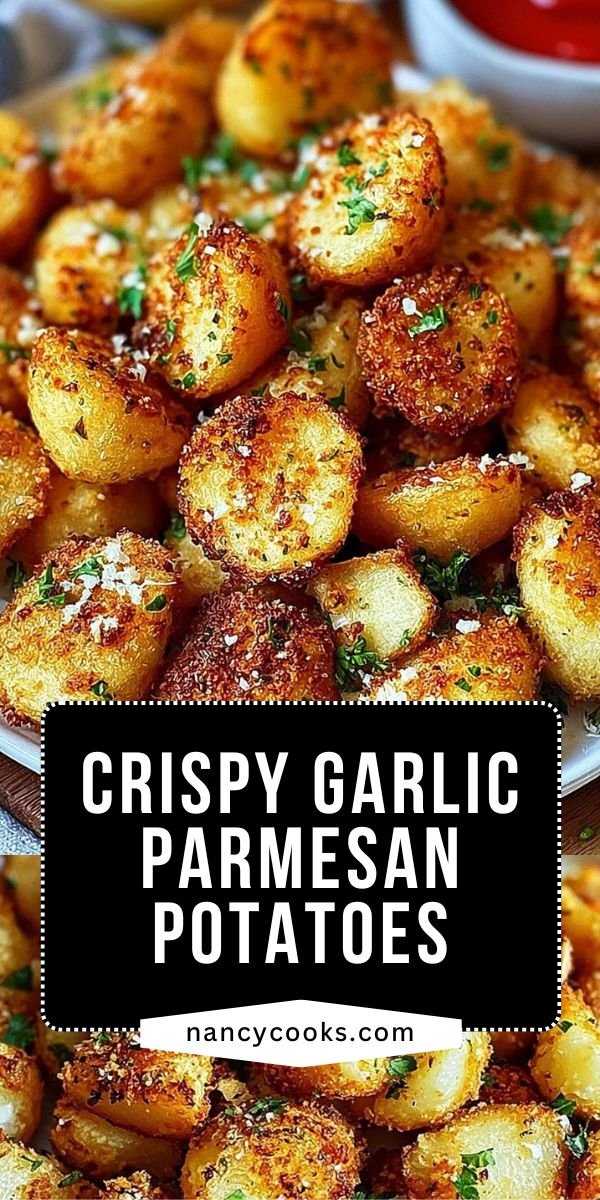
Once you understand the timing, these crispy garlic parmesan potatoes stop feeling like a lucky internet recipe and start feeling like a reliable kitchen method. The first roast cooks and dries the potatoes. The warm toss helps the garlic Parmesan coating stick. The hotter final bake turns that coating into a crust instead of a soft layer. That is the transformation: no more pale, steamed pieces hiding under cheese, just tender potatoes with browned edges, savory garlic aroma, and enough crisp texture to make the whole pan disappear faster than expected.
18) Nutrition
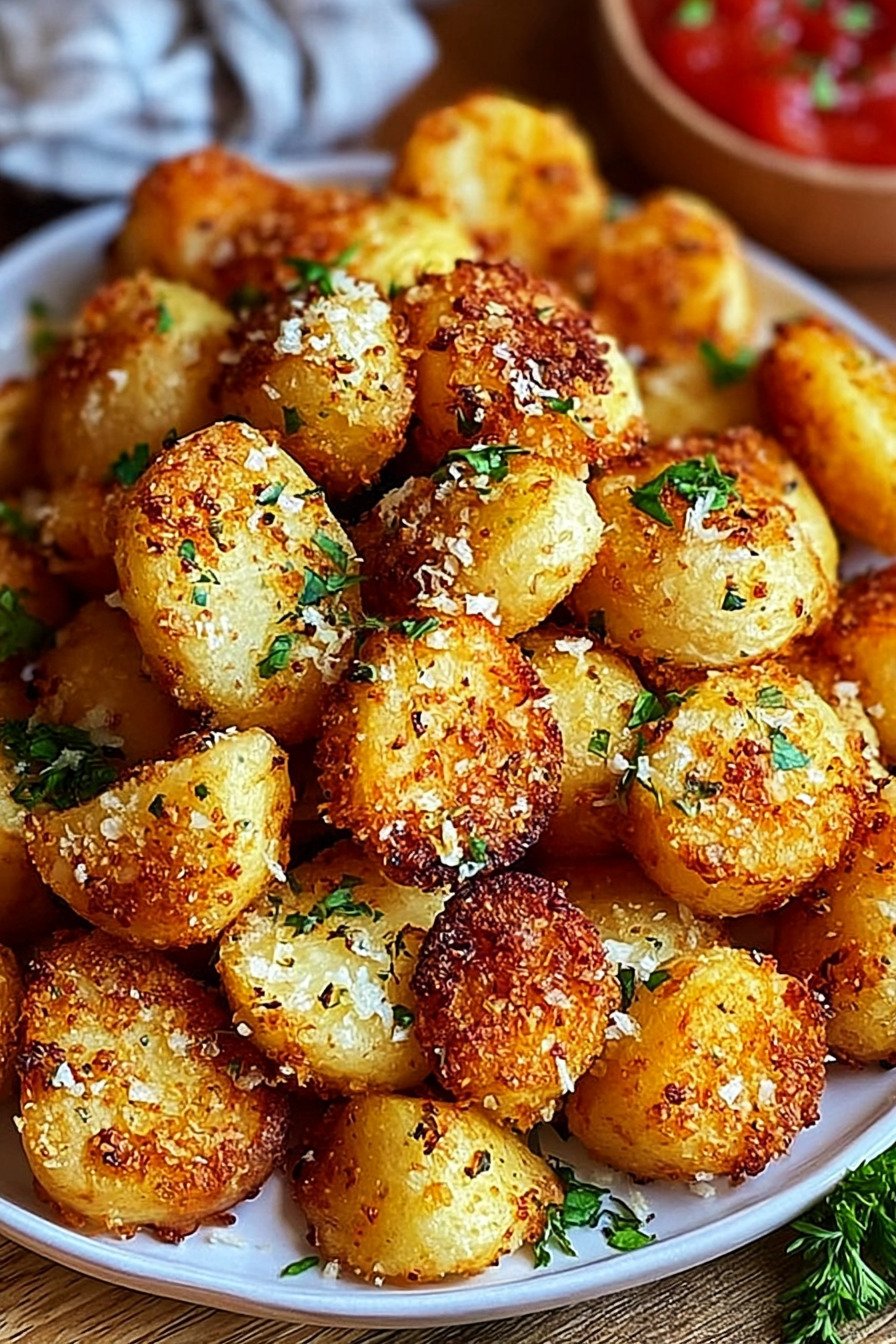
Serving Size 1 portion Calories 255 Sugar 2 g Sodium 360 mg Fat 13 g Saturated Fat 5 g Carbohydrates 30 g Fiber 3 g Protein 7 g Cholesterol 16 mg





Leave a Comment