
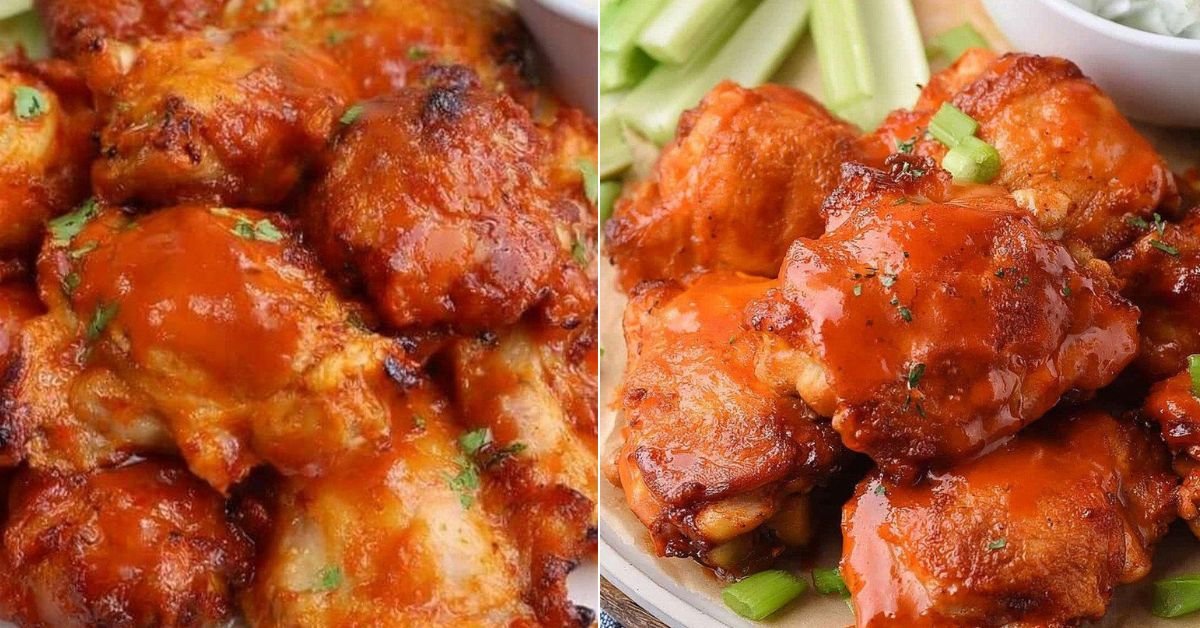
1) What I Learned Testing Buffalo Chicken Thighs
Dry buffalo chicken is usually not a sauce problem; it is a timing problem. I’m Nancy, and my early batches had bold heat but not enough juicy texture, especially when I added all the sauce before cooking. After testing the oven and air fryer methods, I discovered that marinating first, cooking in one layer, and tossing the hot chicken with fresh sauce at the end makes buffalo chicken thighs taste brighter, juicier, and more balanced. That little adjustment turned a rushed dinner into the kind of spicy, comforting chicken I actually want on a busy family night.
Table of Contents
- 1) What I Learned Testing Buffalo Chicken Thighs
- 2) Key Takeaways
- 3) Easy Buffalo Chicken Thighs Recipe
- 4) Why Most Buffalo Chicken Thighs Recipes Fail
- 5) Ingredients for Buffalo Chicken Thighs
- 6) How to Make Buffalo Chicken Thighs
- 7) Recipe Card: Buffalo Chicken Thighs
- 8) Tips for Making Buffalo Chicken Thighs
- 9) Common Mistakes & Fixes
- 10) How to Tell Buffalo Chicken Thighs Are Perfect
- 11) Professional Secrets Behind Better Buffalo Chicken Thighs
- 12) Best Dishes or Pairings to Serve With Buffalo Chicken Thighs
- 13) Making Buffalo Chicken Thighs Ahead of Time
- 14) Storing Leftover Buffalo Chicken Thighs
- 15) FAQ (Real Cooking Questions)
- 16) Save This Buffalo Chicken Thighs Recipe
- 17) Conclusion
- 18) Nutrition
2) Key Takeaways
- Marinate before cooking: A short rest in hot sauce, olive oil, garlic powder, onion powder, and pepper gives the chicken better flavor all the way through, not just on the surface.
- Cook in one layer: Whether you make baked buffalo chicken thighs or use the air fryer, crowding traps steam and softens the edges instead of letting the chicken roast properly.
- Use temperature, not guessing: Boneless chicken thighs are done when the thickest part reaches 165 degrees Fahrenheit, which keeps the meat juicy without leaving it undercooked.
- Sauce after cooking: Tossing the hot chicken with the reserved hot sauce at the end creates a brighter, glossier buffalo coating without burning the sauce during cooking.
3) Easy Buffalo Chicken Thighs Recipe
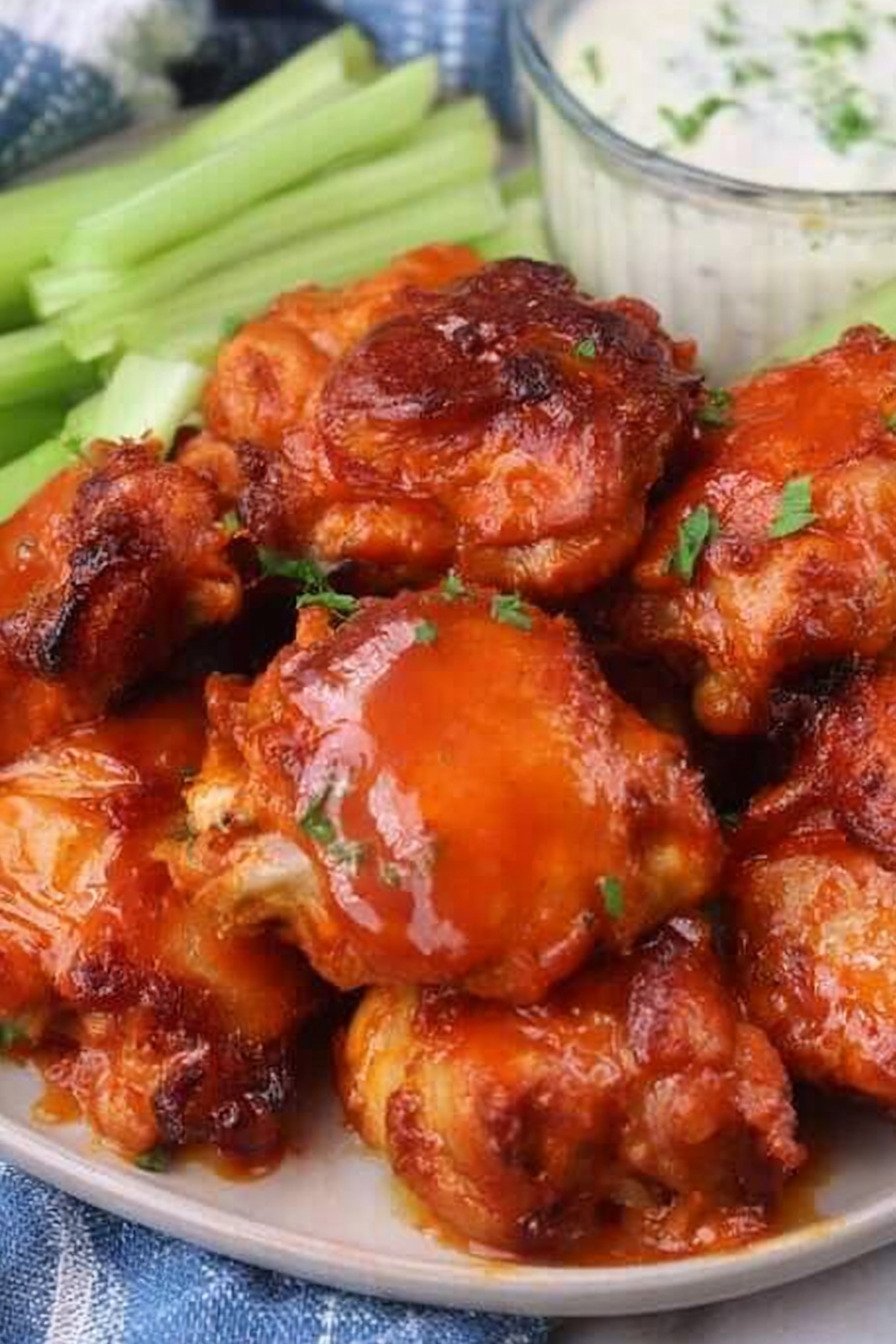
Buffalo chicken thighs are one of those recipes that look simple on paper but can go wrong quickly if the heat, spacing, and sauce timing are ignored. Boneless skinless chicken thighs are forgiving because they contain more natural fat than chicken breast, but they still need careful cooking. The goal is not just “spicy chicken.” The goal is tender meat with a savory hot sauce marinade, lightly roasted edges, and a fresh final coating that tastes lively instead of flat.
This method works because it separates flavor-building into two stages. The first portion of hot sauce seasons the chicken during the marinade. The remaining sauce is held back until the chicken is fully cooked, so it keeps its sharp buffalo flavor. That one detail matters because hot sauce can dull, dry, or darken too much if every drop is cooked aggressively from the start.
The oven method is useful when you want a hands-off tray of buffalo chicken thighs in oven style with lightly browned edges. The air fryer method is faster and gives a more concentrated surface texture because hot air moves closely around the chicken. Both methods rely on the same checkpoints: trimmed chicken, even coating, one-layer spacing, and a clean 165 degrees Fahrenheit internal temperature.
4) Why Most Buffalo Chicken Thighs Recipes Fail
The chicken dries out because it cooks past the target temperature. Chicken thighs are more forgiving than chicken breast, but boneless pieces can still dry out when they stay in high heat too long. The visual color of buffalo sauce can make doneness hard to judge, so a meat thermometer is the most reliable fix. Pull the chicken when the thickest part reaches 165 degrees Fahrenheit, then toss it with sauce while hot.
The sauce tastes harsh because it is doing all the work. Hot sauce has heat, acidity, and salt, but it needs support. Garlic powder, onion powder, black pepper, and olive oil round out the sharp edges. Without those seasonings, hot sauce chicken recipes can taste thin instead of full and savory.
The chicken steams instead of roasts. This happens when the thighs are crowded on a sheet pan or packed tightly in an air fryer basket. Moisture collects between the pieces, and the edges stay soft. A single layer gives each piece enough heat exposure so the surface can cook evenly.
The final coating gets dull when all the sauce is cooked. Buffalo flavor should taste bright at the end. Dividing the hot sauce solves that problem. Some sauce goes into the marinade, and the rest gets tossed with the hot cooked chicken so the final coating stays glossy, tangy, and fresh.
The meat tastes uneven because the marinade is rushed. Even a one-hour marinade improves these buffalo chicken thighs boneless because the seasoning has time to cling and penetrate the surface. Skipping that rest can leave the outside spicy while the inside tastes plain.
5) Ingredients for Buffalo Chicken Thighs
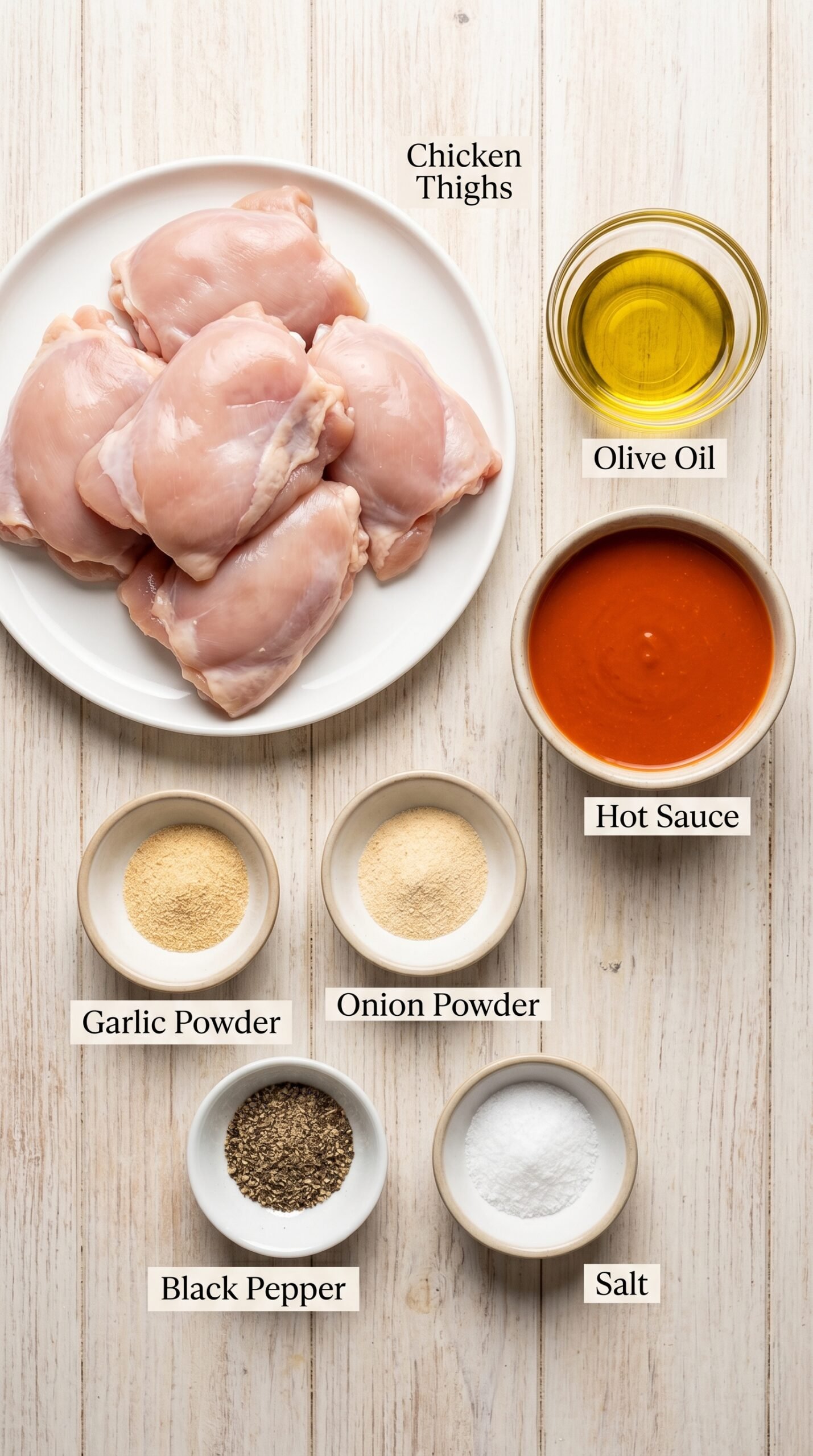
Boneless skinless chicken thighs: These are the main ingredient because they stay juicier than leaner cuts when cooked with bold buffalo sauce. Trim visible fat before marinating so the finished chicken tastes clean and saucy, not greasy. If the thighs are uneven in size, smaller pieces may finish earlier.
Olive oil: Olive oil helps the hot sauce and dry seasonings coat the chicken more evenly. It also supports better surface texture during baking or air frying. Without oil, the marinade can taste sharper and may cling less consistently.
Hot sauce: Hot sauce provides the signature buffalo-style heat, tang, and salt. Dividing it is important: part goes into the marinade, and part is saved for tossing after cooking. If you use a very salty hot sauce, wait until the end before adding any extra salt.
Garlic powder: Garlic powder adds savory depth without the risk of fresh garlic burning at high oven or air fryer temperatures. It works especially well in a marinade because it disperses evenly.
Onion powder: Onion powder softens the sharpness of the hot sauce and gives the chicken a rounder, more complete flavor. If you leave it out, the sauce may taste more acidic and less savory.
Freshly ground black pepper: Black pepper adds a warm bite that supports the hot sauce without competing with it. It is especially helpful in buffalo chicken thigh recipes because the flavor is simple and every seasoning matters.
Extra salt, if needed: Salt should be adjusted carefully because hot sauce already contains sodium. Taste the finished chicken first, then add a small pinch only if the flavor seems flat.
- Oven vs air fryer: The oven is better for cooking the whole batch at once, while the air fryer gives quicker surface texture if the basket is not crowded.
- Boneless thighs vs chicken breast: Boneless thighs stay juicier and handle buffalo sauce better because they have more natural richness.
- Marinade sauce vs finishing sauce: The marinade builds internal flavor, while the finishing sauce gives the chicken its bright buffalo coating.
- Garlic powder vs fresh garlic: Garlic powder is safer for high heat because fresh garlic can scorch before the chicken finishes cooking.
6) How to Make Buffalo Chicken Thighs
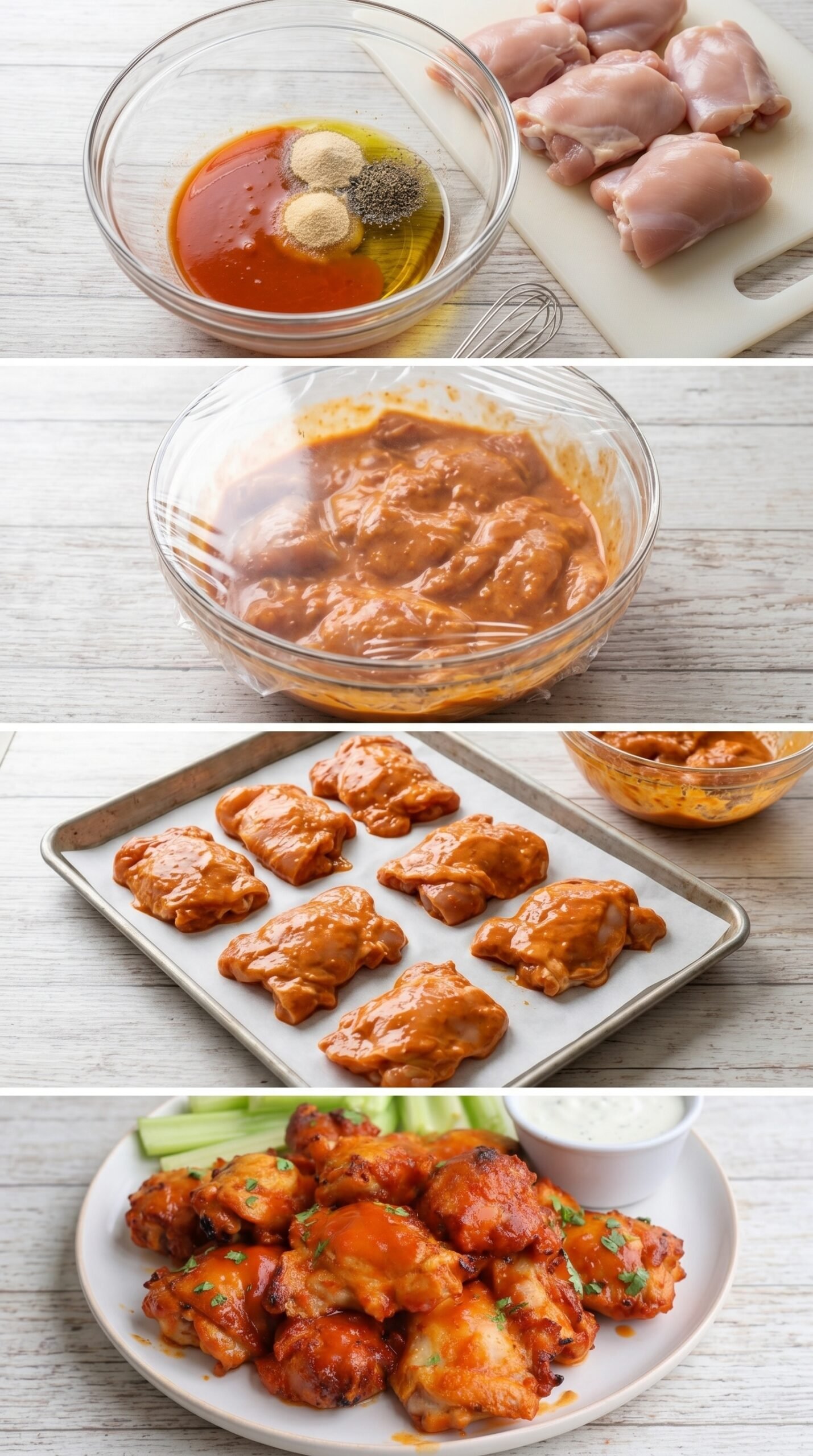
Step 1: Trim the chicken thighs so most of the visible fat is removed. This helps the sauce cling better and keeps the finished chicken from tasting heavy. If the surface is very wet, pat it lightly with paper towels before adding the marinade.
Step 2: Mix part of the hot sauce with olive oil, garlic powder, onion powder, and black pepper in a medium bowl. Add the chicken and stir until every thigh is coated. The mixture should look glossy and evenly orange-red, with no dry patches of seasoning.
Step 3: Cover the bowl and refrigerate the chicken for at least 1 hour. This rest is what separates juicy buffalo chicken thighs from chicken that only tastes seasoned on the outside. Do not leave the chicken sitting at room temperature for the marinade time.
Step 4: For baked buffalo chicken thighs, heat the oven to 425 degrees Fahrenheit and arrange the marinated meat on a baking tray in one layer. Bake for about 25 minutes, checking that the thickest part reaches 165 degrees Fahrenheit. Broil for 1 to 3 minutes at the end if you want lightly crisped edges, but watch closely because buffalo sauce can darken fast.
Step 5: For the air fryer method, preheat the air fryer to 380 degrees Fahrenheit for a couple of minutes, spray the basket, and arrange the chicken in one layer. Air fry for 10 minutes, flip, then cook 8 to 10 minutes more. The chicken should look cooked through, lightly browned in spots, and juicy when cut.
Step 6: Place the hot cooked chicken in a clean bowl and pour the remaining hot sauce over the top. Toss until the thighs are evenly coated and glossy. Serve right away so the sauce tastes fresh and the chicken stays tender.
7) Recipe Card: Buffalo Chicken Thighs
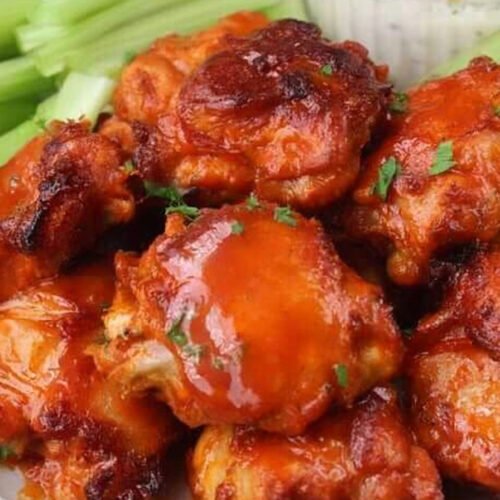
Buffalo Chicken Thighs for Oven or Air Fryer
Ingredients
- 6 boneless skinless chicken thighs, about 1 to 1 1/2 lbs, trimmed of visible fat for better texture
- 2 tablespoons olive oil, to help the marinade coat the chicken and support browning
- 2/3 cup hot sauce such as Frank’s, divided so the chicken marinates first and gets a fresh sauce finish
- 1 teaspoon garlic powder, for savory depth without burning
- 1 teaspoon onion powder, to round out the hot sauce flavor
- 1/2 teaspoon black pepper, freshly ground for a mild sharp finish
- Extra salt if needed, added only after tasting because hot sauce can already be salty
Instructions
- Trim the chicken thighs so most of the visible fat is removed. Pat them lightly dry if they feel wet, which helps the marinade cling instead of sliding off.
- In a medium bowl, mix 1/3 cup hot sauce with the olive oil, garlic powder, onion powder, and black pepper. Add the chicken thighs and stir until every piece is coated. Cover and refrigerate for at least 1 hour so the seasoning can soak into the meat.
- For the oven method, preheat the oven to 425 degrees Fahrenheit. Arrange the marinated chicken thighs on a baking tray in a single layer and bake for about 25 minutes, or until the thickest part reaches 165 degrees Fahrenheit. For lightly crisped edges, broil for 1 to 3 minutes at the end while watching closely.
- For the air fryer method, preheat the air fryer to 380 degrees Fahrenheit for a couple of minutes. Spray the basket with nonstick spray and arrange the chicken thighs in one layer with space between pieces. Air fry for 10 minutes, flip, then air fry for 8 to 10 more minutes, until the chicken reaches 165 degrees Fahrenheit.
- Place the hot cooked chicken in a clean bowl and pour the remaining 1/3 cup hot sauce over the top. Toss until glossy and evenly coated, then serve immediately while the chicken is juicy and the sauce is bright.
8) Tips for Making Buffalo Chicken Thighs
For better buffalo chicken thighs, treat the marinade as seasoning, not as a heavy sauce bath. The chicken should be coated, but it should not be swimming. Too much wet marinade on the pan can create steam, which softens the surface and slows browning. Stir the chicken well before covering it, and make sure the seasoning touches all sides.
Spacing is one of the quiet details that changes the result. On a sheet pan, leave a little room between the thighs so hot air can move around them. In an air fryer, cook in batches if needed. A crowded basket traps moisture, and that is when air fryer chicken starts tasting more steamed than roasted.
Use a thermometer from the side of the thickest thigh, not straight down into the thinnest edge. Boneless chicken thighs can have uneven thickness, and the center needs to reach 165 degrees Fahrenheit. Once the chicken is done, do not keep cooking it just to make the sauce darker. Use the final sauce toss for stronger flavor instead.
If you want slightly crisper baked edges, broiling for 1 to 3 minutes works well, but stay near the oven. Hot sauce contains solids and acidity that can darken quickly under direct heat. The goal is lightly caramelized edges, not scorched sauce.
9) Common Mistakes & Fixes
Problem: The chicken tastes dry. Cause: It cooked past 165 degrees Fahrenheit or sat too long under the broiler. Fix: Start checking early, especially if your thighs are small, and use the final sauce toss to add moisture and brightness.
Problem: The sauce tastes too sharp. Cause: The hot sauce was not balanced with oil and savory seasonings. Fix: Make sure the olive oil, garlic powder, onion powder, and black pepper are mixed smoothly into the marinade before adding the chicken.
Problem: The chicken looks pale or wet. Cause: The pieces were crowded, or too much marinade pooled around them. Fix: Arrange the chicken in one layer with space between pieces and avoid dumping excess marinade onto the tray.
Problem: The finished chicken tastes salty. Cause: Extra salt was added before accounting for the sodium in the hot sauce. Fix: Cook first, toss with the reserved sauce, taste, and only then add a small amount of salt if needed.
Problem: The coating does not taste fresh. Cause: All the sauce was cooked instead of divided. Fix: Save the final portion of hot sauce for tossing after the chicken is fully cooked.
10) How to Tell Buffalo Chicken Thighs Are Perfect
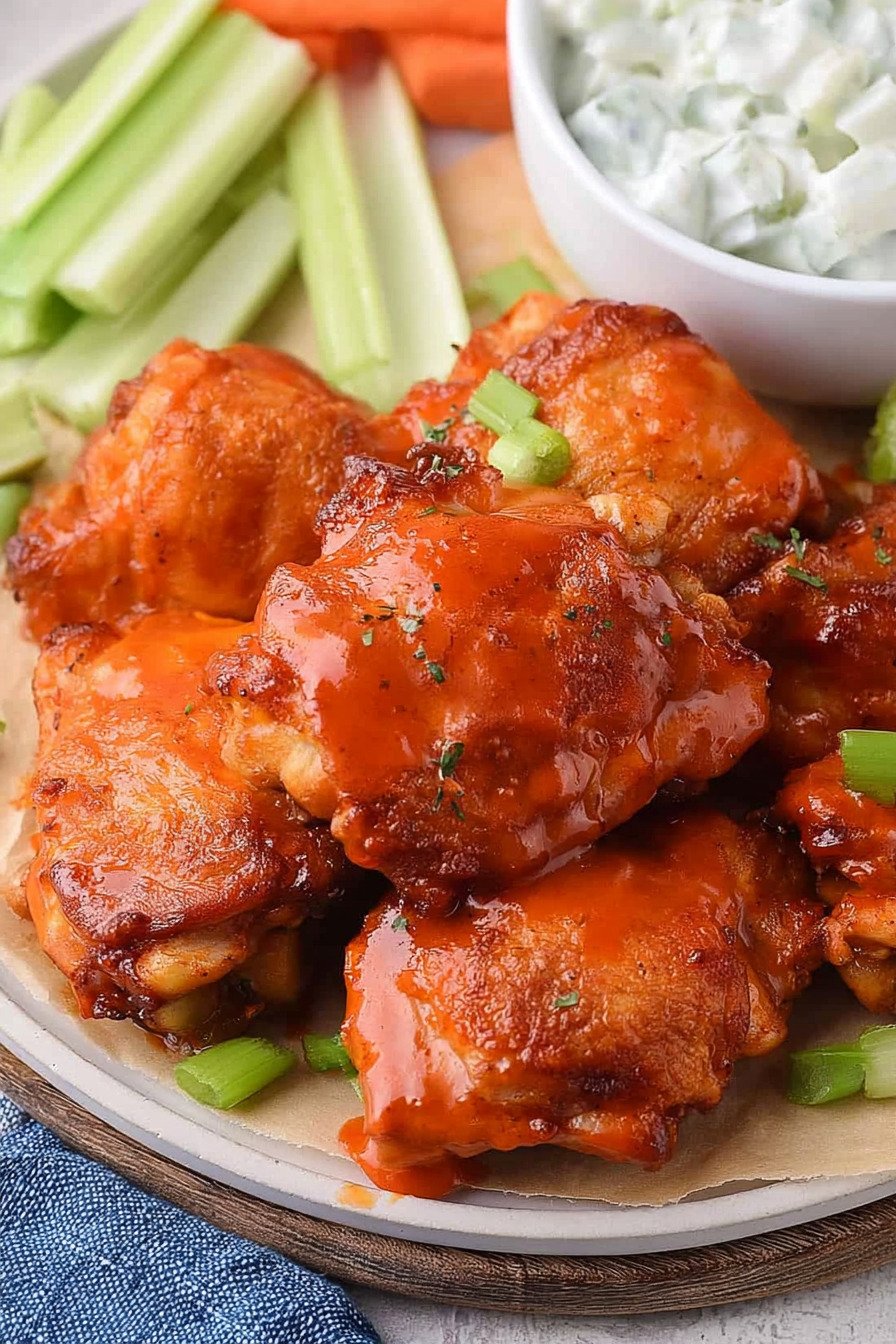
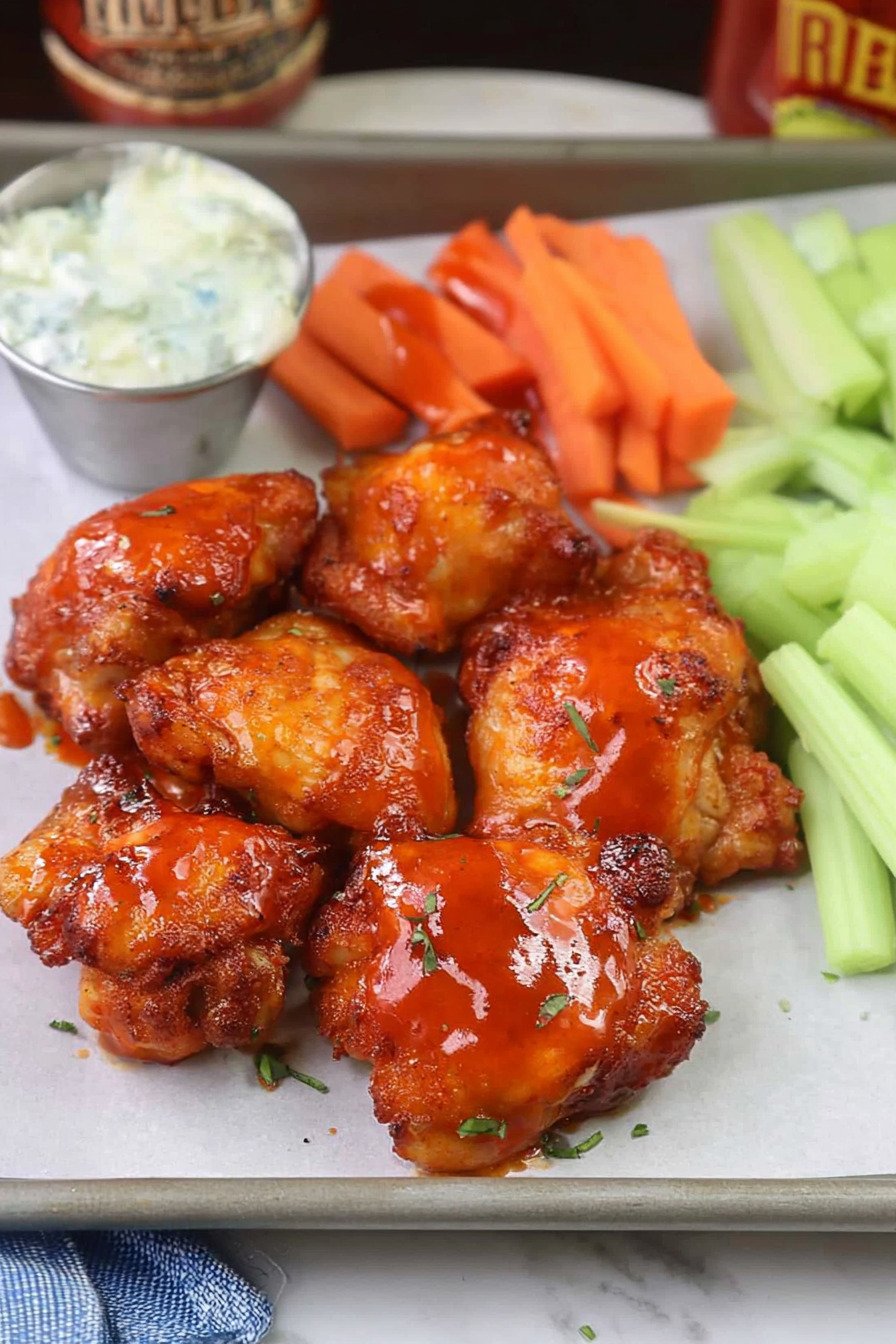
Perfect buffalo chicken thighs should look glossy after the final sauce toss, with lightly browned edges from the oven or air fryer. The surface should not look watery, gray, or greasy. When you cut into the thickest piece, the meat should be opaque, juicy, and tender, not stringy or dry.
The most reliable doneness cue is an internal temperature of 165 degrees Fahrenheit. Visual cues help, but hot sauce can hide color changes, so temperature matters. The chicken should feel firm but not stiff when pressed gently with tongs. If it feels tight and springy, it may be overcooked.
The aroma should be tangy, savory, and slightly roasted. If it smells harsh or burnt, the sauce may have spent too long under direct heat. The flavor should have heat from the hot sauce, savory depth from the garlic and onion powder, and enough salt to taste seasoned without becoming overpowering.
11) Professional Secrets Behind Better Buffalo Chicken Thighs
The first professional habit is separating moisture control from flavor control. Trim excess fat, avoid overcrowding, and cook the chicken in one layer so the heat can reach the surface properly. Then use the finishing sauce to control the final buffalo punch. This gives you a cleaner result than trying to force every bit of flavor into the pan from the beginning.
The second secret is using dry seasonings that match the cooking method. Garlic powder and onion powder work better here than fresh aromatics because they distribute evenly and do not burn as easily. That is especially useful in the air fryer, where moving hot air can intensify browning quickly.
The third secret is knowing when not to touch the chicken. Once the thighs are arranged on the tray or in the basket, let the heat do its job. Flipping too often interrupts surface cooking. For the air fryer, one flip halfway through is enough. For the oven, leave the chicken in place unless you are checking doneness.
12) Best Dishes or Pairings to Serve With Buffalo Chicken Thighs
Buffalo chicken thighs pair best with sides that cool, crunch, or absorb the sauce. Celery sticks, carrot sticks, ranch dressing, or blue cheese dressing make the meal feel classic and balanced. The fresh crunch helps cut through the heat and richness of the chicken.
For a dinner plate, serve the chicken with roasted potatoes, baked fries, rice, coleslaw, corn, or a crisp green salad. The sauce is bold, so the side dishes do not need to be complicated. A creamy slaw or simple cucumber salad is especially helpful when the hot sauce has a strong vinegar kick.
Leftover buffalo chicken also works well tucked into wraps, chopped over salad, added to grain bowls, or served with toasted rolls. If you want a game day style spread, slice the thighs and serve them with pickles, celery, and a cooling dip so every bite has heat, crunch, and contrast.


13) Making Buffalo Chicken Thighs Ahead of Time
The best make-ahead move is to prepare the marinade and coat the chicken in advance. Refrigerate it for at least 1 hour, or up to 12 hours if you want deeper flavor. Because hot sauce is acidic, I do not like pushing the marinade too long; after a while, the surface texture can become a little too soft.
You can also cook the chicken ahead, but the texture is best when served soon after the final sauce toss. If you need to make it earlier, cook the chicken, cool it, and store it without adding extra finishing sauce. Reheat gently, then toss with fresh hot sauce right before serving to bring back that bright buffalo flavor.
For party prep, trim the chicken and mix the marinade in the morning. When it is time to cook, all you need to do is arrange the thighs in one layer and watch the temperature. That keeps the process calm without sacrificing the juicy texture.
14) Storing Leftover Buffalo Chicken Thighs
Store leftover buffalo chicken thighs in an airtight container in the refrigerator for up to 3 days. Let the chicken cool before sealing the container, but do not leave it at room temperature for too long. Extra sauce may collect at the bottom as the chicken sits; spoon it over the meat before reheating.
To reheat, use a 350 degrees Fahrenheit oven or a moderate air fryer setting until the chicken is warmed through. Avoid blasting it with high heat for too long because already-cooked boneless thighs can tighten and dry out. A splash of hot sauce after reheating refreshes the flavor.
Freezing is possible, though the sauce texture may change slightly after thawing. For best results, freeze the cooked chicken in a tightly sealed container for up to 2 months. Thaw in the refrigerator, reheat gently, and add fresh sauce at the end.
15) FAQ (Real Cooking Questions)
Can I make buffalo chicken thighs in the oven instead of the air fryer? Yes. Bake them at 425 degrees Fahrenheit in one layer for about 25 minutes, or until the thickest part reaches 165 degrees Fahrenheit. Broil briefly at the end if you want more browned edges.
Can I use bone-in chicken thighs? Bone-in thighs can work, but they need a longer cooking time than buffalo chicken thighs boneless. Use the same 165 degrees Fahrenheit internal temperature as your guide, and expect the timing to vary based on size.
Why do you divide the hot sauce? Dividing the hot sauce gives you two layers of flavor. The first part seasons the chicken during marinating, and the second part creates a fresh, glossy coating after cooking.
Can I make buffalo chicken thighs crockpot style? You can use similar flavors in a slow cooker, but the result will be softer and less roasted. This recipe is designed for the oven or air fryer because those methods give better surface texture.
Do I need to add extra salt? Not always. Many hot sauces are already salty, so taste the finished chicken after tossing it with the reserved sauce. Add only a small pinch if the flavor seems flat.
How spicy are these buffalo chicken thighs? The heat depends on the hot sauce you choose. A classic cayenne-style hot sauce gives tangy medium heat, while extra-hot sauces will make the chicken sharper and more intense.
16) Save This Buffalo Chicken Thighs Recipe
If this Buffalo Chicken Thighs recipe helped you solve dry, unevenly sauced chicken, save it for busy dinners, game day plates, or meal prep. The key reminder is: marinate first, cook in one layer, and toss with fresh hot sauce after cooking.

17) Conclusion
Buffalo chicken thighs become much more reliable when you stop treating the sauce as the only important part. The real difference comes from trimming the chicken, giving the marinade time to work, cooking the thighs in a single layer, and checking the internal temperature before they dry out. The final toss with hot sauce is what brings everything back to life: heat, tang, shine, and that bold buffalo finish.
Once you understand those checkpoints, this recipe feels simple in the best way. You are not guessing, drowning the chicken in sauce, or hoping the meat stays juicy. You are building flavor in stages and stopping at the right moment. That is the secret behind buffalo chicken that tastes confident, balanced, and worth making again.
18) Nutrition
Serving Size 1 portion Calories 315 Sugar 1 g Sodium 980 mg Fat 20 g Saturated Fat 4 g Carbohydrates 2 g Fiber 0 g Protein 31 g Cholesterol 145 mg





Leave a Comment