
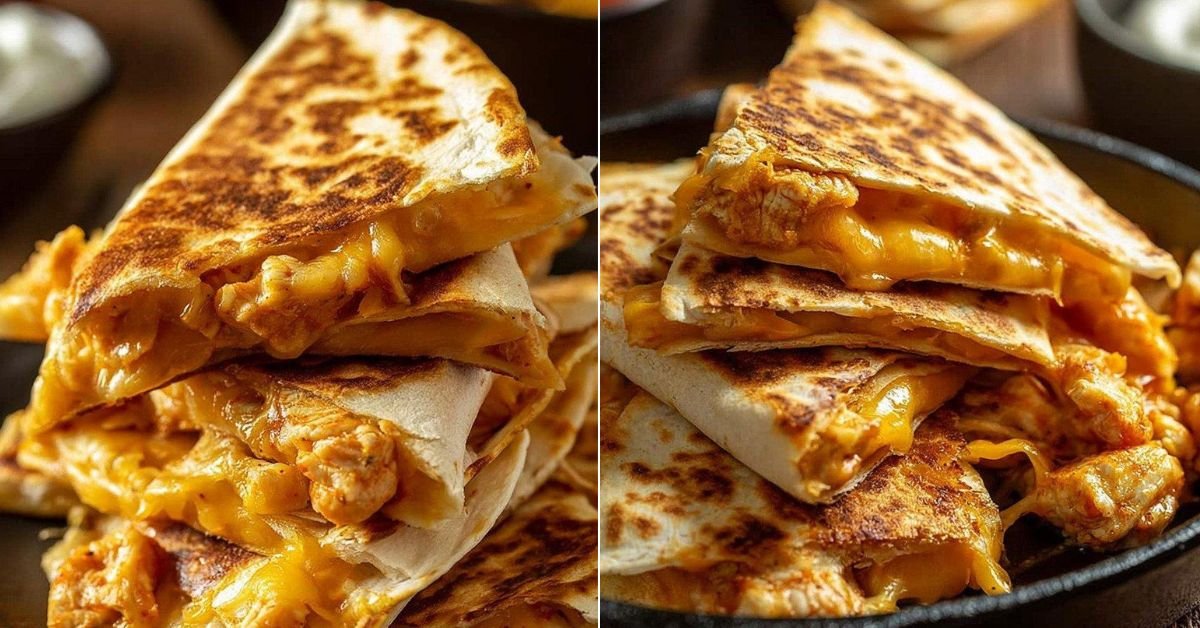
1) The Skillet Trick Behind Chicken and Cheese Quesadilla That Never Stays on the Plate
Nothing ruins a quesadilla faster than a crisp tortilla with cold cheese hiding in the middle. I’m Nancy, and my first few tries were messy: the chicken slipped out, the cheese melted unevenly, and dinner felt more like a cleanup job. After testing the heat, cheese placement, and resting time, I discovered that the real secret is using cheese as the glue on both sides of the chicken. This chicken and cheese quesadilla became the calm, reliable skillet meal I reach for when family dinner needs comfort, crunch, and a little taco-night energy.
Table of Contents
- 1) The Skillet Trick Behind Chicken and Cheese Quesadilla That Never Stays on the Plate
- 2) Key Takeaways
- 3) Easy Chicken and Cheese Quesadilla That Never Stays on the Plate Recipe
- 4) Why Most Chicken and Cheese Quesadilla That Never Stays on the Plate Recipes Fail
- 5) Ingredients for Chicken and Cheese Quesadilla That Never Stays on the Plate
- 6) How to Make Chicken and Cheese Quesadilla That Never Stays on the Plate
- 7) Recipe Card: Chicken and Cheese Quesadilla That Never Stays on the Plate
- 8) Tips for Making Chicken and Cheese Quesadilla That Never Stays on the Plate
- 9) Common Mistakes & Fixes
- 10) How to Tell Chicken and Cheese Quesadilla Has the Right Texture
- 11) Professional Secrets Behind Better Chicken and Cheese Quesadilla
- 12) Best Dishes or Pairings to Serve With Chicken and Cheese Quesadilla
- 13) Making Chicken and Cheese Quesadilla Ahead of Time
- 14) Storing Leftover Chicken and Cheese Quesadilla
- 15) FAQ (Real Cooking Questions)
- 16) Save This Chicken and Cheese Quesadilla That Never Stays on the Plate Recipe
- 17) Conclusion
- 18) Nutrition
2) Key Takeaways
- Cheese placement matters: Put cheese under and over the chicken so the filling binds together instead of falling out when sliced.
- Medium heat is the sweet spot: Too high, and the tortilla burns before the cheese melts; too low, and the tortilla turns pale and soft.
- Small chopped chicken works better: Smaller pieces spread evenly, heat quickly, and make the quesadilla easier to cut cleanly.
- A short rest fixes messy wedges: Letting the quesadilla sit for a minute or two helps the melted cheese settle before slicing.
3) Easy Chicken and Cheese Quesadilla That Never Stays on the Plate Recipe
This easy chicken quesadilla recipe is built around a simple skillet method: seasoned cooked chicken, shredded cheese, flour tortillas, and a butter-oil blend for browning. The goal is not just melted cheese. The goal is a quesadilla that turns crisp on the outside while staying soft, warm, and cohesive inside.
The biggest improvement comes from treating the cheese like structure, not just flavor. When cheese sits both below and above the chicken, it melts around the filling and helps hold everything together. That small step makes this chicken quesadilla recipe easier to flip, easier to slice, and much less likely to spill across the cutting board.
The butter adds flavor and color, while the neutral oil helps keep the butter from browning too aggressively. The seasoning is intentionally simple: salt, black pepper, chili powder, and garlic powder. It gives the cooked chicken a warm taco-style flavor without adding wet ingredients that could make the tortilla soggy.
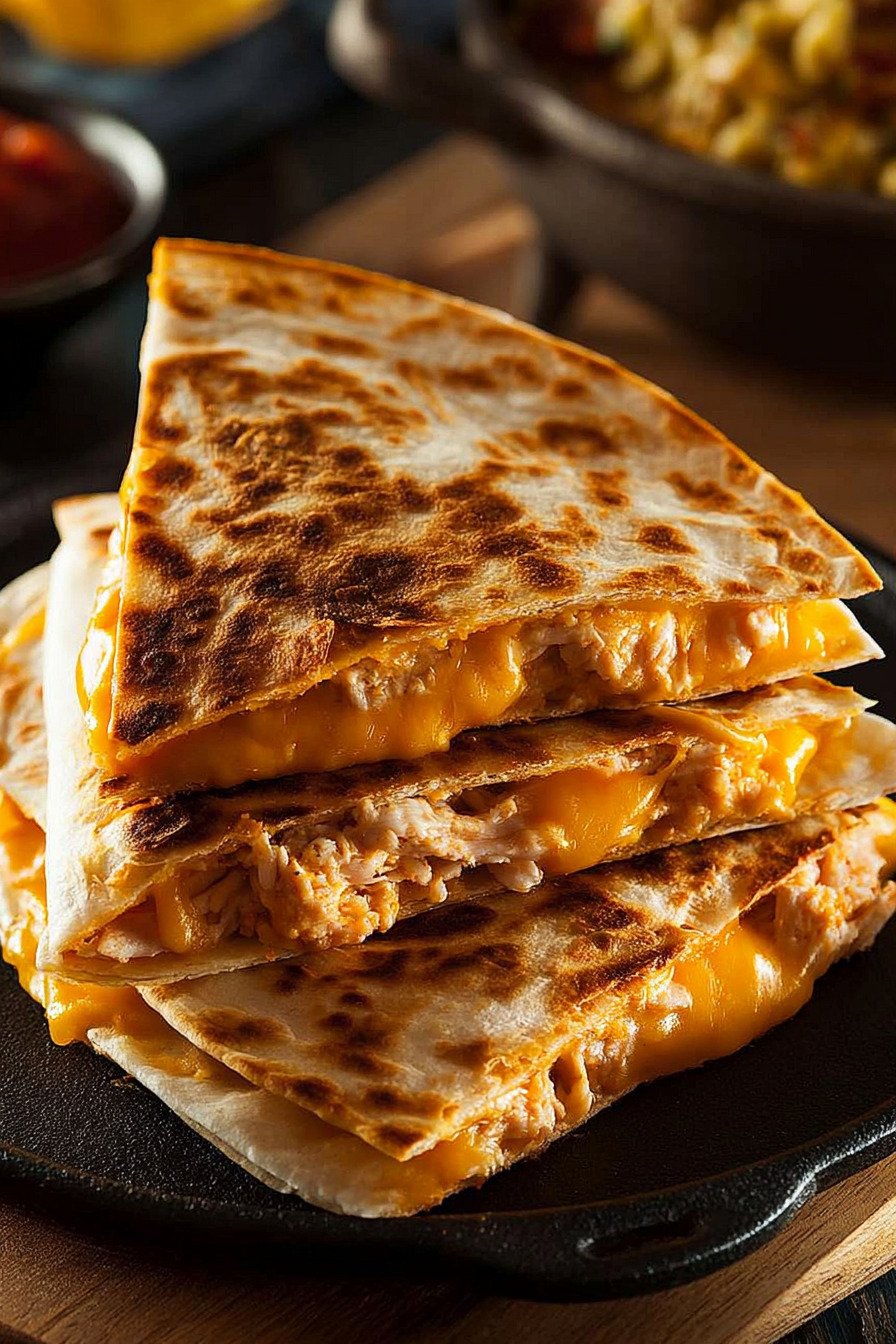
4) Why Most Chicken and Cheese Quesadilla That Never Stays on the Plate Recipes Fail
Most quesadilla failures start with heat control. If the skillet is too hot, the tortilla browns before the cheese has time to melt. The outside looks finished, but the inside stays patchy and loose. Medium heat gives the cheese enough time to soften and bind while the tortilla slowly develops golden spots.
Another common problem is filling that is too chunky or uneven. Large chicken pieces create bumps, which keep the tortillas from pressing together. Chopped chicken works better because it spreads into a thin, even layer. The flatter the filling, the more contact the tortilla has with the skillet, and the cleaner the quesadilla cooks.
Wet chicken can also ruin the texture. If the cooked chicken is very juicy, sauced, or freshly refrigerated with moisture on the surface, it can steam the tortilla from the inside. A good chicken and cheese quesadilla should have a crisp shell, not a damp one. Patting the chicken dry or letting it lose excess steam before seasoning helps.
The final mistake is cutting too soon. Hot melted cheese is fluid, so the filling can slide out if the quesadilla is sliced the second it leaves the pan. A short rest gives the cheese just enough time to tighten slightly while staying melty.
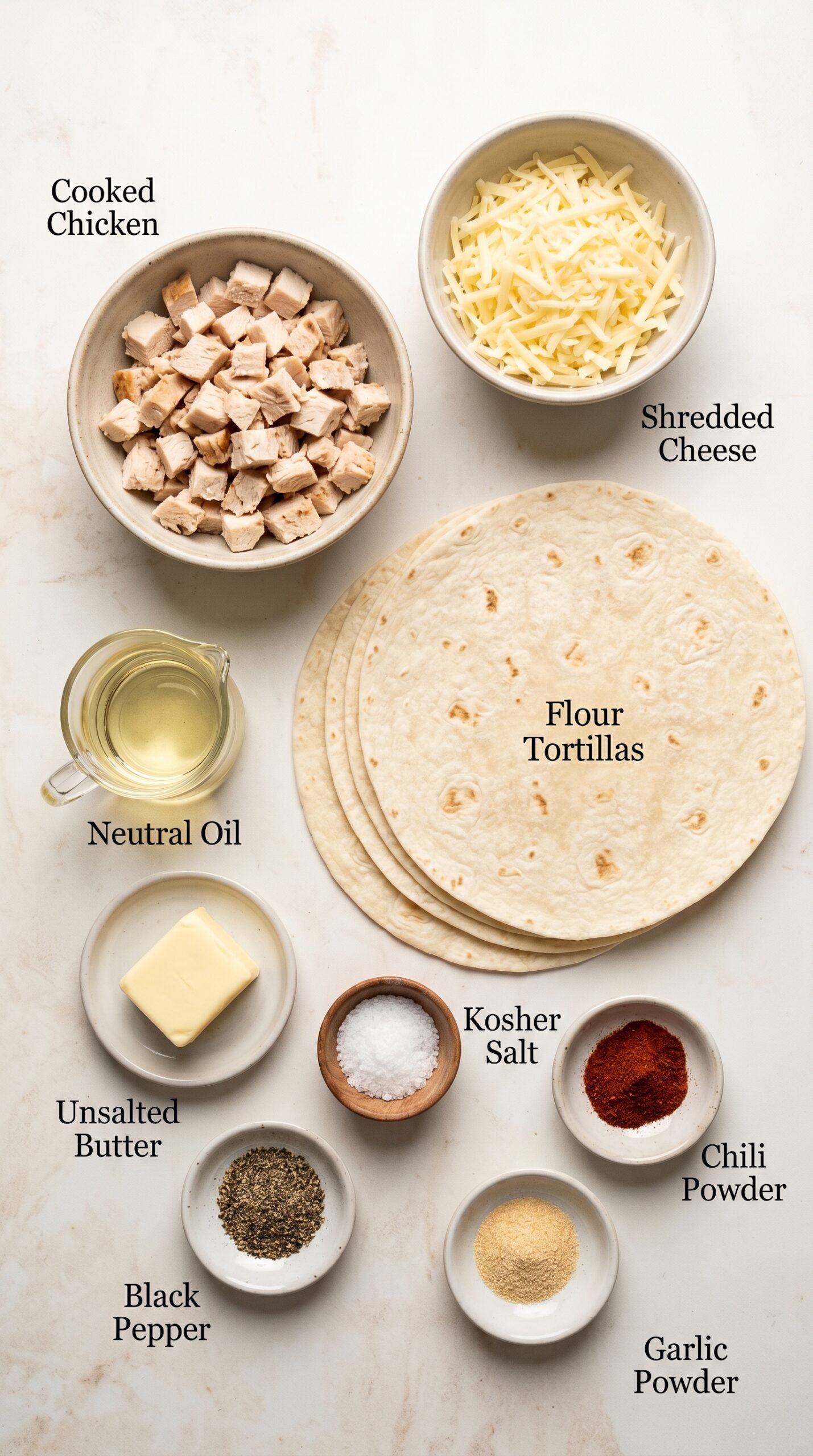
5) Ingredients for Chicken and Cheese Quesadilla That Never Stays on the Plate
Cooked chicken: Chopped cooked chicken is the main filling, and it works best when cut into small, even pieces. Use it after it has cooled slightly or after excess moisture has been patted away. If the pieces are too large, the quesadilla becomes harder to press and flip.
Shredded cheese: Cheese gives this recipe flavor, melt, and structure. Use it in two layers so the chicken is held between melted cheese. A good melting cheese makes a smoother center; a very dry or crumbly cheese can separate and leave gaps.
Large flour tortillas: Flour tortillas brown evenly and stay flexible enough to hold the filling. Use them when they feel soft, not dry or cracked. If the tortillas are stiff, warm them briefly before assembling so they do not split during flipping.
Neutral oil: Oil helps the tortilla crisp without giving the quesadilla a strong flavor. It also raises the browning tolerance of the butter. If you use only butter, watch the heat carefully because milk solids can brown quickly.
Unsalted butter: Butter adds flavor and helps create golden color. Unsalted butter gives better control because the chicken is already seasoned with kosher salt. If salted butter is used, reduce the added salt slightly.
Kosher salt: Salt wakes up the cooked chicken and keeps the filling from tasting flat. Add it before cooking so it distributes through the chopped chicken instead of sitting on one bite.
Black pepper: Black pepper adds mild warmth and balances the richness of the cheese. Freshly cracked pepper gives a sharper aroma, while pre-ground pepper is softer and more subtle.
Chili powder: Chili powder brings taco-style warmth without adding liquid. It is useful in quesadilla recipes easy enough for a skillet because it seasons quickly and evenly.
Garlic powder: Garlic powder gives the chicken savory depth without adding raw garlic moisture. Fresh garlic can burn in the skillet if it falls out of the tortilla, so powder is more reliable here.
- Shredded cheese vs sliced cheese: Shredded cheese melts into the chicken more evenly, while sliced cheese can leave thick pockets that take longer to soften.
- Butter plus oil vs butter alone: The blend gives flavor and steadier browning; butter alone can taste great but needs gentler heat.
- Small chopped chicken vs large chunks: Small pieces create a flatter filling, cleaner flipping, and better cheese coverage.
- Medium heat vs high heat: Medium heat melts the center before the outside gets too dark; high heat often makes a crisp tortilla with a cold middle.
6) How to Make Chicken and Cheese Quesadilla That Never Stays on the Plate
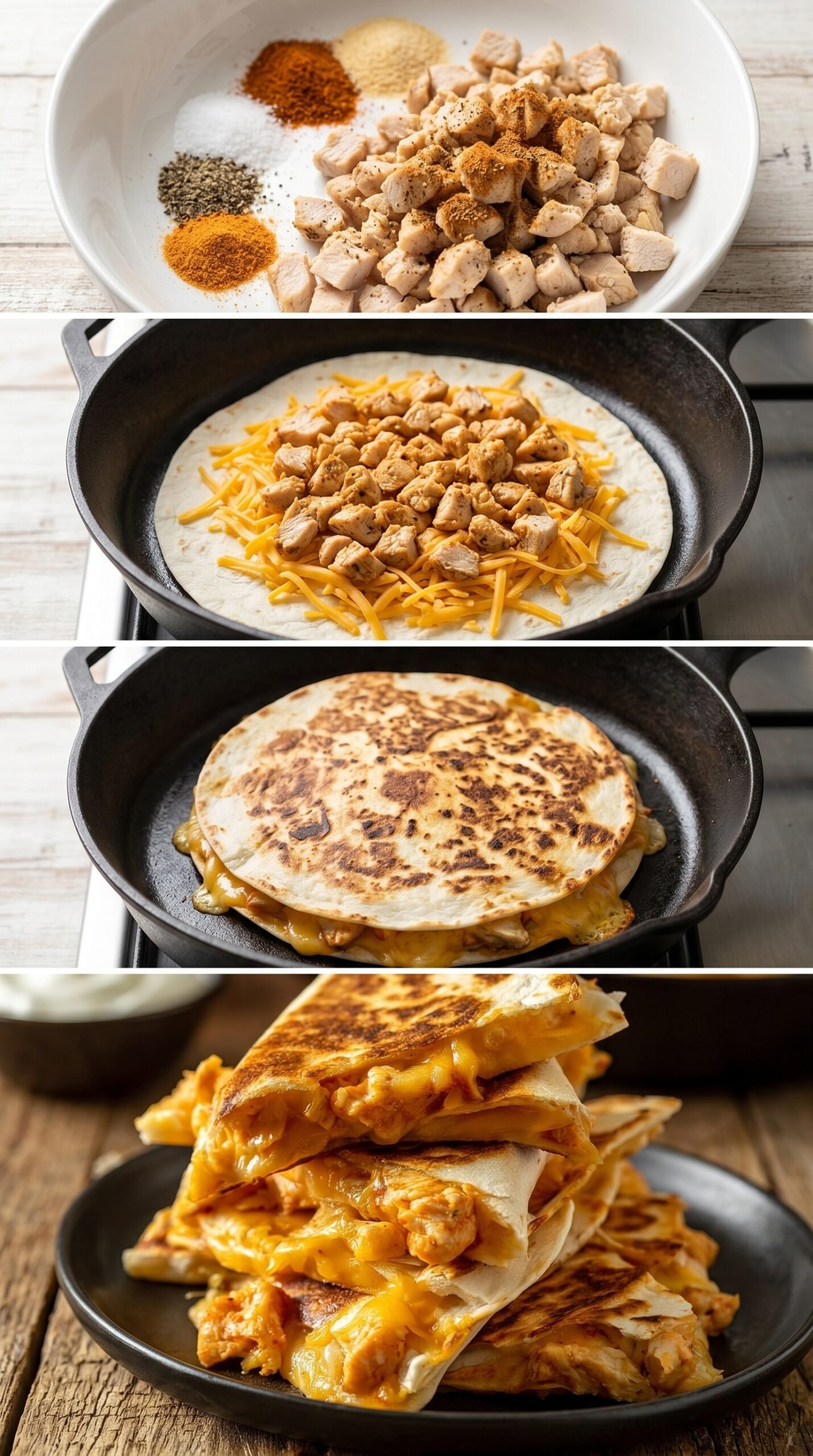
Step 1: Season the chopped cooked chicken with salt, black pepper, chili powder, and garlic powder. Toss it well so every piece gets flavor. This matters because the chicken is already cooked, so the seasoning needs to coat the surface evenly.
Step 2: Heat a skillet over medium heat and melt the butter with the neutral oil. Look for gentle bubbling, not smoking. If the butter browns immediately, the pan is too hot and the tortilla may scorch before the cheese melts.
Step 3: Place a tortilla in the skillet and sprinkle cheese across it. Keep a narrow border at the edge so melted cheese does not leak out and burn against the pan.
Step 4: Add the seasoned chicken, then top it with more cheese. This double-cheese placement is the part that keeps the filling from falling apart. It also helps the quesadilla slice into neat wedges.
Step 5: Cover with the second tortilla and press gently with a spatula. Do not smash it hard. Gentle pressure makes the layers touch; heavy pressure pushes the filling out.
Step 6: Cook until the bottom is golden and crisp, then flip carefully with a wide spatula. The tortilla should feel sturdy before turning. If it bends too much, give it another minute.
Step 7: Cook the second side until the cheese is fully melted. You can check the edge for soft, glossy cheese and a crisp tortilla surface.
Step 8: Rest briefly before slicing. This short pause keeps the cheese from rushing out and gives the wedges a cleaner shape.
7) Recipe Card: Chicken and Cheese Quesadilla That Never Stays on the Plate
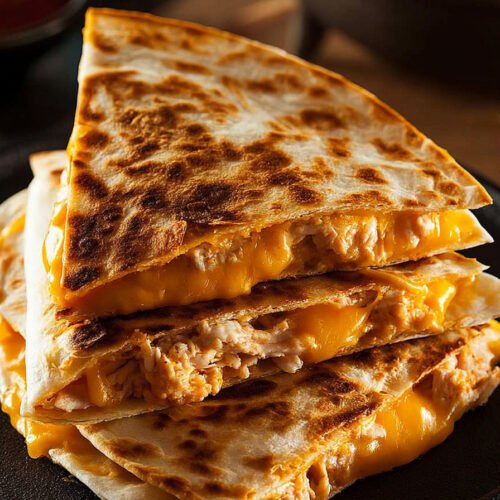
Chicken and Cheese Quesadilla That Never Stays on the Plate
Ingredients
- 2 cups cooked chicken, chopped into small pieces so the filling spreads evenly
- 2 cups shredded cheese, divided so some goes under and over the chicken for better melting
- 4 large flour tortillas, soft and flexible for folding or stacking without cracking
- 1 tbsp neutral oil, for steady skillet browning without overpowering the flavor
- 1 tbsp unsalted butter, for a golden, lightly rich tortilla surface
- 1/2 tsp kosher salt, to season the chicken evenly
- 1/2 tsp black pepper, for mild heat and balance
- 1 tsp chili powder, for warm taco-style flavor
- 1/2 tsp garlic powder, to season the chicken without adding moisture
Instructions
- Season the chopped cooked chicken evenly with kosher salt, black pepper, chili powder, and garlic powder, tossing until every piece is lightly coated.
- Heat a wide skillet over medium heat, then add the neutral oil and unsalted butter. Let the butter melt and foam lightly without browning too hard.
- Place one tortilla in the skillet and sprinkle part of the shredded cheese evenly over the surface, leaving a small border around the edge.
- Scatter the seasoned chicken over the cheese, then add more shredded cheese on top so the filling melts together instead of sliding out.
- Cover with a second tortilla and press gently with a spatula so the layers make contact without forcing the filling out the sides.
- Cook for 2 to 4 minutes, until the bottom tortilla is golden, crisp, and sturdy enough to flip. Turn carefully with a wide spatula.
- Cook the second side for another 2 to 4 minutes, until the tortilla is crisp and the cheese inside is fully melted.
- Transfer to a cutting board and rest for 1 to 2 minutes before slicing so the melted cheese settles and the wedges hold together.
8) Tips for Making Chicken and Cheese Quesadilla That Never Stays on the Plate
Keep the filling thin. A quesadilla should cook quickly, and a thick mound of chicken slows down melting. A thin, even layer lets the cheese soften before the tortilla gets too dark. Think of the filling as a blanket, not a pile.
Use cheese as the first and last layer of filling. This is the most practical trick in this chicken and cheese quesadilla because cheese melts into the tortilla and chicken at the same time. It creates structure without needing sauce or extra ingredients.
Do not rush the flip. The bottom tortilla should be golden with crisp spots before you turn it. If it is still pale, the quesadilla may bend, tear, or drop filling into the pan.
If you are making more than one quesadilla, wipe out any burnt cheese between batches. Tiny browned bits can turn bitter and stick to the next tortilla.
For a richer result, use a cheese that melts smoothly. Cheddar brings sharper flavor, Monterey Jack melts softly, and a Mexican-style shredded blend gives the familiar flavor many people expect from chicken taco recipes.
9) Common Mistakes & Fixes
Problem: The tortilla browns before the cheese melts. Cause: The skillet is too hot. Fix: Lower the heat to medium or medium-low and give the cheese time to soften before flipping.
Problem: The filling falls out when sliced. Cause: The chicken is too chunky, the cheese is not layered on both sides, or the quesadilla was cut too soon. Fix: Chop the chicken smaller, use cheese above and below it, and rest before slicing.
Problem: The tortilla turns soft instead of crisp. Cause: The chicken is too wet or the pan is not hot enough. Fix: Use drier cooked chicken, keep the filling thin, and cook over steady medium heat.
Problem: The flavor tastes flat. Cause: Cooked chicken often needs more surface seasoning than raw chicken because the seasoning is not penetrating during cooking. Fix: Toss the chopped chicken thoroughly with salt, pepper, chili powder, and garlic powder before it goes into the tortilla.
Problem: Cheese leaks into the pan and burns. Cause: The filling is spread too close to the tortilla edge. Fix: Leave a small border and press gently instead of forcing the layers flat.
10) How to Tell Chicken and Cheese Quesadilla Has the Right Texture
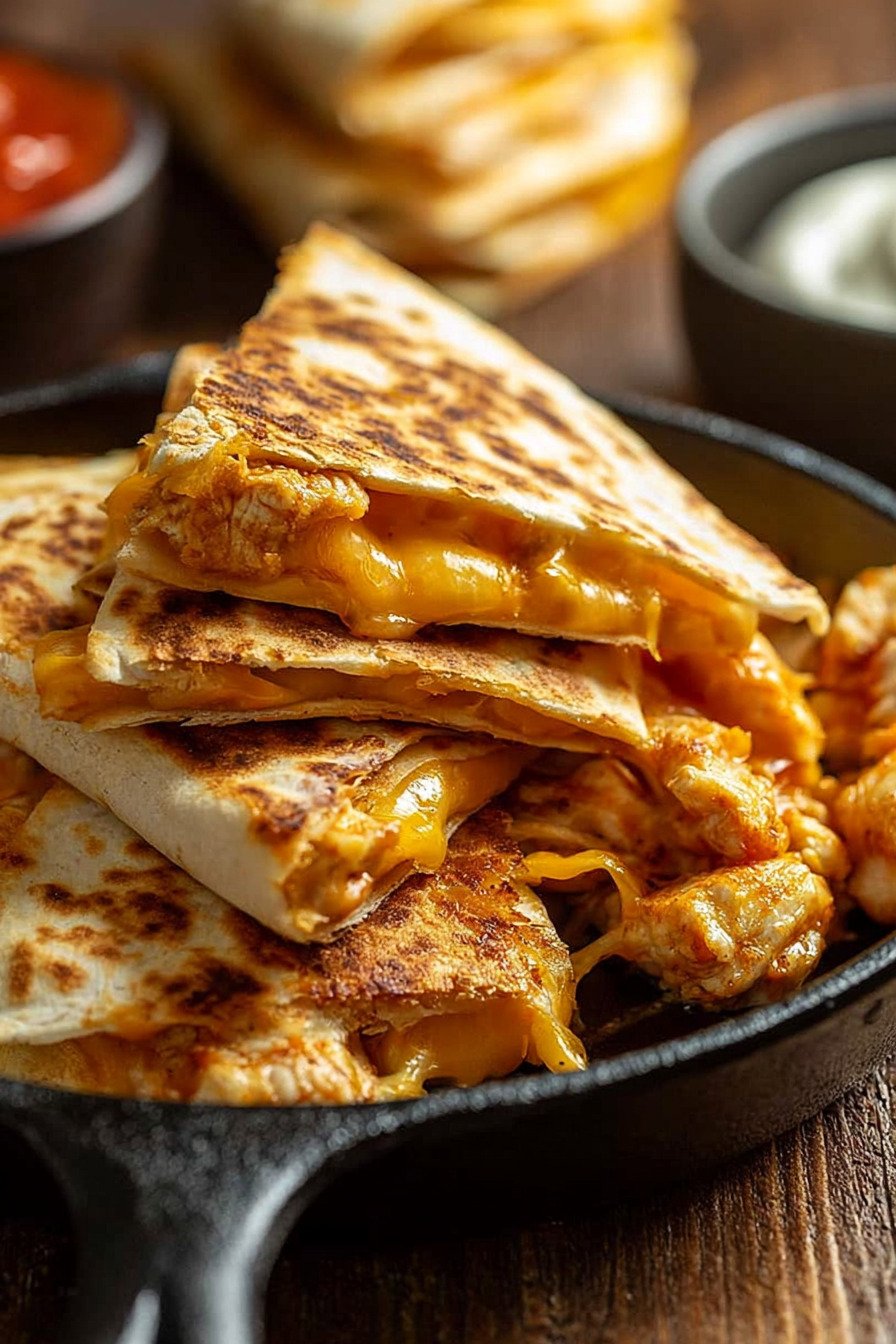
A finished chicken and cheese quesadilla should feel crisp on the outside but not brittle. The tortilla should show golden spots and light browning where it touched the skillet. When you press it with a spatula, it should feel firm enough to hold its shape without cracking.
The cheese should be fully melted and slightly glossy at the edges. If you see unmelted shreds when you peek near the seam, the inside needs more time. If the tortilla is already dark, lower the heat and let the center warm gently.
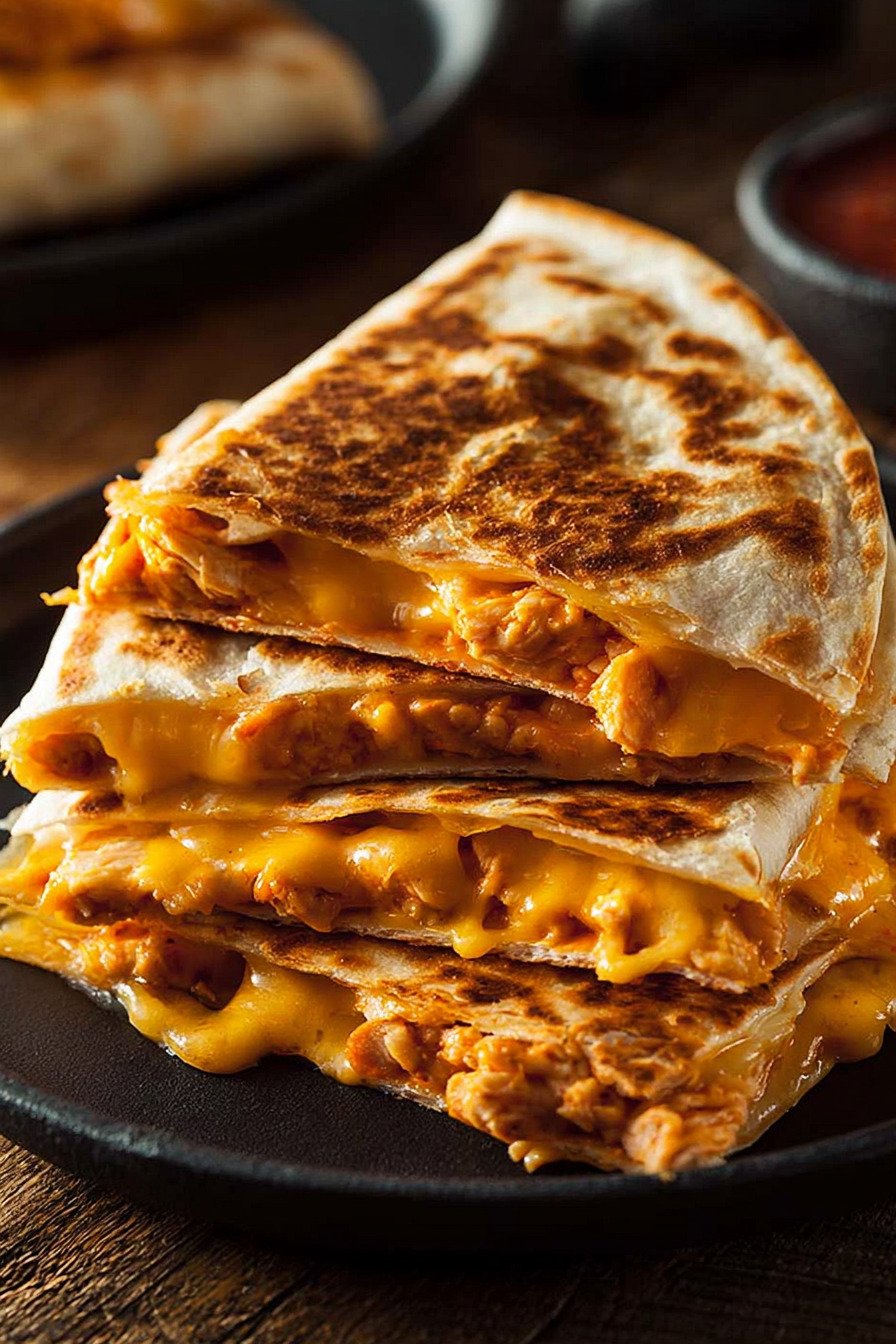
The filling should stay in place when sliced. A little cheese stretch is good; a full slide-out means it either needed more cheese contact, a shorter filling layer, or a brief rest before cutting.
The aroma should be buttery, toasty, and lightly spiced. If it smells bitter or smoky, the skillet was too hot or leaked cheese burned against the pan.
11) Professional Secrets Behind Better Chicken and Cheese Quesadilla
The first secret is managing moisture. Restaurants often use fillings that are flavorful but not watery because excess steam softens tortillas. At home, that means using cooked chicken that is chopped and seasoned, not swimming in sauce.
The second secret is contact. A quesadilla browns best when the tortilla lies flat against the skillet. If the filling is lumpy, the tortilla lifts away from the heat, and the browning becomes uneven. Keeping the chicken layer thin solves that problem.
The third secret is residual heat. Once the second side is crisp, the inside keeps warming for a short moment after it leaves the pan. Resting is not just for big roasts; it helps this small skillet meal hold together too.
The fourth secret is seasoning the chicken before assembly. Sprinkling seasoning after the quesadilla is cooked only flavors the outside. Tossing the chicken first gives every bite a consistent chili-garlic flavor.
12) Best Dishes or Pairings to Serve With Chicken and Cheese Quesadilla
This chicken and cheese quesadilla pairs well with fresh, acidic sides because the tortilla, butter, and cheese are rich. Salsa adds brightness, pico de gallo gives freshness, and a squeeze of lime helps cut through the melted cheese.
For a fuller dinner, serve it with black beans, Mexican-style rice, a chopped tomato salad, corn salad, or a simple cabbage slaw. The crunch from slaw is especially useful because it contrasts with the warm, melty center.
For dipping, keep it simple. Sour cream cools the chili powder, guacamole adds creaminess, and salsa verde brings a sharper tang. If serving for kids, cut the quesadilla into smaller triangles and keep dips on the side.
13) Making Chicken and Cheese Quesadilla Ahead of Time
The best make-ahead strategy is to prepare the filling, not fully cook the quesadilla too early. Season the chopped chicken and store it in the refrigerator until you are ready to assemble. This keeps the tortillas from absorbing moisture while they sit.
You can also shred the cheese ahead and keep the tortillas sealed so they stay soft. When it is time to cook, assemble directly in the skillet. This gives the freshest texture and keeps the outside crisp.
If you need to cook quesadillas ahead for a gathering, slightly under-crisp them, cool them on a rack, then reheat in a dry skillet or warm oven until the tortillas regain their crunch. Avoid stacking hot quesadillas tightly because trapped steam softens them.
14) Storing Leftover Chicken and Cheese Quesadilla
Store leftover chicken and cheese quesadilla wedges in an airtight container in the refrigerator for up to 3 days. Let them cool first so steam does not collect inside the container and make the tortillas soggy.
For reheating, a dry skillet is the best choice. Warm the wedges over medium-low heat until the cheese softens and the tortilla crisps again. An air fryer can also work if you keep the heat moderate and watch the edges closely.
The microwave is fast, but it softens the tortilla. If you use it, heat briefly, then finish the quesadilla in a skillet to bring back some crispness.
Freezing is possible, but the texture is not quite the same. If freezing, wrap cooled wedges tightly and reheat from thawed for better results. The cheese may release a little moisture, so skillet reheating matters even more.
15) FAQ (Real Cooking Questions)
Can I use rotisserie chicken? Yes. Rotisserie chicken works well as long as it is chopped small and not too wet. If the chicken has a lot of juices, pat it lightly before seasoning so the tortilla can crisp.
What cheese melts best for this recipe? Monterey Jack, cheddar, Colby Jack, or a Mexican-style shredded blend all work. For the smoothest center, avoid very dry cheeses that do not melt evenly.
Can I make this as a folded quesadilla instead of using two tortillas? Yes. Use one tortilla, fill half, fold it over, and cook the same way. The two-tortilla version makes larger wedges, while the folded version is easier to flip.
How do I stop the quesadilla from getting soggy? Keep the chicken dry, use medium heat, and do not add wet sauces inside the tortilla. Serve salsa, sour cream, or guacamole on the side instead.
Is this also a cheese quesadilla recipe? The same skillet method works for a cheese-only version. Leave out the chicken, use enough cheese to create a thin even layer, and cook until both sides are golden and the center is fully melted.
How can I make the flavor closer to chicken taco recipes? Add taco-style toppings after cooking, such as salsa, lime, lettuce, or diced tomato. Keep wet toppings outside the quesadilla so the tortilla stays crisp.
16) Save This Chicken and Cheese Quesadilla That Never Stays on the Plate Recipe
If this Chicken and Cheese Quesadilla That Never Stays on the Plate helped you solve the messy filling problem, save it for quick skillet dinners, lunch prep, or taco-night leftovers. The key reminder is: cheese under and over the chicken keeps the filling melty, crisp, and sliceable.
17) Conclusion
A better quesadilla is not about stuffing in more filling. It is about controlling heat, moisture, cheese placement, and timing. Once the chicken is chopped small, the cheese is layered properly, and the skillet stays at medium heat, the whole recipe becomes easier to manage.
This chicken and cheese quesadilla turns a common kitchen frustration into a simple method you can repeat. The tortilla crisps, the cheese melts fully, and the filling stays where it belongs. That is the difference between a quesadilla that falls apart and one that disappears from the plate before it has time to cool.
18) Nutrition
Serving Size 1 portion Calories 520 Sugar 2 g Sodium 820 mg Fat 30 g Saturated Fat 14 g Carbohydrates 31 g Fiber 2 g Protein 32 g Cholesterol 105 mg





Leave a Comment