
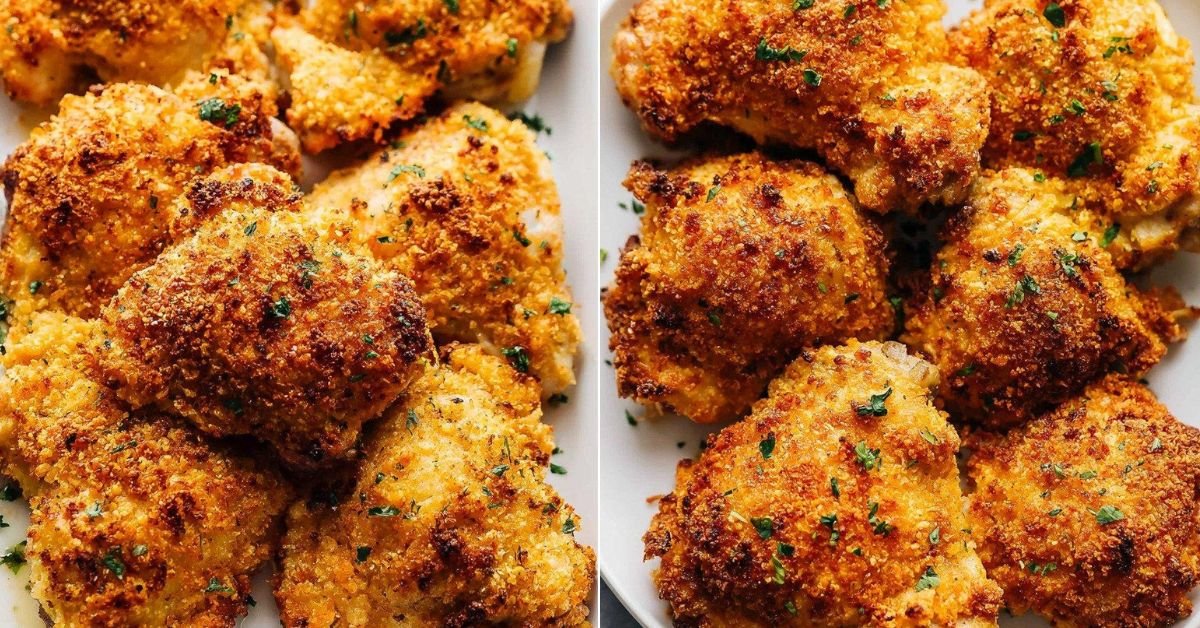
1) What I Learned Testing Crispy Baked Chicken Thighs
Soggy coating on oven chicken is the kind of dinner disappointment that makes you wonder why you did not just fry it. I’m Nancy, and after one batch of breaded chicken thighs came out pale, patchy, and not nearly crisp enough, I started adjusting the breading order, seasoning, pan spacing, and oil drizzle. The discovery was simple but important: Panko needs firm pressure, dry chicken, and enough oven heat to turn golden. These crispy breaded chicken thighs bring me that calm Sunday-dinner feeling without a splattering skillet or a pile of dishes afterward.
Table of Contents
- 1) What I Learned Testing Crispy Baked Chicken Thighs
- 2) Key Takeaways
- 3) Easy Crispy Baked Chicken Thighs Recipe
- 4) Why Most Crispy Baked Chicken Thighs Recipes Fail
- 5) Ingredients for Crispy Baked Chicken Thighs Recipe
- 6) How to Make Crispy Baked Chicken Thighs Recipe
- 7) Recipe Card: Crispy Baked Chicken Thighs Recipe
- 8) Tips for Making Crispy Baked Chicken Thighs Recipe
- 9) Common Mistakes & Fixes
- 10) How to Tell Crispy Baked Chicken Thighs Are Perfect
- 11) Professional Secrets Behind Better Crispy Baked Chicken Thighs Recipe
- 12) Best Dishes or Pairings to Serve With Crispy Baked Chicken Thighs Recipe
- 13) Making Crispy Baked Chicken Thighs Recipe Ahead of Time
- 14) Storing Leftover Crispy Baked Chicken Thighs Recipe
- 15) FAQ (Real Cooking Questions)
- 16) Save This Crispy Baked Chicken Thighs Recipe
- 17) Conclusion
- 18) Nutrition
2) Key Takeaways
- Dry chicken matters: Moisture on the surface keeps flour from sticking cleanly, which can make the coating slide off after baking.
- Panko gives the best crunch: Its coarse texture creates crisp edges that brown better than fine crumbs in the oven.
- Spacing prevents steaming: Crowded chicken traps moisture on the baking sheet and turns the bottom coating soft.
- Temperature confirms doneness: Golden crumbs are helpful, but chicken thighs should reach 165°F in the thickest part for safe, juicy results.
3) Easy Crispy Baked Chicken Thighs Recipe
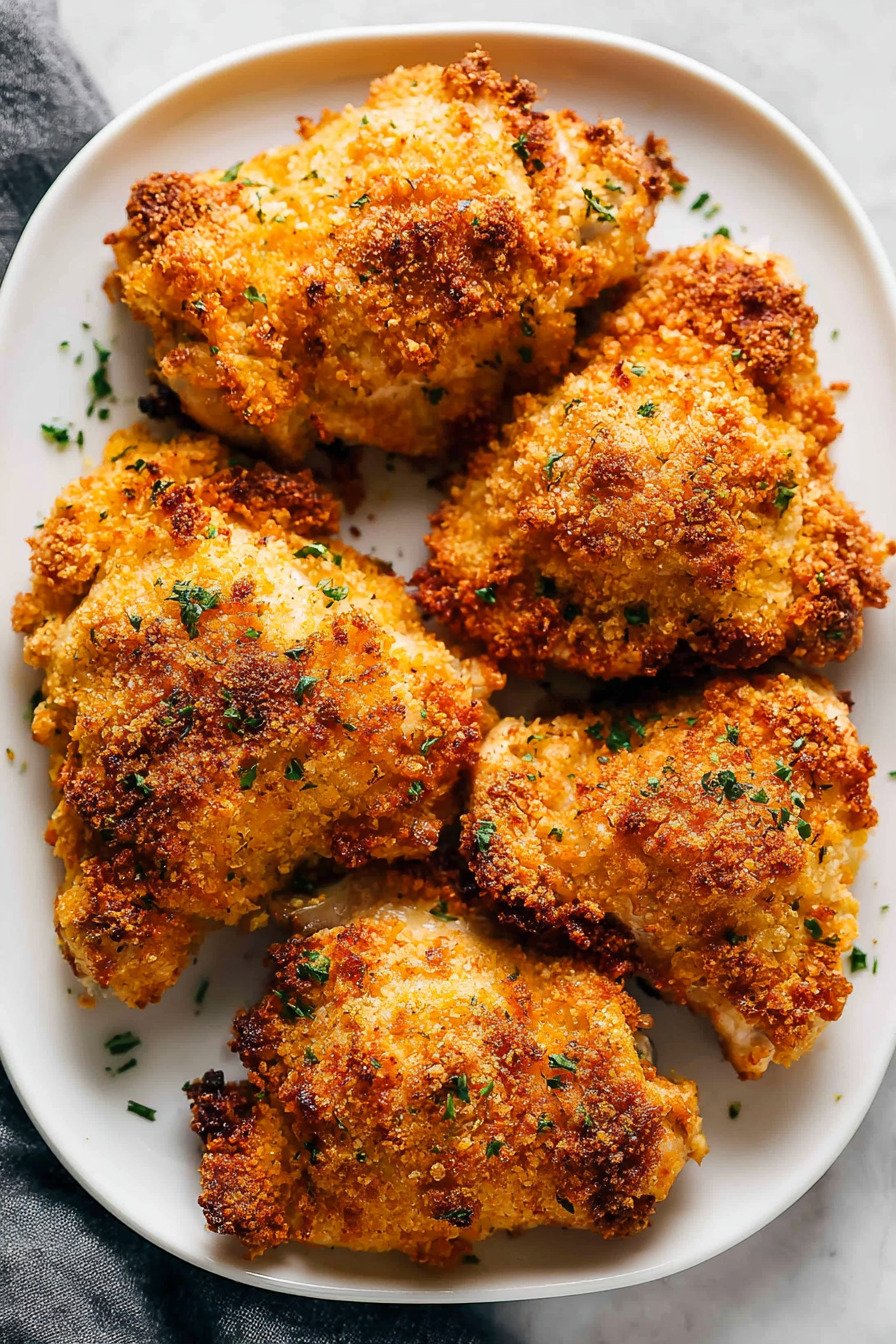
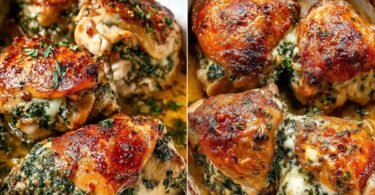
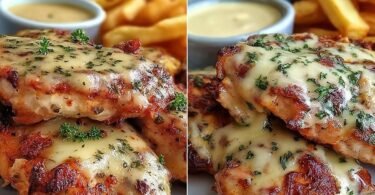
This breaded chicken thighs recipe works because it treats oven-baked chicken like a small system: dry surface, seasoned flour, thin egg coating, coarse crumbs, space on the pan, and enough heat to crisp the outside before the meat dries out. Boneless, skinless chicken thighs are forgiving because they stay juicier than breast meat, but they still need proper coating technique. The flour gives the egg something to grip. The egg gives the Panko something to hold onto. The olive oil helps the crumb layer brown instead of staying pale and dusty. The goal is not just cooked chicken; the goal is a crisp bite, savory coating, and tender meat underneath.
4) Why Most Crispy Baked Chicken Thighs Recipes Fail
Most baked breaded chicken thighs fail for one of five reasons: excess surface moisture, weak seasoning, loose crumbs, poor pan spacing, or guessing doneness by color alone. When chicken goes into flour while wet, the coating turns pasty and may peel away. When the flour and crumbs are not both seasoned, the chicken tastes flat even if the crust looks golden. When Panko is sprinkled instead of pressed on, it falls off before it can crisp. When pieces touch on the baking sheet, they steam each other and soften the coating. And when the chicken is pulled from the oven only because the crust looks browned, the inside may still need a temperature check. This method prevents those problems by building layers in order, using enough seasoning, finishing with a light olive oil drizzle, and baking until the chicken reaches 165°F.
5) Ingredients for Crispy Baked Chicken Thighs Recipe
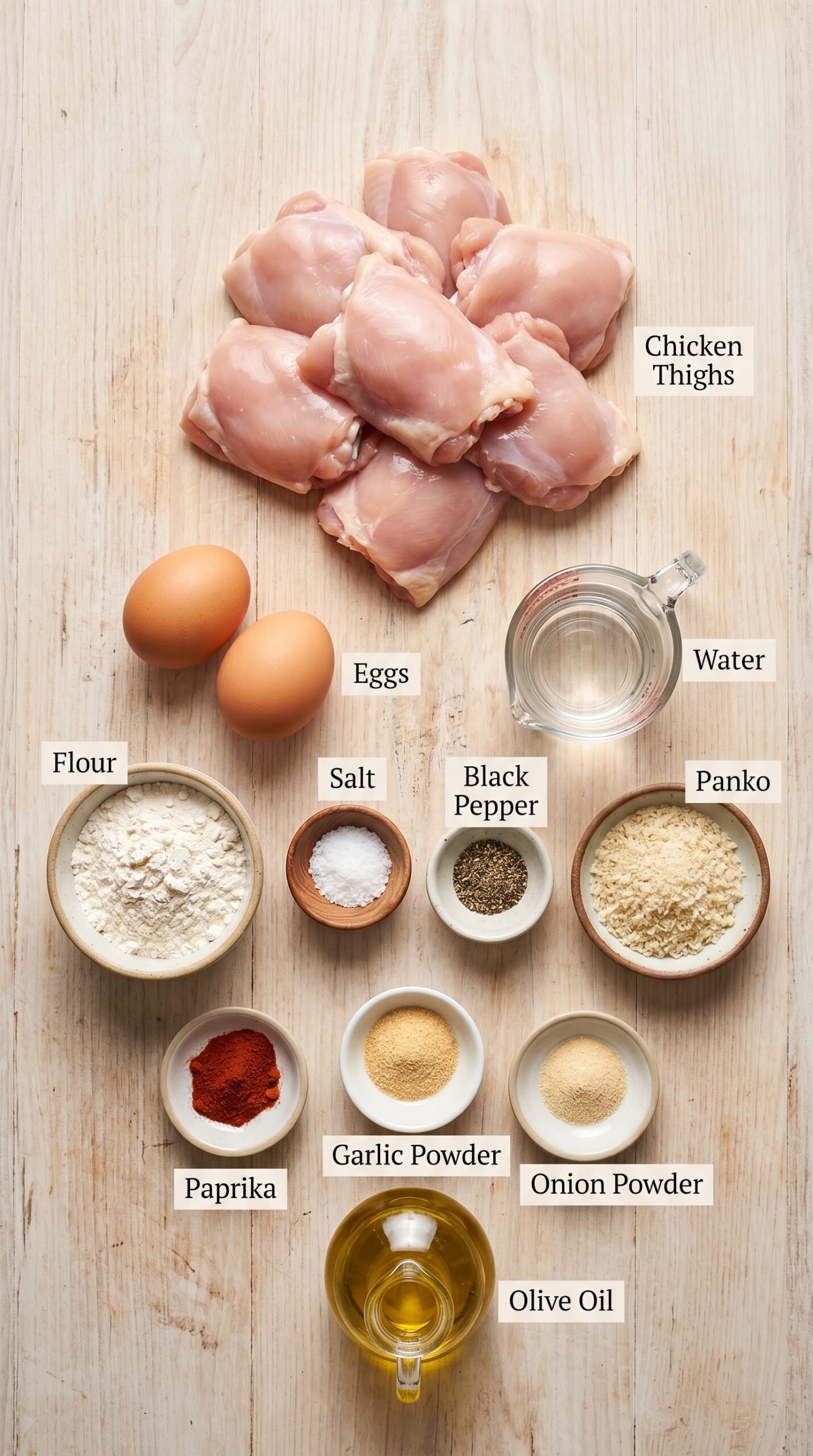
All-purpose flour: Flour is the dry base layer that helps the egg cling to the chicken. Use it after patting the thighs dry; if the chicken is wet, the flour can become gummy instead of lightly coating the surface.
Salt: Salt is divided between the flour and Panko so every layer has flavor. If all the salt goes into only one bowl, the chicken can taste uneven, with bland meat and salty crumbs.
Ground black pepper: Pepper adds gentle heat to the flour layer. It is used early so the seasoning sits close to the chicken instead of only on the outer crust.
Eggs and water: Eggs create the sticky middle layer that holds the crumbs in place. The water loosens the eggs slightly, making it easier to coat the thighs without thick, clumpy patches.
Panko bread crumbs: Panko is the crunch builder. Its larger flakes bake up lighter and crispier than fine breadcrumbs, which is why it works especially well for breadcrumb chicken thighs in the oven.
Paprika: Paprika helps the coating look warmer and more golden while adding mild savory depth. Without it, baked crumbs can look pale even when fully cooked.
Garlic powder and onion powder: These season the crumb layer evenly without adding moisture. Fresh garlic or onion would be more likely to burn or create wet spots in the breading.
Boneless, skinless chicken thighs: Thighs stay juicy because they have more natural fat than chicken breast. Use pieces that are similar in size so they finish cooking at the same time.
Olive oil: A light drizzle helps the Panko brown in the dry heat of the oven. Too little oil can leave the coating dusty; too much can make it heavy.
- Panko vs fine breadcrumbs: Panko creates a lighter, craggier crust, while fine breadcrumbs make a denser coating that may not feel as crisp after baking.
- Chicken thighs vs chicken breast: Thighs are more forgiving and juicy, while breast meat can dry faster and may need closer timing.
- Light oil drizzle vs no oil: Oil encourages browning; without it, the coating may cook through but stay pale and dry-looking.
- Pressed crumbs vs loose crumbs: Pressing the Panko onto the egg-coated chicken gives better coverage and fewer bare spots after baking.
6) How to Make Crispy Baked Chicken Thighs Recipe
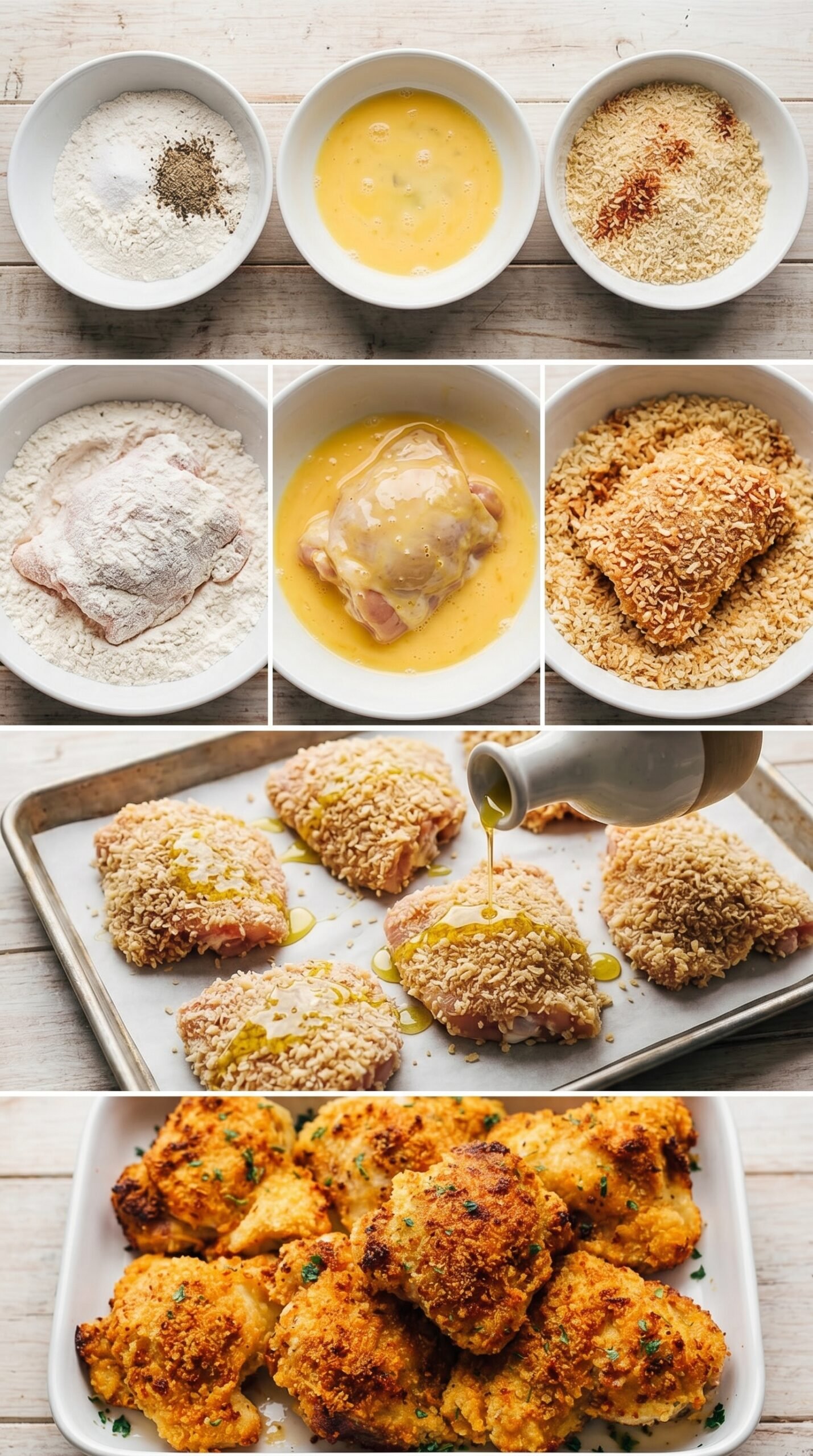
Step 1: Preheat the oven to 400°F and line a baking sheet with parchment paper. Starting with a hot oven helps the coating crisp quickly, while parchment keeps the breaded chicken thighs from sticking and tearing when lifted.
Step 2: Set up three bowls in order: flour with some salt and pepper, beaten eggs with water, and Panko with the remaining salt, paprika, garlic powder, and onion powder. Keeping the bowls in order makes the process cleaner and helps each layer do its job.
Step 3: Dredge each chicken thigh in flour, coating all sides, then shake off the extra. Too much flour can turn into a thick paste under the egg, so aim for a thin, even dusting.
Step 4: Dip the floured chicken into the egg mixture, let excess drip off, then press it into the seasoned Panko. Pressing is the small step most cooks rush, but it is what gives crispy breaded chicken thighs their stronger crust.
Step 5: Arrange the coated thighs on the prepared pan with space between them, drizzle with olive oil, and bake for 20 to 25 minutes. The chicken is ready when the coating is golden and crisp and the thickest part reaches 165°F.
7) Recipe Card: Crispy Baked Chicken Thighs Recipe
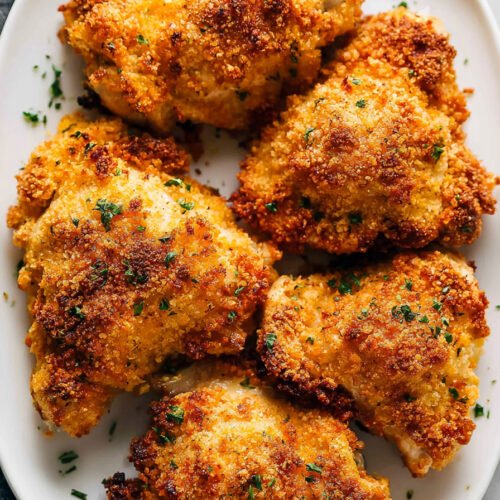
Crispy Baked Chicken Thighs Recipe
Ingredients
- 1 cup all-purpose flour, for the first coating layer that helps the egg cling evenly
- 1½ tsp salt divided, used in both the flour and breadcrumb mixtures for balanced seasoning
- ¼ tsp ground black pepper, for mild warmth in the flour coating
- 2 large eggs, beaten to help the crumbs adhere to the chicken
- 2 tbsp water, whisked with the eggs to loosen the dip slightly
- 2 cups Panko bread crumbs, for a crisp, coarse coating that browns well in the oven
- 1 tsp paprika, for color and gentle savory depth
- ½ tsp garlic powder, to season the breadcrumb coating evenly
- ½ tsp onion powder, for a rounded savory flavor
- 2-2½ lbs boneless, skinless chicken thighs, patted dry so the coating sticks better
- 2 tbsp olive oil, drizzled over the coated chicken to encourage golden crisp edges
Instructions
- Preheat the oven to 400°F. Line a baking sheet with parchment paper and set it aside so the coated chicken can go straight into a hot oven without sticking.
- Set out 3 separate bowls for the breading station. In the first bowl, stir together the flour, ½ teaspoon salt, and black pepper. In the second bowl, beat the eggs with the water until smooth. In the third bowl, combine the Panko bread crumbs, the remaining salt, paprika, garlic powder, and onion powder, making sure the seasoning is evenly distributed.
- Dredge each chicken thigh in the flour mixture, coating all sides and shaking off any heavy excess. Dip the floured chicken into the egg mixture, letting extra egg drip back into the bowl, then press it into the seasoned bread crumbs until fully coated.
- Place the breaded chicken thighs on the prepared baking sheet in a single layer with a little space between pieces. Drizzle the olive oil over the tops so the crumbs can crisp and turn golden instead of staying dry and dusty.
- Bake for 20-25 minutes, or until the coating is crispy and golden brown and the thickest part of each chicken thigh reaches 165°F. Let the chicken rest for a few minutes before serving so the juices settle and the crust stays crisp.
8) Tips for Making Crispy Baked Chicken Thighs Recipe
Pat the chicken dry before breading, even if it does not look very wet. A dry surface creates a cleaner flour layer, and that first layer affects everything that comes after it. Use one hand for dry ingredients and the other hand for the egg mixture to avoid building a thick glove of crumbs on your fingers. Keep the chicken pieces in a single layer, and do not let them overlap. If your thighs vary a lot in size, check the smaller ones first and give larger pieces extra time as needed. For easy baked chicken thighs with better browning, drizzle the olive oil lightly over the top rather than pouring it in one spot. If the coating looks dry halfway through baking, a very light additional drizzle can help, but avoid soaking the crumbs.
9) Common Mistakes & Fixes
Problem: The coating falls off. Cause: The chicken was too wet, the flour layer was too thick, or the Panko was not pressed firmly enough. Fix: Pat the thighs dry, shake off excess flour, let extra egg drip away, and press the crumbs onto every side.
Problem: The chicken is cooked but not crisp. Cause: The pan was crowded, the oven was not hot enough, or there was not enough oil to help the Panko brown. Fix: Bake at 400°F, leave space around each piece, and drizzle the tops lightly with olive oil.
Problem: The outside is golden but the inside is not done. Cause: Color was used as the only doneness sign. Fix: Use a thermometer and check the thickest part of the chicken thigh for 165°F.
Problem: The flavor tastes flat. Cause: Only the outside was seasoned, or the salt was not divided between the flour and crumb layers. Fix: Season both the flour and Panko so every bite has flavor from crust to chicken.
10) How to Tell Crispy Baked Chicken Thighs Are Perfect
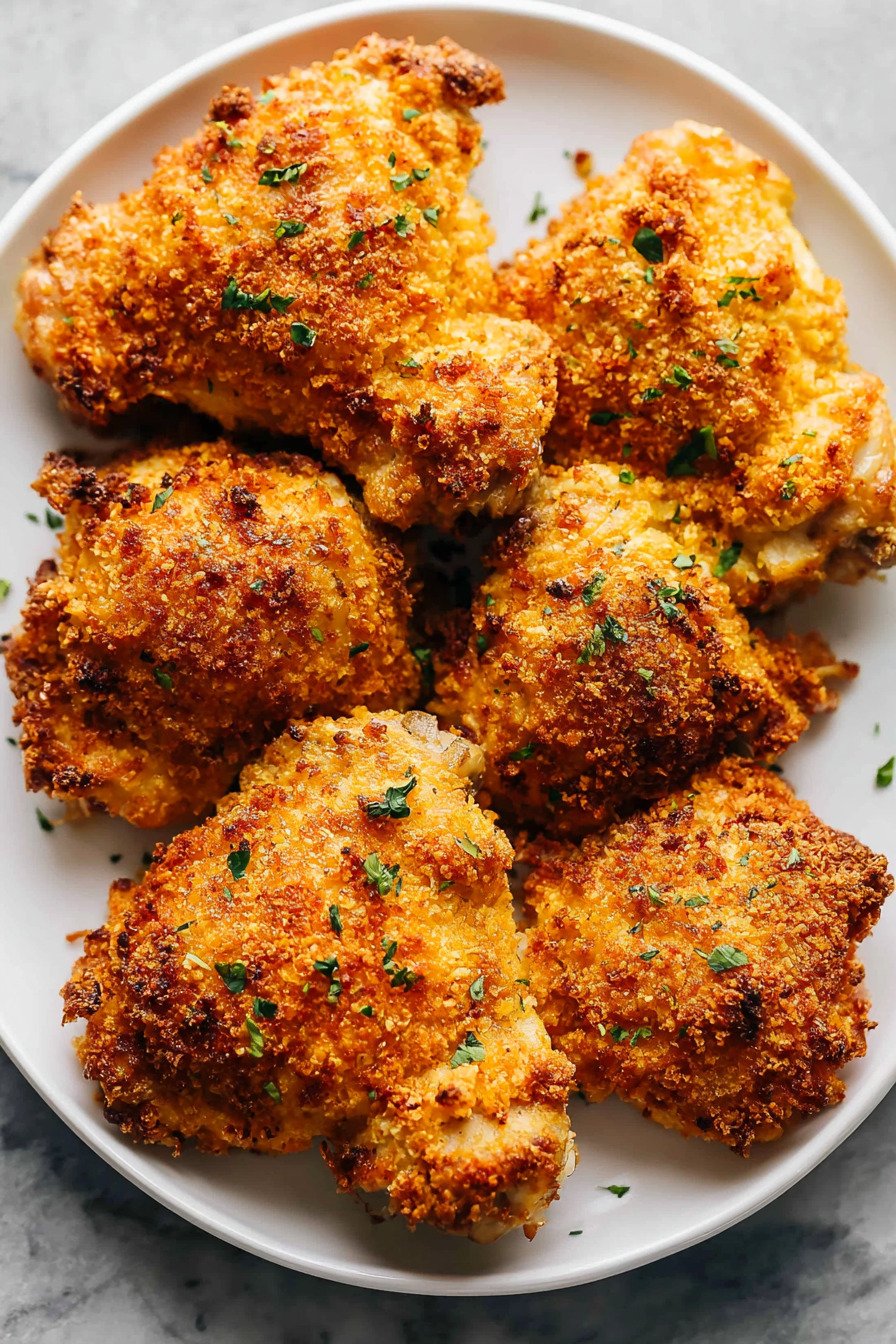
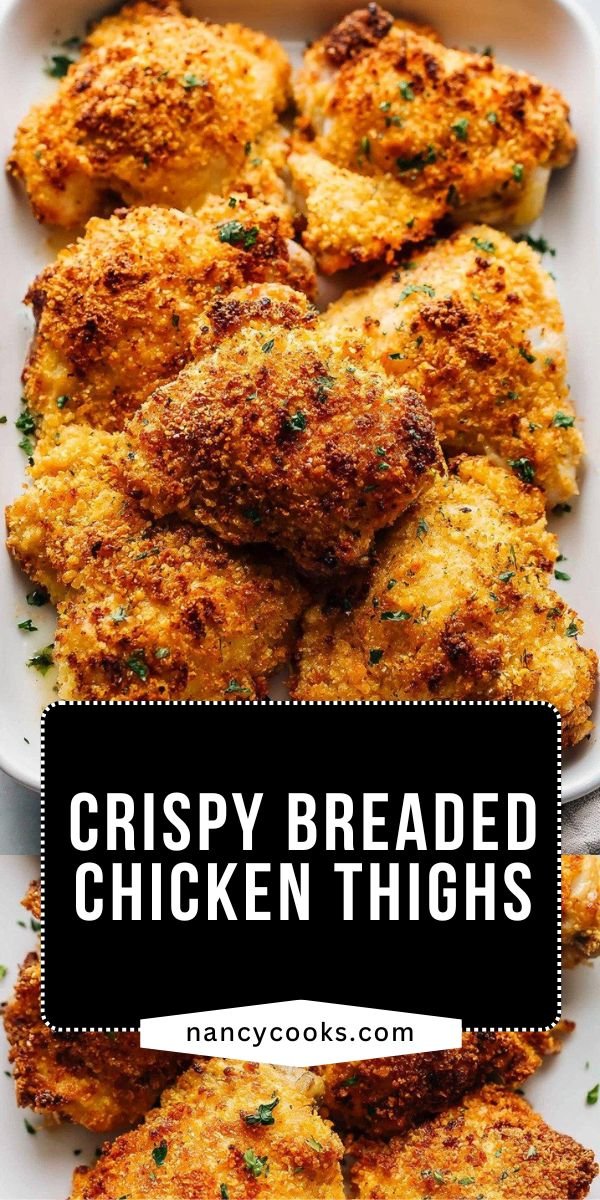
Perfect baked breaded chicken thighs should look evenly golden, with crisp Panko edges and no pale, floury patches. The coating should feel dry and crunchy when tapped lightly, not damp or greasy. The chicken should smell savory from the paprika, garlic powder, onion powder, and toasted crumbs. When cut, the meat should be juicy and fully cooked, with no translucent center. The most reliable doneness cue is an internal temperature of 165°F in the thickest part. Failure signs include loose crumbs sliding off, wet breading on the bottom, a dusty-looking top, or meat that releases too much liquid when cut immediately. Letting the chicken rest briefly helps the juices settle and keeps the crust from softening too fast.
11) Professional Secrets Behind Better Crispy Baked Chicken Thighs Recipe
The biggest professional-style secret is to think of breading as layers, not decoration. Flour dries the surface. Egg creates adhesion. Panko creates texture. Oil encourages browning. Heat sets the crust. If one layer is too heavy or too wet, the final bite suffers. Another useful trick is to press the crumbs onto the chicken with purpose, especially around folded edges of the thighs where coating tends to fall away. For chicken thigh recipes breaded in the oven, airflow matters too. A crowded pan acts more like a steamer than a roasting surface, so use a large baking sheet and leave room around each piece. Finally, do not skip the thermometer. A crisp crust is visual; juicy chicken is measured.
12) Best Dishes or Pairings to Serve With Crispy Baked Chicken Thighs Recipe
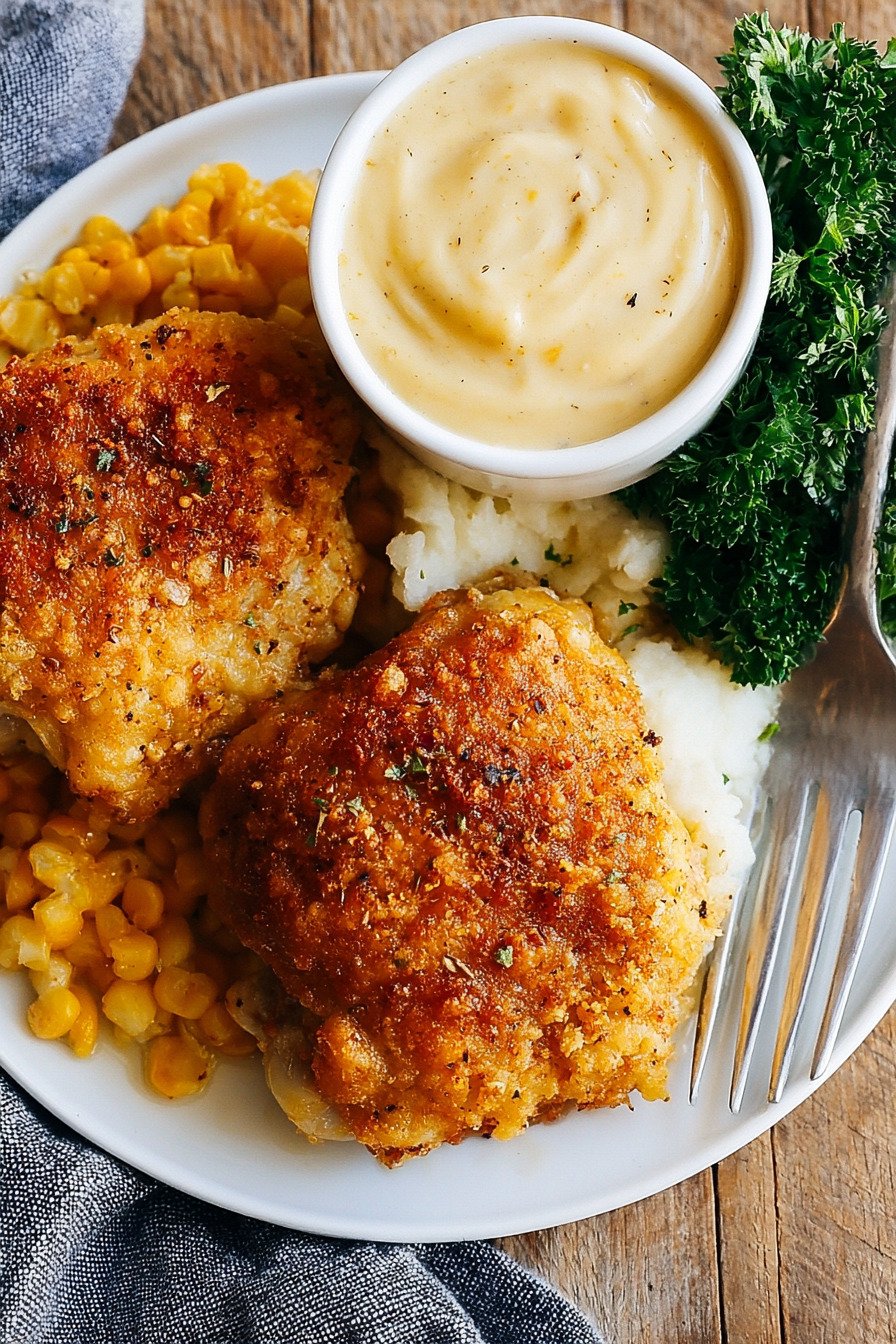
These breaded chicken thighs pair well with sides that balance the crunchy coating. For a comfort-style plate, serve them with mashed potatoes, roasted carrots, green beans, or buttered corn. For something fresher, add a crisp salad with lemony dressing, coleslaw, cucumber salad, or tomato salad. Rice pilaf, garlic rice, or simple pasta with olive oil and herbs also work because they do not compete with the seasoned Panko crust. If you want a dipping sauce, choose something bright or creamy, such as honey mustard, ranch, garlic yogurt sauce, or a squeeze of lemon. The key is contrast: crisp chicken, juicy center, and a side that adds either freshness, creaminess, or gentle acidity.

13) Making Crispy Baked Chicken Thighs Recipe Ahead of Time
You can bread the chicken a few hours ahead, place it on a parchment-lined baking sheet, and refrigerate it uncovered until baking. That short uncovered rest can help the coating set, which makes the crumbs less likely to slide off. Do not drizzle with olive oil until right before baking; adding it too early can soften the Panko. For the best texture, bake the chicken close to serving time because the crust is crispiest shortly after it leaves the oven. If you are planning dinner ahead, prepare your sides first, bread the chicken, then bake it last so the coating reaches the table while still crisp and golden.
14) Storing Leftover Crispy Baked Chicken Thighs Recipe
Store leftover baked breaded chicken thighs in an airtight container in the refrigerator for up to 3 days. The coating will soften as it sits because refrigeration adds moisture, but reheating it on a baking sheet can bring back some crunch. Use a 375°F oven until the chicken is hot in the center and the coating feels crisp again. Avoid microwaving if crispness matters; it warms the meat quickly but makes the crust softer. Freezing is possible, but the coating may lose some texture after thawing. Leftovers can be sliced over salad, tucked into sandwiches, served with rice bowls, or chopped into wraps with a creamy sauce and crisp vegetables.
15) FAQ (Real Cooking Questions)
Can I use regular breadcrumbs instead of Panko? Yes, but the texture will be different. Regular breadcrumbs create a finer, denser coating, while Panko makes crispy breaded chicken thighs with more visible crunch and a lighter bite.
Why did my breading fall off? The most common reason is too much moisture. Pat the chicken dry, shake off extra flour, let excess egg drip off, and press the crumbs firmly onto the chicken before baking.
Can I use bone-in chicken thighs? The method can work, but the timing will change because bone-in thighs take longer to cook. Use a thermometer and bake until the thickest part reaches 165°F without touching bone.
How do I make the bottom crispier? Give the chicken space on the pan and avoid moving it too early. If the bottom is consistently soft, use a wire rack set over the baking sheet to improve airflow.
Can I season the chicken itself before breading? Yes, a light sprinkle of salt can help, but remember the flour and Panko already contain salt. Avoid over-seasoning, especially if serving with a salty sauce.
16) Save This Crispy Baked Chicken Thighs Recipe
If this Crispy Baked Chicken Thighs Recipe helped you solve soggy oven breading, save it for your next chicken dinner. The key reminder is: dry the chicken, press on the Panko, leave space on the pan, and bake until the crust is golden and the center reaches 165°F.
17) Conclusion
Crispy oven chicken is not about luck; it is about controlling moisture, building the breading in the right order, and giving the crumbs enough heat and space to brown. Once you understand why flour, egg, Panko, oil, and temperature each matter, breaded chicken thighs become much more dependable. You are no longer guessing why the coating turned soft or why the meat dried out. You have a clear method, visible checkpoints, and a final temperature target. That is the difference between a pan of pale crumb-coated chicken and a tray of golden, crisp, juicy thighs that feel worth making again.
18) Nutrition
Serving Size 1 portion Calories 455 Sugar 1 g Sodium 760 mg Fat 20 g Saturated Fat 5 g Carbohydrates 31 g Fiber 2 g Protein 35 g Cholesterol 160 mg



Leave a Comment